
Kīlauea episode 46 ends after 9 hours of lava fountaining, tephra reaches Highway 11, Hawaii
Episode 46 of the ongoing Halemaʻumaʻu eruption at Kīlauea ended at 17:22 HST on May 5, 2026 (03:22 UTC on May 6), after about 9 hours of continuous lava fountaining from the north vent at the summit. USGS lowered the Volcano Alert Level from Watch to Advisory and the Aviation Color Code from Orange to Yellow after ground and aviation hazards decreased.
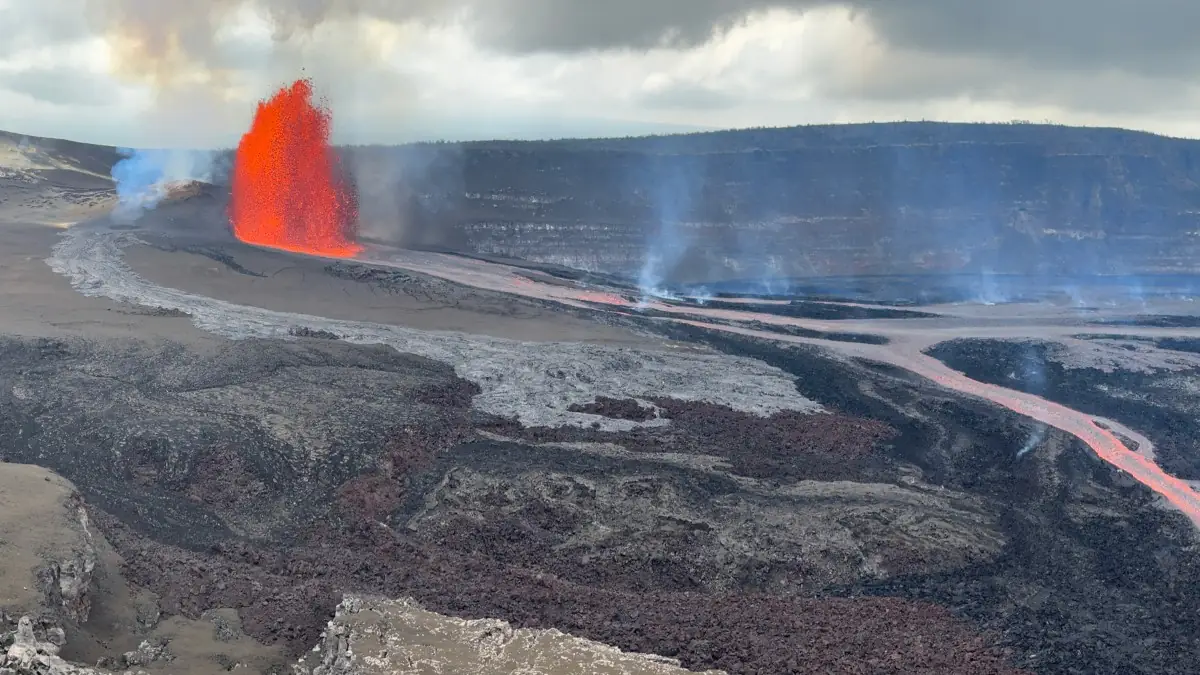
Episode 46 of lava fountaining in Halemaʻumaʻu began at the summit of Kīlauea at 08:17 HST on May 5, 2026. This panoramic photograph, taken from the south rim of Halemaʻumaʻu at 13:00 HST, shows the lava fountain from the north vent feeding a channelized lava flow across the crater floor. Credit: USGS/M. Patrick.
Episode 46 began at 08:17 HST (18:17 UTC) on May 5 in Halemaʻumaʻu crater, within Hawaiʻi Volcanoes National Park, and remained confined to the summit eruption area. The south vent did not produce sustained fountaining, but USGS reported periodic gas jetting and flames during the episode.
The agency estimated a peak instantaneous effusion rate of just over 240 m³/s (310 yd³/s) around 09:50 HST, with an average effusion rate of 140 m³/s (180 yd³/s). About 4.6 million m³ (6 million yd³) of lava erupted, covering about 60% of the Halemaʻumaʻu crater floor.
North vent fountains reached about 200 m (650 feet) above ground level between 10:00 and 10:30 HST, then declined to about 50 m (160 feet) before the episode stopped. The Uēkahuna tiltmeter recorded about 14 microradians of deflationary tilt during the episode.
The lava fountain produced heat and ash that fed a plume reaching about 6 000 m (20 000 feet) above sea level, based on radar data reported by the National Weather Service (NWS) and the Washington Volcanic Ash Advisory Center. Lower-level winds carried the plume and tephra toward the north and northwest of Halemaʻumaʻu, while higher-level winds carried the upper plume toward the north and northeast.
NWS issued an Ashfall Advisory at 08:52 HST for Hawaiʻi Volcanoes National Park and areas north and northeast, including Volcano and Mountain View. USGS reported tephra outside closed areas of the park along the north rim of Kaluapele, on Highway 11 between mile markers 30 and 34, and in adjacent communities.
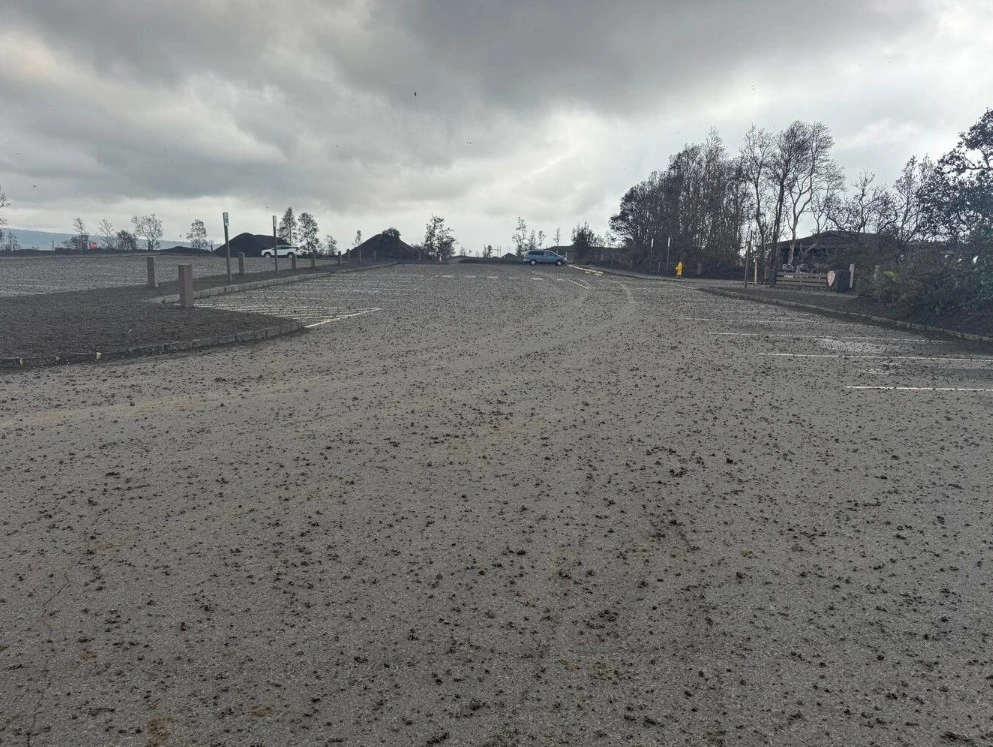
Tephra clasts as large as 15 cm (6 inches) were observed falling on Highway 11 inside the national park, while fine ash and Pele’s hair were reported as far as Mountain View. Earlier in the episode, USGS reported fist-sized and smaller clasts at Uēkahuna overlook and between mile markers 31 and 32 on Highway 11.
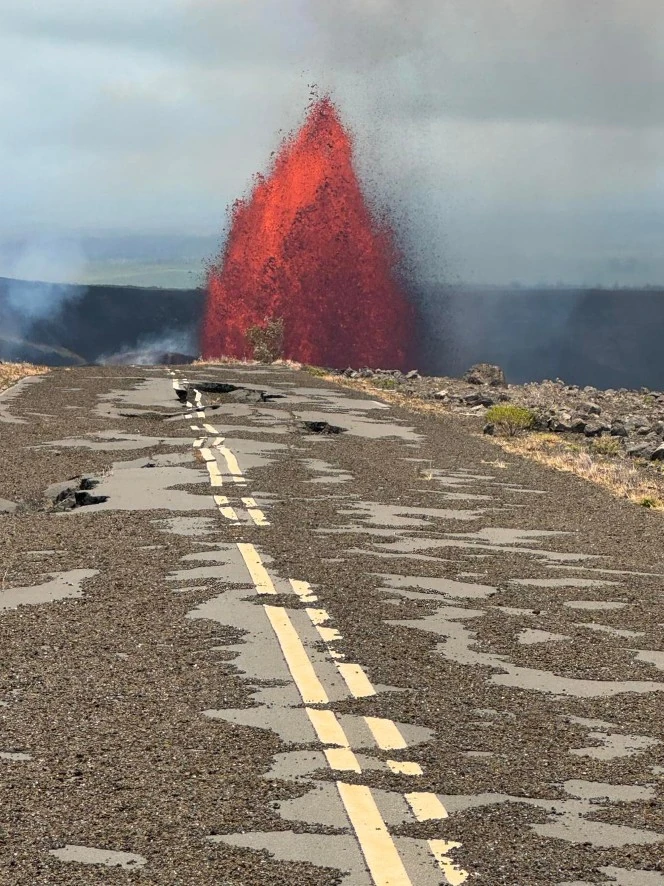
Earthquake activity during episode 46 was minor, and seismic tremor rose and fell with fountaining before returning to levels typical of an eruption pause. All eruptive vents and lava flows remained confined to Halemaʻumaʻu crater within Hawaiʻi Volcanoes National Park.
USGS said volcanic gases, including water vapor, carbon dioxide, and sulfur dioxide, are continuously released during eruptions. Sulfur dioxide reacts in the atmosphere to create vog downwind, while tephra from lava fountains can cause skin, eye, and respiratory irritation.
Kīlauea has been erupting episodically within its summit caldera since December 23, 2024. Episode 46 followed about 45 precursory overflows that began during the afternoon of May 4, including about 24 from the north vent and 21 from the south vent.
References:
1 Volcano notice for Kilauea – USGS/HVO – May 6, 2026
2 HVO/USGS Volcanic Activity Notice for Kilauea – USGS/HVO – May 5, 2026

I'm a dedicated researcher, journalist, and editor at The Watchers. With over 20 years of experience in the media industry, I specialize in hard science news, focusing on extreme weather, seismic and volcanic activity, space weather, and astronomy, including near-Earth objects and planetary defense strategies. You can reach me at teo /at/ watchers.news.

Commenting rules and guidelines
We value the thoughts and opinions of our readers and welcome healthy discussions on our website. In order to maintain a respectful and positive community, we ask that all commenters follow these rules.