
Study estimates 440 excess deaths in Los Angeles County from January 2025 wildfires
New research published on August 6, 2025, in JAMA estimates that 440 excess deaths occurred in Los Angeles County, California, from January 5–February 1, 2025, due to the Palisades and Eaton wildfires, compared with 30 direct deaths officially reported.
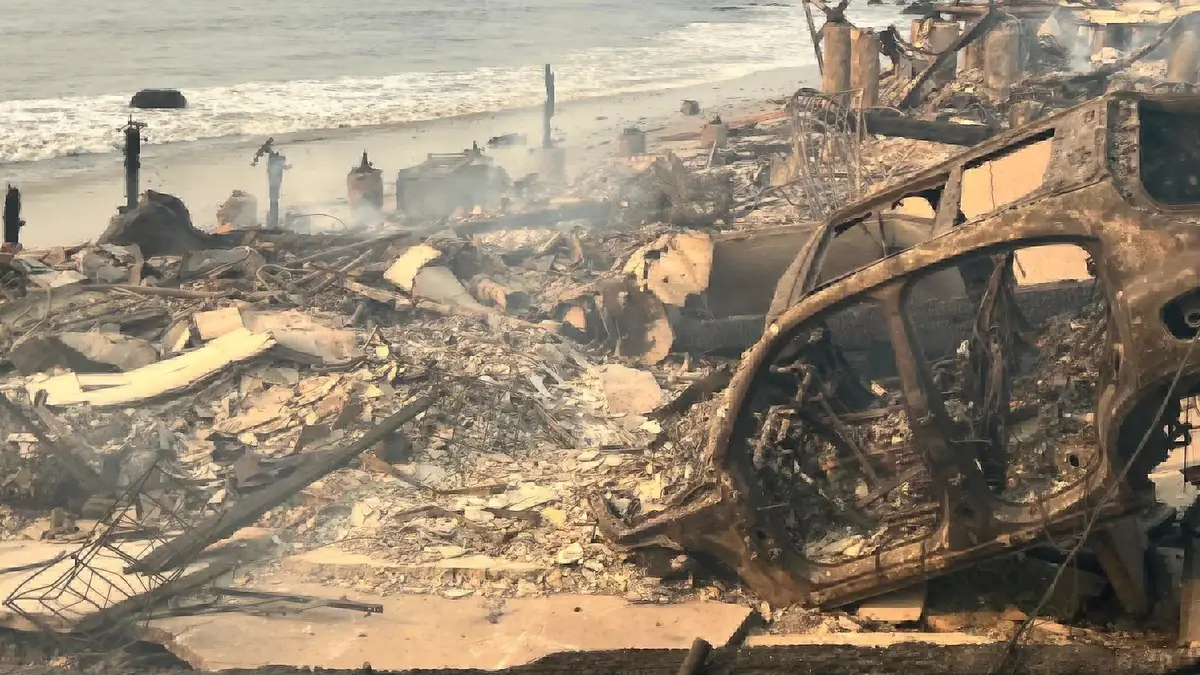
Damage caused by the Palisades Fire, California in January 2025. Credit: CalFire
While authorities recorded 30 direct deaths, a cross-sectional analysis by researchers at Boston University and the University of Helsinki indicates that the actual mortality burden was markedly higher.
The study used an interrupted-time-series design, applying weekly all-cause mortality data for 2018, 2019 and 2024 (excluding 2020–2023 due to COVID-19 effects).
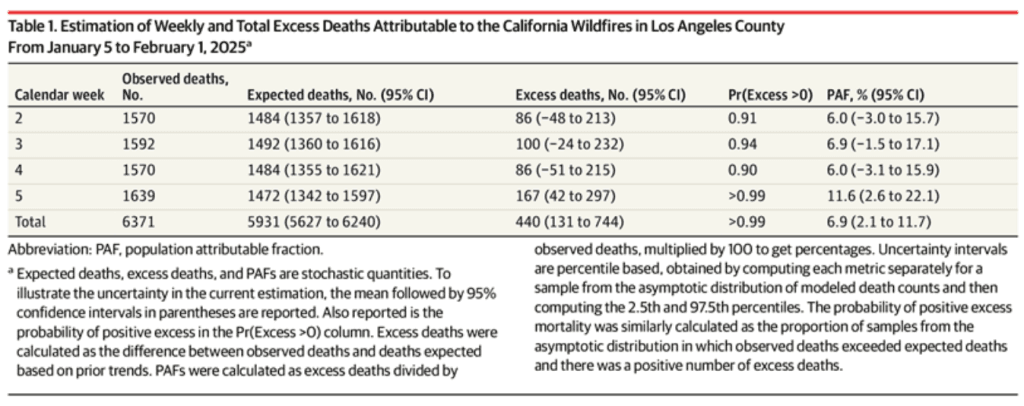

A negative-binomial generalized additive model estimated the number of expected deaths during the wildfire period.
A total of 6 371 deaths were observed in Los Angeles County during the study period, compared with an expected 5 931 deaths (95% CI, 5 627–6 240). This corresponds to 440 excess deaths (95% CI, 131–744), or 6.9% (95% CI, 2.1%–11.7%) of all deaths during this time.
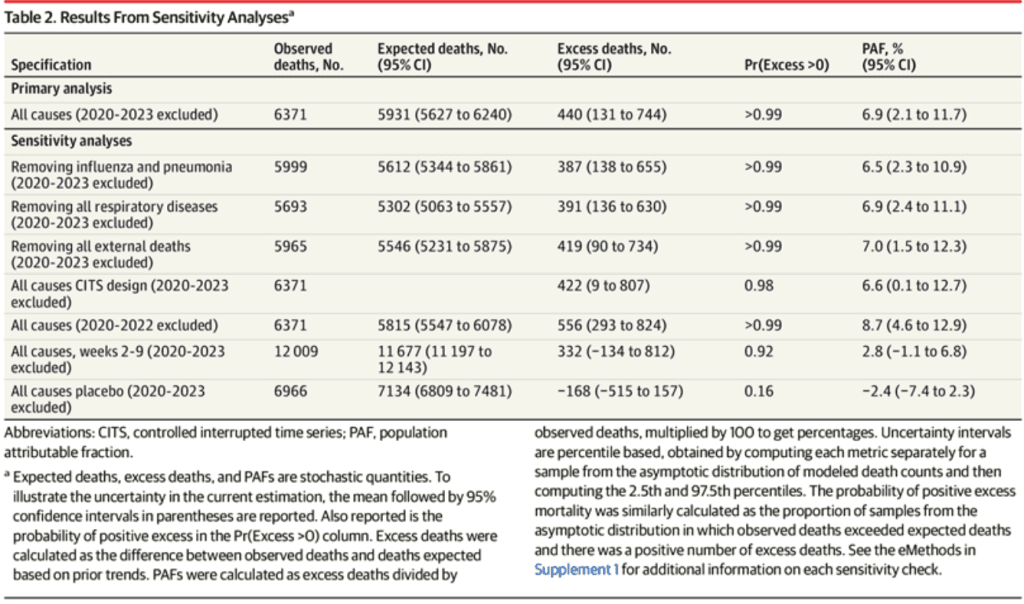
Sensitivity analyses, including exclusion of respiratory and external causes of death, showed similar excess mortality estimates, with the probability of positive excess consistently above 0.98.

The authors note that excess deaths likely include partially attributable causes, such as cardiovascular and respiratory conditions exacerbated by smoke exposure and stress, as well as indirect causes such as delays or disruptions in healthcare.
Extending the analysis to March 1, 2025, lowered the estimated excess to 332 deaths (95% CI, −134 to 812), which may reflect reporting delays or post-event mortality trends.
The study clearly showed the limitations of relying solely on direct fatality counts for wildfire impact assessments. Provisional mortality data, incomplete cause-of-death reporting, and unmeasured confounding are acknowledged limitations.
The researchers call for stronger mortality surveillance during and after wildfire events and for wider use of excess mortality models to better assess the public health impacts of climate-related disasters.
According to the Swiss Re Institute, global natural disasters caused an estimated USD 135 billion in economic losses in the first half of 2025 and the January wildfires in Los Angeles County were the largest single contributor, generating approximately USD 40 billion in insurance claim. This, according to Swiss Re, is the highest insured loss ever recorded for a wildfire event.
The Palisades and Eaton fires destroyed more than 16 000 structures, fueled by an extended Santa Ana wind season and prolonged lack of rainfall. The affected area included one of the highest concentrations of high-value single-family residential properties in the United States.


Swiss Re data show that wildfire-related insured losses have increased significantly over the past decade. Before 2015, wildfires accounted for about 1% of all natural catastrophe claims; in the last ten years, that share has risen to 7%, with eight of the ten costliest wildfire events on record occurring during this period.
The institute attributes the trend primarily to growing exposure in hazard-prone areas, particularly California’s wildland–urban interface zones, where exposure has increased nearly twice as fast as in non-interface areas since 1990.
References:
1 Climate Change and Health: Excess Deaths Attributable to the Los Angeles Wildfires From January 5 to February 1, 2025 – Paglino, E., Raquib, R.V., Stokes, A.C. – JAMA – https://doi.org/10.1001/jama.2025.10556 – August 6, 2025

I’m a science journalist and researcher at The Watchers, contributing to the Epicenter edition, where I cover peer-reviewed scientific research and emerging discoveries across Earth and space sciences. With a background in astronomy and a passion for environmental science, I’ve worked in shark and coral conservation in Fiji, conducting reef and shark-behavior research, contributing to mangrove restoration, and earning PADI Open Water and Coral Reef Certifications. I bring a blend of scientific rigor and storytelling to illuminate the discoveries shaping our planet and beyond.

Commenting rules and guidelines
We value the thoughts and opinions of our readers and welcome healthy discussions on our website. In order to maintain a respectful and positive community, we ask that all commenters follow these rules.