
Mount Spurr quiets after prolonged unrest, alert and aviation codes downgraded
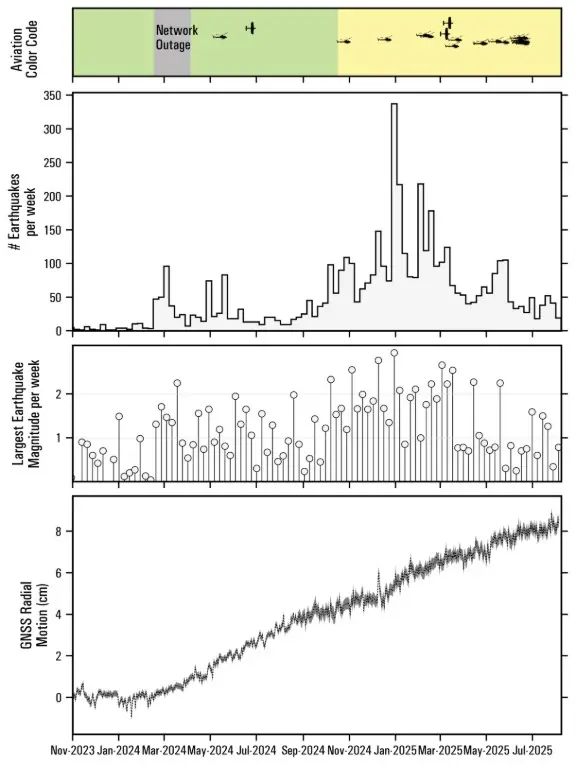
The Alaska Volcano Observatory lowered the Volcano Alert Level for Mount Spurr to Normal and the Aviation Color Code to Green at 10:07 AKDT (18:07 UTC) on August 20, 2025, following a gradual decline in unrest and the absence of ground deformation since March 2025.

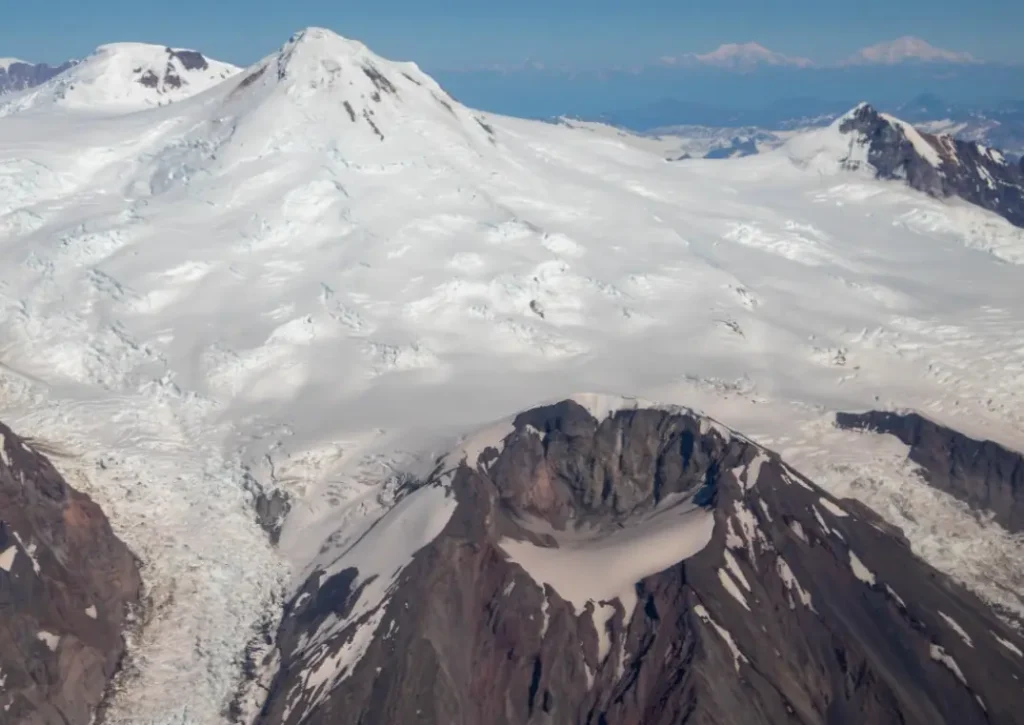
Mount Spurr with the Crater Peak flank vent in the foreground and the Alaska Range visible in the background. This oblique aerial photograph was captured during an observation and gas measurement overflight on August 17, 2025. Credit: AVO/USGS, Laura Clor
The decision follows a sustained period of decreasing geophysical and geochemical activity. Since March 2025, no ground deformation has been detected. Small earthquakes, surface changes, gas emissions, and ice melt, previously associated with shallow magma movement, have all diminished, indicating that the magmatic intrusion which began in early 2024 has ceased.
Although the volcano has returned to background levels of activity, low-level unrest persists. Small earthquakes are still occurring at slightly elevated rates compared to pre-2024 levels.
Volcanic gases, primarily carbon dioxide, continue to be emitted from both the summit crater and Crater Peak vent on the volcano’s south flank. AVO notes that this is expected behavior for a system where magma has ascended but not erupted.
The observatory also reported hazardous concentrations of carbon dioxide gas detected near the rim of Crater Peak. While these levels pose no threat to surrounding communities, they represent a danger to individuals near the crater due to the gas’s odorless and colorless nature.
Mount Spurr is a snow- and ice-covered stratovolcano located approximately 120 km (75 miles) west of Anchorage, on the west side of Cook Inlet.
Spurr last erupted in 1992, with a previous historical eruption in 1953. Both events originated from Crater Peak, a flank vent situated 3.5 km (2 miles) south of the summit. These explosive eruptions produced ash columns reaching up to 20 km (65 000 feet) and deposited several millimeters of ash across south-central Alaska, including Anchorage.
The summit of Mount Spurr has not erupted in over 5 000 years. Primary hazards during future eruptions include far-traveled ash clouds, ash fall, pyroclastic flows, and lahars or mudflows that could inundate drainages all sides of the volcano, but primarily on the south and east flanks.

I'm a dedicated researcher, journalist, and editor at The Watchers. With over 20 years of experience in the media industry, I specialize in hard science news, focusing on extreme weather, seismic and volcanic activity, space weather, and astronomy, including near-Earth objects and planetary defense strategies. You can reach me at teo /at/ watchers.news.

Commenting rules and guidelines
We value the thoughts and opinions of our readers and welcome healthy discussions on our website. In order to maintain a respectful and positive community, we ask that all commenters follow these rules.