
Caldera cliff collapses in Santorini’s Imerovigli, triggering slope instability concerns
A large landslide occurred in the village of Imerovigli on the island of Santorini, Greece, at 15:30 LT (12:30 UTC) on August 20, 2025, collapsing part of the volcanic caldera cliff and generating a dense dust cloud over the area.
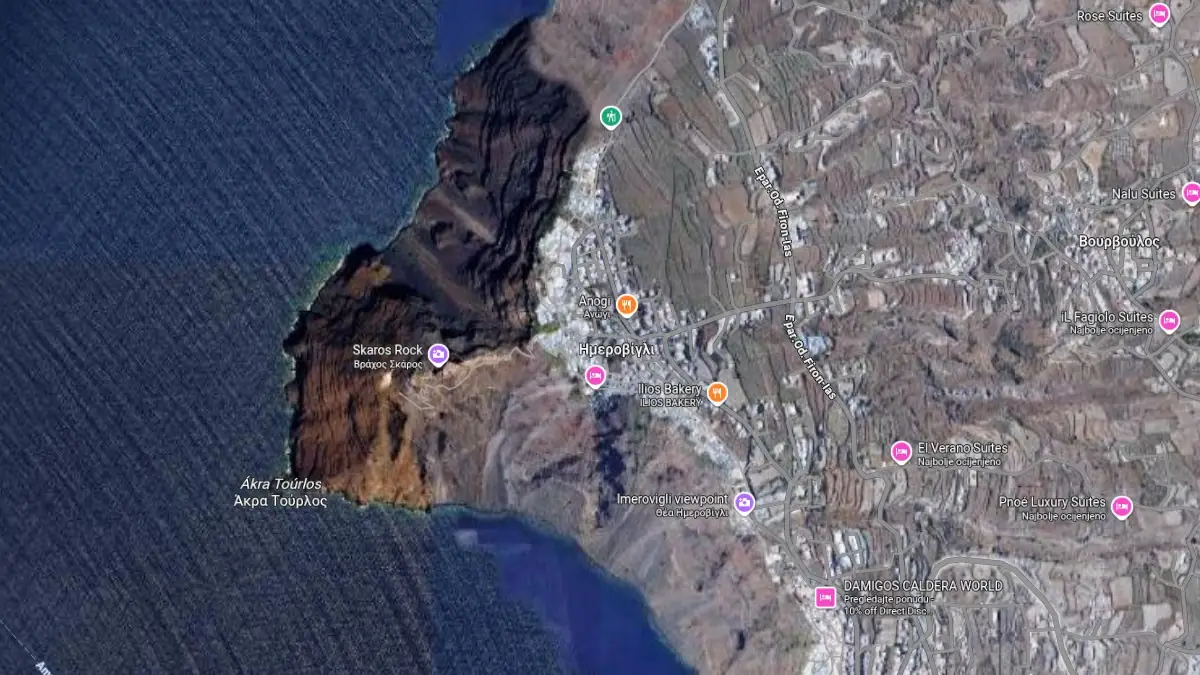
Imerovigli, Santorini, Greece satellite image. Credit: Google/TW
An extensive section of cliff in Imerovigli, Santorini, collapsed on August 20, producing a dust cloud that spread across the caldera rim and surrounding tourist areas. The incident occurred in the early afternoon and caused significant disruption, though no official reports of casualties have yet been released.
Geologists noted that the slope had been under stress due to intensive construction and overdevelopment in recent decades.
The cliff face lies on inherently unstable volcanic terrain formed by the collapse of the Santorini caldera during the Minoan eruption approximately 3 600 years ago. The addition of new structures on the rim has further increased loading on an already fragile geological setting.
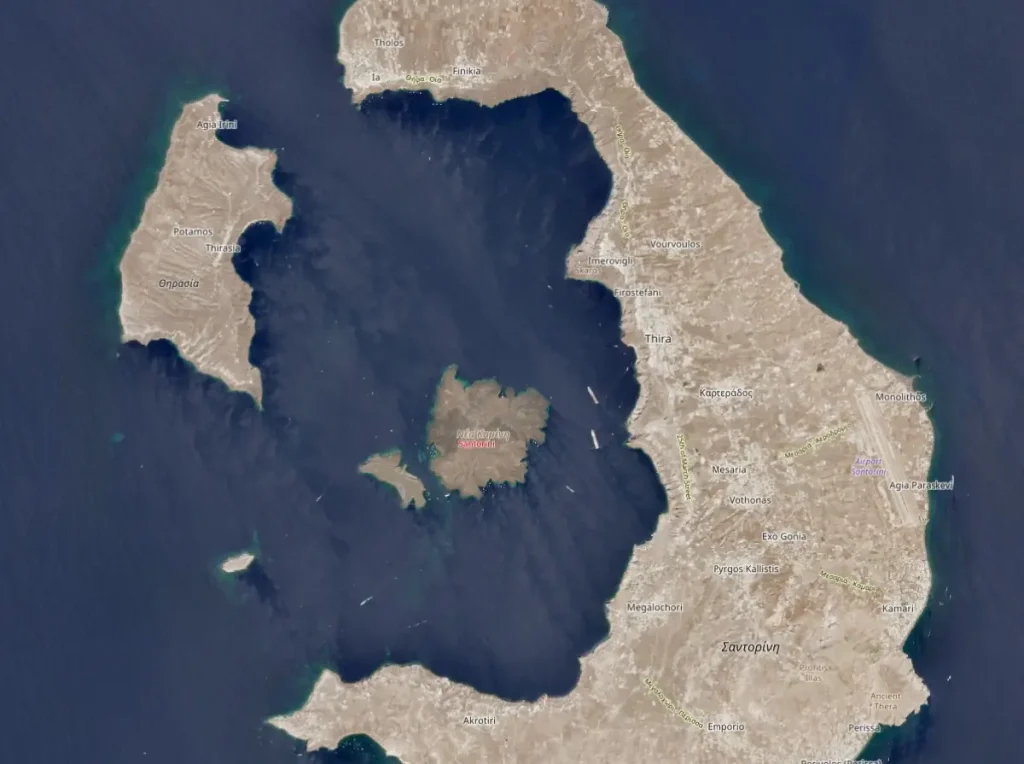
Santorini also experienced an intense seismic swarm earlier this year with more than 20 000 small tremors recorded between January 26–February 22. Experts suggest that this seismic activity weakened the rock mass, contributing to slope failure.
The landslide follows warnings by local and international geologists regarding the geomorphological instability of Santorini’s caldera slopes. They emphasized the urgent need for stricter building regulations to reduce risks to residents and visitors.
Earlier in 2025, the Greek government allocated GBP 2.5 million for the construction of an emergency evacuation route on the island, recognizing the hazards posed by earthquakes, landslides, and volcanic activity.
Imerovigli, a settlement of 469 permanent residents, is a popular tourist destination due to its elevated position on the caldera rim and panoramic views of the Aegean Sea.
As of August 20, local authorities have not provided detailed information on damage to infrastructure or buildings, nor have they confirmed injuries or fatalities. Monitoring and assessment of slope stability are ongoing.

I’m a science journalist and researcher at The Watchers, contributing to the Epicenter edition, where I cover peer-reviewed scientific research and emerging discoveries across Earth and space sciences. With a background in astronomy and a passion for environmental science, I’ve worked in shark and coral conservation in Fiji, conducting reef and shark-behavior research, contributing to mangrove restoration, and earning PADI Open Water and Coral Reef Certifications. I bring a blend of scientific rigor and storytelling to illuminate the discoveries shaping our planet and beyond.

Commenting rules and guidelines
We value the thoughts and opinions of our readers and welcome healthy discussions on our website. In order to maintain a respectful and positive community, we ask that all commenters follow these rules.