
Priština breaks snowfall record as early wintry weather hits Kosovo and Greece
Record-breaking early October snow struck Priština in Kosovo on October 3, 2025, while early season snow struck high elevation regions of Greece.
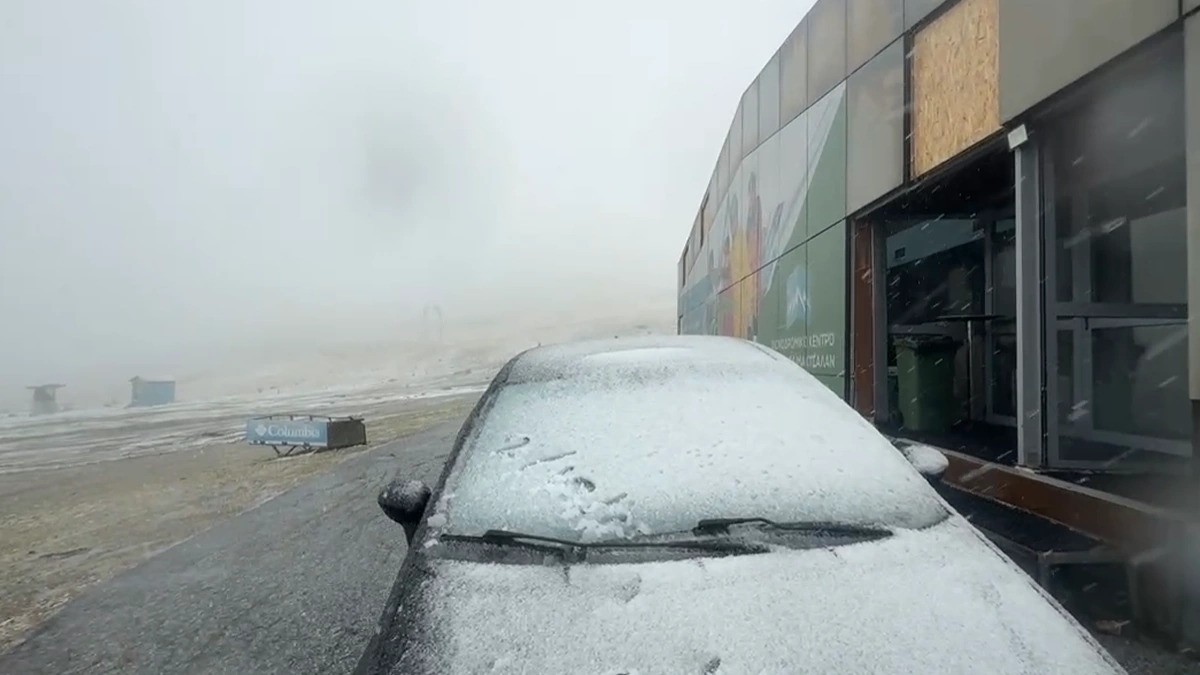
Rare October Snowfall in Greece on October 3, 2025. Credit: Forecast Weather Greece
Priština experienced record snowfall on October 3, accumulating around 10 cm (4 inches) throughout the day.
This was the earliest October snowfall on record for the region. The previous record for the earliest October snowfall was on October 7, 2017, when 1 cm (0.4 inches) of snow fell over the region.
It was also the heaviest October snowfall on record for the region. It completely shattered the old record of 4 cm (1.5 inches), which was a tie between October 28, 1997, and October 27, 2003.
It is worth noting that these heavy snowfall records were set during the later part of October, while the current record happened on the third day of the month. Such heavy snowfall this early in October is practically unheard of in the region.
Northern Greece also experienced an unusually early taste of winter, with the first snowfall of the season blanketing high-altitude mountains like Mount Olympus, Kaimaktsalan, and Falakro.
The cold front brought sub-zero temperatures, dropping to -1°C (30.2 °F) at the Kakalos Refuge on Olympus at an elevation 2 650 m (8 694 feet), where the legendary peaks received a dusting of snow above 2500 m (8 200 feet).
This early October snow is extremely rare for Greece, having been observed a few times in the past.
According to studies conducted by METEO (the meteorological unit of the National Observatory of Athens), across Greece, the duration of the snow cover period has been decreasing by approximately 1.5 days per year over the analysis period of 1991 to 2020.
This annual rate translates to a significant loss in total snow-covered days over the three decades, particularly in central and northern mountainous regions, which have experienced a loss of 30 to 50 days with snow cover.
Studies show that snowfall is becoming rarer in autumn, starting later (towards the end of November in the mountains), while the snowmelt begins earlier in the spring, significantly shortening the overall snow season.

Rishav Kothari is Editor-in-Chief of The Watchers, where he runs the newsroom and covers earthquakes, volcanoes, severe weather and space weather.
Published in the last 24 hours
- A meteorite blew a crater beside a village near Lake Titicaca in 2007, and dozens of villagers who went to see it got headaches and nausea, though tests found nothing the rock had added to the water Epicenter
- The people who pay closest attention to the weather are the ones storms have already cost the most, a study of 946 students found, with one damaging storm making little difference to how much attention a student paid, but two or more making a clear one Epicenter
- The sea is falling in Juneau, Alaska, because land freed from melted glaciers is rising about 0.6 inches a year Epicenter
- A dam above Los Angeles collapsed just before midnight on March 12, 1928, and the flood killed more than 400 people, hours after the engineer who built it had spent two hours looking at a new leak and decided there was no danger Epicenter
