
Nanmadol hits Kyushu as 4th strongest typhoon in the recorded history of Japan

Featured image: Typhoon "Nanmadol" at 07:00 UTC on September 18, 2022. Credit: JMA/Himawari-8, RAMMB/CIRA, The Watchers
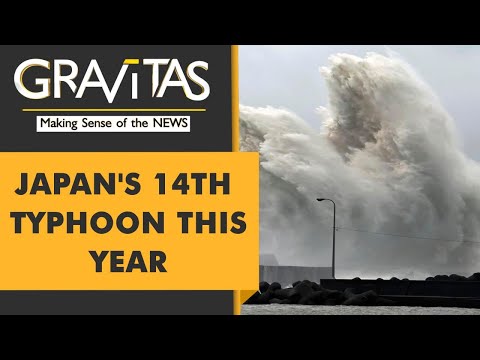
Typhoon “Nanmadol” made landfall in Kyushu, Japan on September 18, 2022, with maximum sustained winds of 175 km/h (110 mph) and a central pressure of 935 hPa, making it the 4th strongest typhoon on record to make landfall in Japan. Historical records there date back to 1951.
An estimated 9.5 million people have been advised to evacuate their homes ahead of the landfall.
Weather stations in Kyushu recorded more than 500 mm (19.69 inches) of rain in 24 hours on September 18; and about 1 000 mm (39.3 inches) from September 15 – 18 in Misato Town, Miyazaki – more than twice its average for the entire month of September.
Nanmadol caused widespread floods and landslides, in which 2 people lost their lives, 1 person went missing and more than 100 were injured.
More than 340 000 people were left without electricity.

After traveling along the Sea of Japan coast, the typhoon moved through the northeastern region of the country’s largest main island of Honshu early Tuesday, September 20, with the JMA warning of strong winds, high tides and potential landslides in areas already hit by heavy rain.1
Landslides and a fallen bridge were confirmed in mountainous regions of Miyazaki, while part of the Hikone Castle structures, designated an important cultural property, in Shiga Prefecture was found damaged, the Mainichi reports.
The typhoon wrought damage in Morotsuka, a village located in the mountainous regions of Miyazaki, which was similarly battered in a typhoon in September 2005 and had spent about 10 years to complete elevation work.

References:
1 Typhoon Nanmadol rips through Japan archipelago, leaves 2 dead – The Mainichi – September 20, 2022

Teo Blašković founded The Watchers in 2011 and edited it until 2026, covering seismic and volcanic activity, extreme weather, space weather and near-Earth objects. Articles on this page are his archive.
Earlier reporting
Nothing on Watchers was published in the last 24 hours. These are older articles.
- In 1920, a man out hunting on a farm in Namibia sat down on a strange black rock, scratched it with his knife and saw metal shine underneath. It was Hoba, a 60-ton meteorite, the largest ever found, and there is no crater around it Epicenter
- On December 26, 2004, a 10-year-old British girl on a Phuket beach recognized the frothing sea from a recent geography lesson, and her warning helped clear the beach before the tsunami struck Epicenter
- A volcano in Tonga exploded so loudly in 2022 that people in Alaska, 6,000 miles away, were woken by the booms. Hawaii, at half that distance, heard nothing at all Epicenter
- In 2001, red rain fell on parts of Kerala, India, on and off for about two months. Scientists traced the color to algae spores, but one physicist argued the cells came from space. Epicenter
