
SO2 at historically high levels, White Island alert levels raised, New Zealand
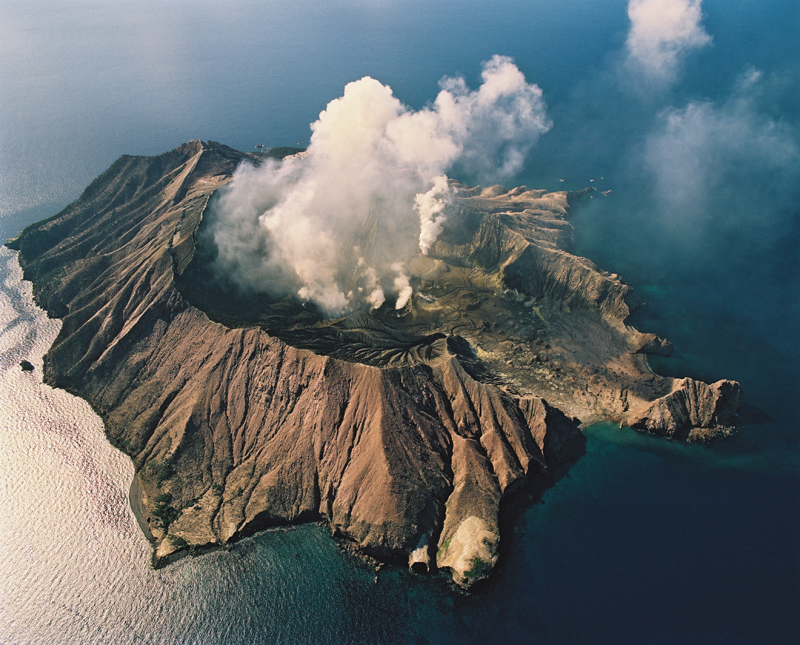
Featured image: White Island, showing the white clouds of highly acidic gases. Credit: GNS Science - GeoNet
A moderate volcanic unrest is taking place at New Zealand's White Island volcano (Whakaari), forcing authorities to raise the Volcanic Alert Level to 2 and Aviation Color Code to Yellow on June 26, 2019.
"Our heightened monitoring of Whakaari as part of the response to recent earthquake swarms has shown an increase in sulfur dioxide gas flux to historically high levels," GNS Science Duty Volcanologist Agnes Mazot said June 26, 2019.
A gas flight today detected 1 886 tons/day of sulfur dioxide, nearly 3 times the previous values measured in May 2019. This is the highest value recorded since 2013 and the 2nd highest since regular measurements began in 2003.
Further gas measurements will be undertaken as soon as conditions allow, Mazot said.
Nearby earthquake swarms are continuing although at lower levels than reported on in previous bulletins. It is still unclear of the relationship of the earthquake swarms to the high sulfur dioxide observed today.
"The change in gas flux represents a significant change in our background monitoring parameters at Whakaari and is consistent with moderate or heightened volcanic unrest. As such we have changed the Volcanic Alert Level to Level 2 and the Aviation Colour Code is raised to Yellow."
Volcano Alert Level 2 is mostly associated with volcanic unrest hazards with the potential for eruption hazards.
GNS Science and the National Geohazard Monitoring Centre continues to closely monitor Whakaari/White Island for further signs of activity.
Geological summary
White Island is a mostly ice-covered volcanic complex at the northern end of the island consisting of two shield volcanoes and overlying pyroclastic cones.
The youngest Potassium-Argon date obtained was 0.17 million years ago and there is no evidence of Holocene activity.

I'm a dedicated researcher, journalist, and editor at The Watchers. With over 20 years of experience in the media industry, I specialize in hard science news, focusing on extreme weather, seismic and volcanic activity, space weather, and astronomy, including near-Earth objects and planetary defense strategies. You can reach me at teo /at/ watchers.news.

Commenting rules and guidelines
We value the thoughts and opinions of our readers and welcome healthy discussions on our website. In order to maintain a respectful and positive community, we ask that all commenters follow these rules.