
Europe hit by abrupt weather shift as heat dome collapses, bringing early snowfall, torrential rainfall and cold blast
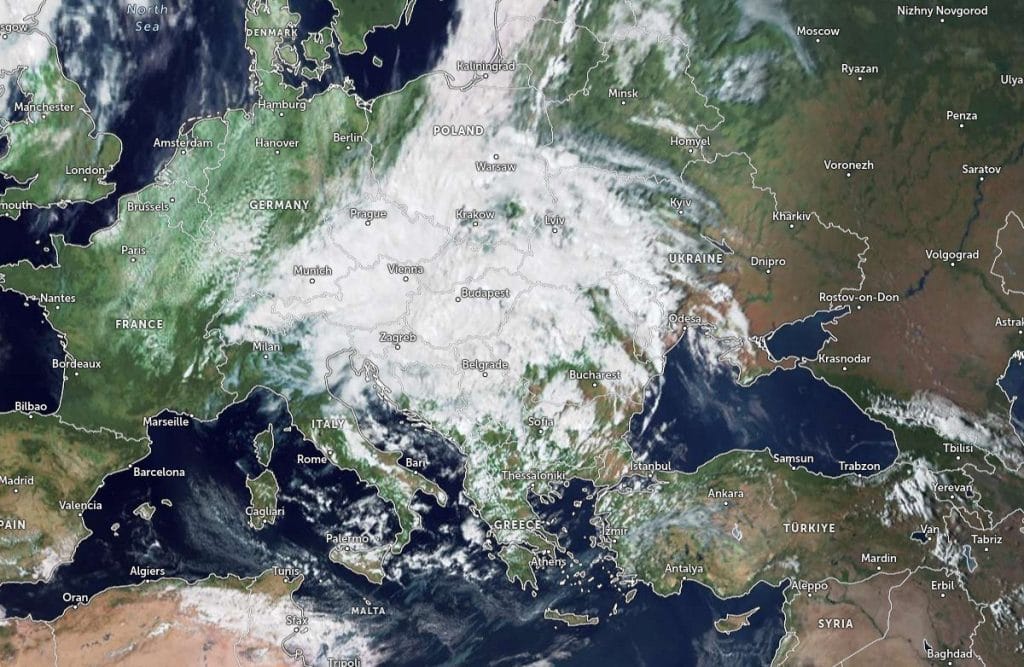
Europe is experiencing a sharp weather shift following the collapse of a persistent heat dome that had brought record-breaking temperatures across the continent in early September 2024. As the heatwave subsided, parts of central Europe transitioned abruptly from extreme summer heat to unusually cold and wet conditions. Austria, for example, saw early snowfall shortly after temperatures had soared above seasonal norms. This sudden weather shift, caused by a breakdown of the high-pressure system, is now leading to prolonged rains and cold blasts in central Europe.
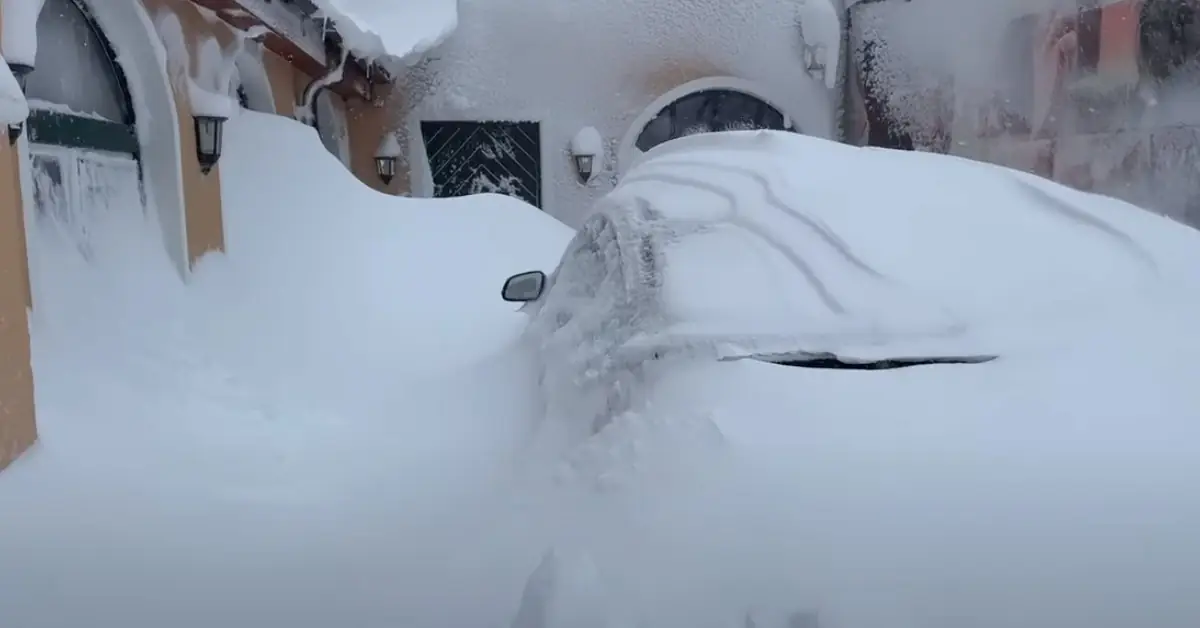
Image credit: WetterOnline
- The collapse of the heat dome over Europe has brought an abrupt end to summer, leading to unusual weather, including prolonged rains and cold blasts affecting multiple countries in central Europe.
- The region has already seen torrential rainfall, powerful winds, waterspouts, and snowstorms in the second half of the week.
- Austrian storm warning center UWZ says that in some areas, previous rainfall records for the entire month of September will be “surpassed in just a few days.”
- On September 13, a 56-year-old Canadian woman died in a sudden snowstorm while climbing in the Dolomite mountains; her companion survived but was treated for severe hypothermia.
- On September 14, at least 4 people died in Romania due to severe flooding.
September 2024 started with record-breaking heat across Europe due to an intense heat dome, which caused temperatures to soar well above seasonal averages, especially in southern and central Europe. This heatwave was driven by a high-pressure system that trapped warm air over the continent.
However, weather patterns shifted after the first week of September, bringing cooler conditions, rain, and even snowfall to some regions, marking a sharp transition from the intense summer heat to more autumnal/winter weather — associated with Cyclone Boris.
This storm is now causing significant disruption across central Europe, bringing extreme weather conditions that include heavy rainfall, record-breaking early snowfall, and strong winds.
In eastern Romania, four people have died in floods after heavy rainstorms associated with Boris caused widespread damage and left many residents stranded. Emergency services rescued 95 people in the hardest-hit areas, including the eastern counties of Galați and Vaslui, according to the Department for Emergency Situations on Saturday, September 14.
The bodies of the four victims were found in the localities of Pechea, Drăgușeni, Costache Negri, and Corod, although authorities have not yet provided details on the causes of death. A fifth body was discovered, but officials confirmed the death was unrelated to the flooding.
The rainstorms affected 19 localities across eight counties, bringing down trees that damaged vehicles and blocked roads. Romanian authorities issued text message warnings to residents in affected areas and deployed emergency services to help clear floodwaters from homes. Several roads were closed as a precautionary measure.
According to Environment Minister Mircea Fechet, some of the hardest-hit areas received 160 mm (6.3 inches) of rain, which he noted is a rare occurrence.
On Friday, September 13, Italy’s Alpine Rescue Corps reported the tragic death of a 56-year-old Canadian woman who was caught in a sudden snowstorm while climbing in the Dolomite mountains. Her companion, who survived, was being treated for severe hypothermia.
According to the Alpine Rescue Corps, the two climbers, whose names and hometowns were not disclosed, became exhausted and began suffering from hypothermia after being overtaken by the storm. They were approximately 2 km (1.2 miles) from a mountain refuge when they called for help on Thursday evening.
Rescue teams responded quickly and managed to reach the climbers. However, severe weather conditions hampered evacuation efforts. Despite two attempts to airlift the woman from the mountain by helicopter, the worsening conditions made it impossible. The woman’s health continued to deteriorate, and unfortunately, she died on the mountain before she could be rescued.
Other parts of central Europe are also experiencing heavy rains and preparing for severe flooding, with countries such as Poland, Hungary, Slovakia, the Czech Republic, Austria, and Germany expecting continued heavy rainfall over the weekend.
Emergency authorities in the Czech Republic have set up barriers and are releasing water from dams to create more capacity in reservoirs. Authorities declared the highest level of flood alerts in 38 separate locations on Saturday.
“We are currently preparing for a possible rise in the local river’s water level, so this is a precautionary measure,” said Deputy Commander of the Holasice Volunteer Fire Brigade, Aleš Chovanec of the Czech Republic.
In anticipation of potential floods, public events, including top-league football matches, have been canceled. Prime Minister Petr Fiala stated they must prepare for worst-case scenarios.
The heaviest downpours were expected in the eastern half of the Czech Republic, particularly in the Jeseníky mountains. Brno, the second-largest city in the country, is at risk, as flood protection work there has not yet been completed. Authorities are warning residents to stay out of parks and wooded areas, where winds of up to 100 km/h (62 mph) are forecast.
Poland’s Prime Minister Donald Tusk traveled to the southwestern city of Wrocław, where flooding is expected. Local authorities have advised residents to stock up on essential supplies and prepare for possible power outages. Evacuations have already started as rivers have started to rise to dangerous levels.
In Glucholazy, the river level had exceeded a safe level by 2 m (6.6 feet), and residents living in nearby streets have been evacuated.
The Polish Institute of Meteorology and Water Management has issued the highest alert level from the four southern provinces to the mouth of the River Odra in Szczecin, where it spills into the Baltic Sea.
In Germany, the National Weather Service warned of significant rainfall, especially in the Alps, where snowfall and strong winds are affecting higher elevations.
Neighboring Austria is also experiencing significant snowfall and heavy rainfall. Some regions, particularly at higher altitudes, are seeing snow accumulation up to 1 m (3.3 feet), with more expected, which is unprecedented for this time of year. Snow levels have dropped as low as 700 m (2 300 feet) in certain areas, and forecasters expect up to 200 cm (6.5 feet) of snow at higher elevations through mid-September.
In addition to the snow, heavy rainfall is triggering flood warnings across much of the country, with risks of landslides and road closures.
Austria experienced its hottest August since records began, according to the Geosphere Austria federal institute, and now it is expecting heavy rains and snow.
The regional governor of Lower Austria, Johanna Mikl-Leitner, referred to previous flood experiences when discussing the country’s readiness. “I think that we have learned a lot from the floods of 2002 and 2013,” she said. “We have made all the necessary investments in flood protection, and numerous projects have been implemented.”
Austria’s meteorological service issued its highest warning for heavy rainfall in Vienna, Lower Austria, and Burgenland. 100 – 200 mm (3.9 – 7.9 inches) of rain may fall in many regions in a matter of days, and over 200 mm (7.9 inches) is possible, especially in the mountains of Upper and Lower Austria and in northern Upper Styria.
In the capital, the downpour will be accompanied by wind gusts reaching 90 km/h (56 mph), and the municipality is advising people to avoid unnecessary journeys. Authorities are also bracing for flooding risks along the Enns and Steyr rivers.
Austrian storm warning center UWZ says that in some areas, previous rainfall records for the entire month of September will be “surpassed in just a few days.”
In Obertauern, Austria, nearly 48 consecutive hours of snowfall, coupled with strong winds, created extreme conditions rarely seen even during peak winter months. The relentless snow accumulation has resulted in significant disruptions, including impassable roads and increased avalanche risks.
The intensity of the storm, combined with the harsh wind, has made the situation particularly challenging for local authorities and residents, who are more accustomed to such conditions later in the season.
Visuals shared on social media show Obertauern and Salzburg in Austria covered in deep early September snow.
References:
1 Four die in Romanian floods as rain lashes Europe – BBC -September 14, 2024
2 Four dead and dozens stranded after torrential rain hits eastern Romania – euro news -September 14, 2024
3 Snow and Flood Alerts Across Austria, Germany And The Czech Republic: Here’s What Travellers Should Know –Outlook Traveller – September 14, 2024
4 Cyclone Boris prompts flood warnings across Czech Republic, Poland, and Austria while sudden snowstorm claims life in Italy – The Watchers – September 13, 2024

I am an Assistant Editor and Severe Weather & Science Journalist at The Watchers, specializing in real-time severe weather coverage, geophysical event reporting, and research-driven scientific analysis. You can reach me at rishav(at)watchers(.)news.

Commenting rules and guidelines
We value the thoughts and opinions of our readers and welcome healthy discussions on our website. In order to maintain a respectful and positive community, we ask that all commenters follow these rules.