
Low solar activity despite growing Sunspot 1640
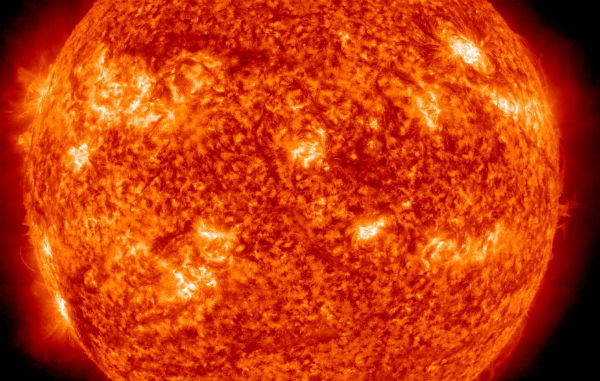
Image credit: TW
Solar activity has been at low levels for the past 24 hours. The largest solar event was a C1 flare erupting from Sunspot 1640, observed late on the January 3rd. Sunspot 1640 has developed a ‘beta-gamma-delta’ magnetic field that harbors energy for X-class solar flares. NOAA/SWPC forecasters estimate 5% chances of X-class flare and 25% chances of M-class solar flares. There are currently 12 numbered sunspot regions on the disk with two new regions rotating onto the southeast limb.
 X-Ray solar flares activity (Credit: GOES/NOAA/SWPC)
 Sun seen by SDO’s AIA 304 and STAR Active Region Map (Credit: SDO)
Solar wind flowing from coronal hole should reach Earth on January 8-9.
Follow Sun’s activity in real time via Space Weather Station

Earlier reporting
Nothing on Watchers was published in the last 24 hours. These are older articles.
- On October 22, 2017, a single flash of lightning stretched 515 miles from eastern Texas to near Kansas City, a distance that takes eight hours to drive, and nobody realized how far it had gone until scientists went back through the satellite data years later Epicenter
- CPC posts a slight risk of heavy rain from the Gulf Coast to the Northeast urban corridor November 25-29, and a moderate risk of West Coast wind and Sierra snow on November 25
- Florida's east coast faces a moderate flash flood risk Wednesday through Friday, with 4 to 8 inches of rain forecast and the St. Johns River near Cocoa already in major flood at 17.13 feet
- Cyclone Akvan to make landfall between Nellore and Visakhapatnam around noon on November 20, IMD forecasts 120-130 km/h winds gusting to 145
