
Powerful winter storm drops 30% of monthly precipitation across Kamchatka in 24 hours
A powerful winter storm struck the Kamchatka Peninsula overnight on January 13, 2026, dropping 30% of the region’s monthly precipitation in 24 hours. Small avalanches were reported in snow-covered neighborhoods across the region. The storm added to existing accumulations from previous winter storms, one of which brought the heaviest snowfall on record to Moscow between January 8 and 9.
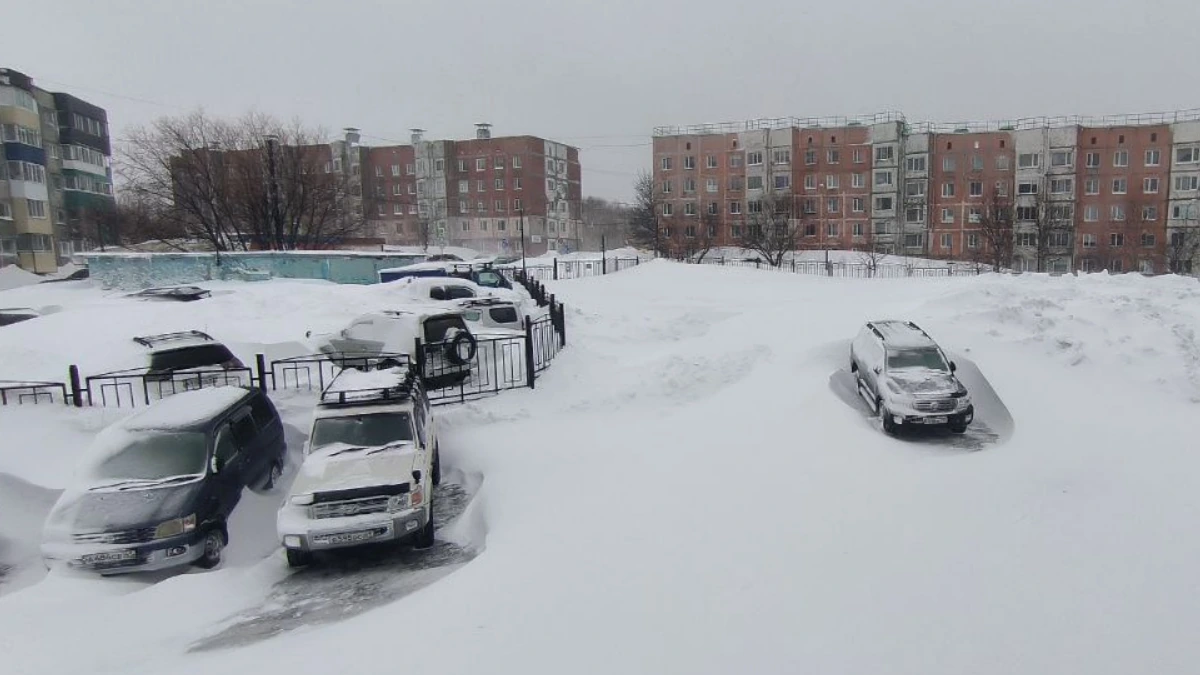
Heavy snowfall in Petropavlovsk-Kamchatsky on January 13, 2026. Credit: PKGO
The city of Petropavlovsk-Kamchatsky and the town of Vilyuchinsk on the southeastern tip of the peninsula were hit hardest, with 39 mm (1.5 inches) of precipitation recorded in less than 24 hours between January 12 and 13, according to the Emergency Situations Ministry.
The region received about 30% of its monthly precipitation in 24 hours through January 13, as wind gusts reached 180 km/h (112 mph). In some areas, snow heights reportedly reached the second floors of homes or higher.
The storm created blizzards and extremely difficult road conditions, with residents and traffic police officers pulling skidding vehicles out of snow traps on the roads.
The winter of 2025–2026 in Kamchatka has been abnormally snowy, with at least five storms having struck the peninsula since mid-November. Southern Kamchatka recorded over 300% of the monthly precipitation norm during December.
The heavy snow on January 13 was triggered by a storm system in the Sea of Okhotsk that reached the peninsula, according to Kamchatgidromet.
The region, particularly Vladivostok, has been battling the aftermath of what forecasters described as the heaviest snowfall in the past 11 years for the third day in a row, reported TASS.
For two days, Vladivostok has been paralyzed by 10-point traffic jams in the mornings and evenings. Road equipment and crews are working around the clock. Mayor Konstantin Shestakov stated that it could take up to five days to fully clear Vladivostok’s roads and sidewalks.
The mayor’s office announced school closures through the end of the week, effectively extending children’s New Year holidays. Standard buses are unable to navigate the roads, prompting authorities to deploy multiple high-clearance off-road trucks to ferry residents along main city arteries.
Governor Vladimir Solodov said authorities had managed to maintain heating and electricity in most areas despite pressure on the grid.
This comes just days after one of the worst snowstorms on record hit Moscow on January 9, dropping about 42% of the monthly average precipitation between January 8 and 9. Russia’s Hydrometeorological Center said the January 9 snowfall ranked among the five heaviest in Moscow’s 146 years of weather records.
“Moscow’s main weather station at the Exhibition Centre of the National Economy logged 22 mm (0.8 inches) of precipitation in a single day, equivalent to 42 percent of the monthly norm. Overnight, the snow eased off, with an additional 2 mm (0.08 inches) of light snow falling by morning,” Tishkovets said, reported The Business Standard.
This added to the accumulations from past storms that have brought heavy snow across the region since November 2025, pushing snow depth in Moscow over 65 cm (26 inches) on January 9.
Moscow’s Sheremetyevo International Airport reported that over 1 million m3 (35 million feet3) of snow had been cleared from its premises in the past 24 hours.
78 flights at Moscow’s four major airports had been delayed by more than two hours, while 35 others were canceled, Russia’s Ministry of Transport said.
Moscow Railway estimated that around 70 000 m3 (24 million feet3) of snow had been removed from the city’s railway infrastructure over the past 24 hours.

I am an Assistant Editor and Severe Weather & Science Journalist at The Watchers, specializing in real-time severe weather coverage, geophysical event reporting, and research-driven scientific analysis. You can reach me at rishav(at)watchers(.)news.

Commenting rules and guidelines
We value the thoughts and opinions of our readers and welcome healthy discussions on our website. In order to maintain a respectful and positive community, we ask that all commenters follow these rules.