
Explosive eruption at Sheveluch sends ash to 12 km (39 400 feet), Red aviation code issued, Russia
Sheveluch volcano on Russia’s Kamchatka Peninsula produced an explosive eruption at 08:00 UTC on June 6, 2026, sending ash to about 12 km (39 400 feet) above sea level and triggering a Red aviation color code.
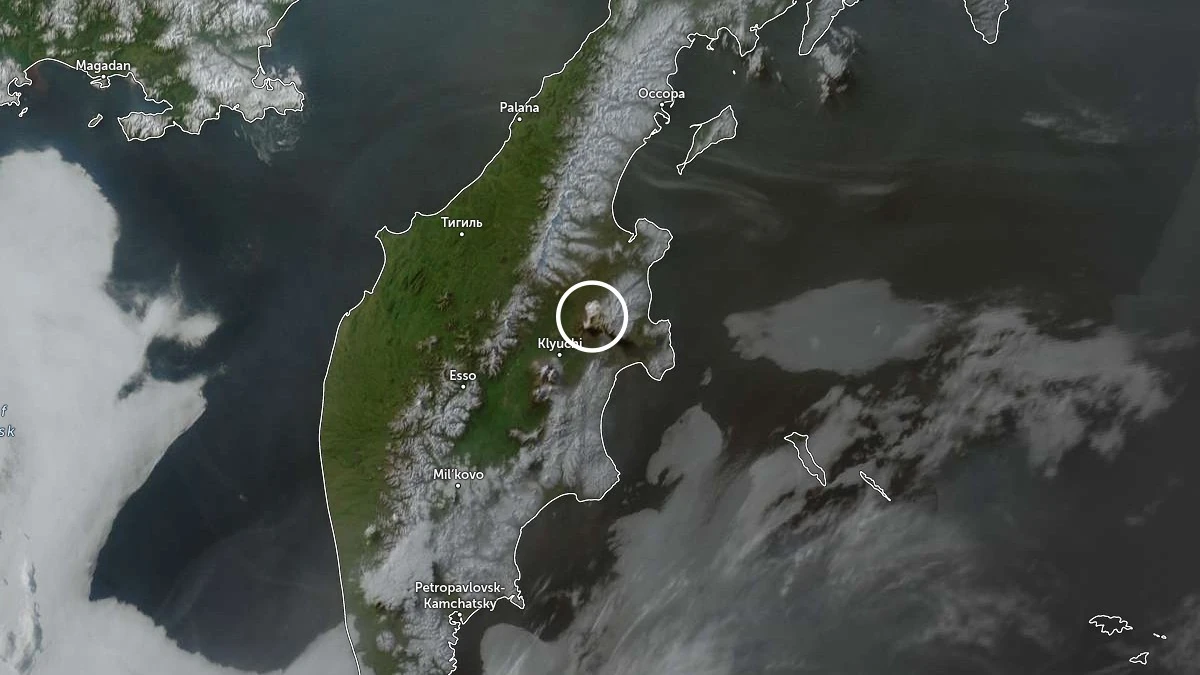
Satellite image of ash cloud rising over Sheveluch volcano, Russia at 08:30 UTC on June 6, 2026. Credit: JMA/Himawari-9, Zoom Earth, The Watchers
The Kamchatka Volcanic Eruption Response Team (KVERT) issued a Volcanic Activity Notice at 08:17 UTC, increasing the Aviation Color Code for Sheveluch from Orange to Red. The observatory reported that the explosive-extrusive eruption continued, accompanied by powerful gas-and-steam activity, while a new lava block continued to grow in the northern sector of the lava dome.
Tokyo VAAC reported ash rising to about 12.2 km (40 000 feet), at 08:00 UTC. Satellite observations showed the ash cloud drifting east of the volcano, while KVERT reported the ash plume about 10 km (6 miles) east of Sheveluch at 08:15 UTC.
In a subsequent notice issued at 09:05 UTC, KVERT maintained the Red aviation color code and reported volcanic cloud height at 10 km (32 800 feet) above sea level. The agency said ash had moved about 50 km (31 miles) northeast of the volcano based on Himawari-9 satellite data.
🌋 One of the world’s most dangerous volcanoes has erupted, sending a 12-kilometer ash plume into the sky
— NEXTA (@nexta_tv) June 6, 2026
The Shiveluch volcano in Russia’s Kamchatka region has entered a new phase of activity, prompting authorities to issue a red aviation alert.
The ash cloud has stretched for… pic.twitter.com/3OKH2ReqVF
According to KVERT, ash explosions to 12 km (39 400 feet) above sea level could occur at any time, and ongoing activity could affect international and low-flying aircraft.
Sheveluch is one of Kamchatka’s most active volcanoes and has produced repeated ash-rich explosive episodes capable of disrupting aviation across the North Pacific region.
References:
1 Volcanic activity notices for Sheveluch – KVERT – June 6, 2026

Teo Blašković founded The Watchers in 2011 and edited it until 2026, covering seismic and volcanic activity, extreme weather, space weather and near-Earth objects. Articles on this page are his archive.
Published in the last 24 hours
- The Leonid meteor shower peaks on the night of November 17, exactly 60 years after the 1966 storm, when some observers reported meteors falling at up to 40 a second, though this year’s show should be closer to 15 an hour
- When Arctic air reached South Florida in January 2020, Miami fell to 40°F and the National Weather Service warned residents to watch for cold-stunned iguanas dropping out of the trees Epicenter
- In May 2024, the strongest solar storm in 20 years put northern lights over the southern US, and across the Plains, GPS-guided tractors built to plant within an inch drifted about 10 feet off their rows Epicenter
- In 1943, a flight instructor in Texas flew a two-seat training plane into the eye of a hurricane because he was curious, then landed and took the base weatherman up for a second pass Epicenter
