
Tropical Storm Cosme strengthens off the coast of Mexico
Tropical Storm Cosme formed off the southern coast of Mexico on Sunday, June 8, 2025, and is forecast to continue strengthening to near hurricane strength on Monday, June 9.
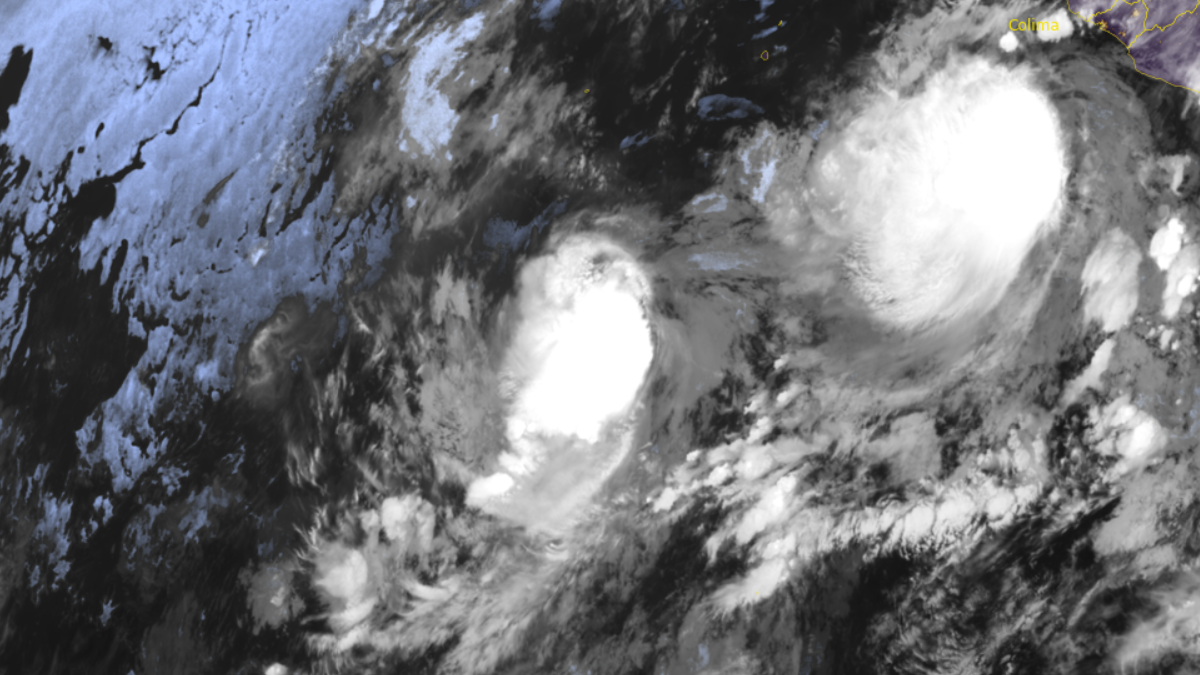
Satellite image of Tropical Storm Cosme at 09:20 UTC on Monday, June 9, 2025. Credit: NOAA/GOES-East, RAMMB/CIRA, The Watchers
Cosme continued to strengthen following formation, with 10-minute maximum sustained winds reaching 80 km/h (50 mph) by 09:00 UTC on Monday, June 9.
At the time, the cyclone was located roughly 1 014 km (630 miles) south-southwest of Baja California. It was moving west-northwest at 15 km/h (9 mph). The system’s minimum central pressure was estimated at 999 hPa, and its tropical-storm-force winds extended outward up to 72 km (45 miles) from the center.
Cosme is forecast to continue moving west-northwestward through Monday night.
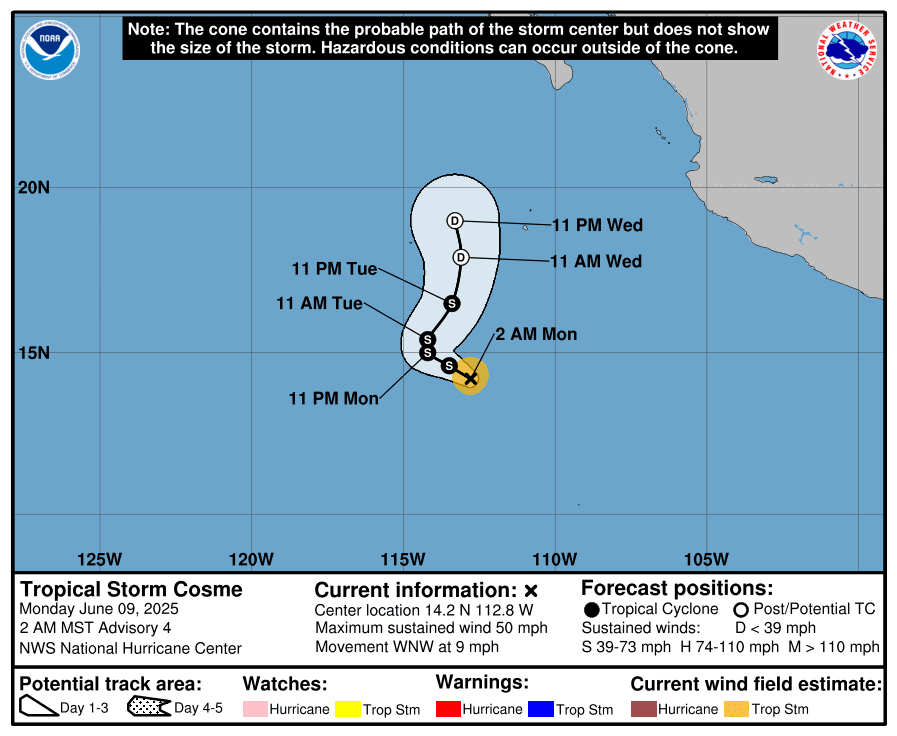
Cosme will continue strengthening to near hurricane strength late on Monday. However, it is forecast to weaken rapidly late on Tuesday, June 10, or early Wednesday, June 11.

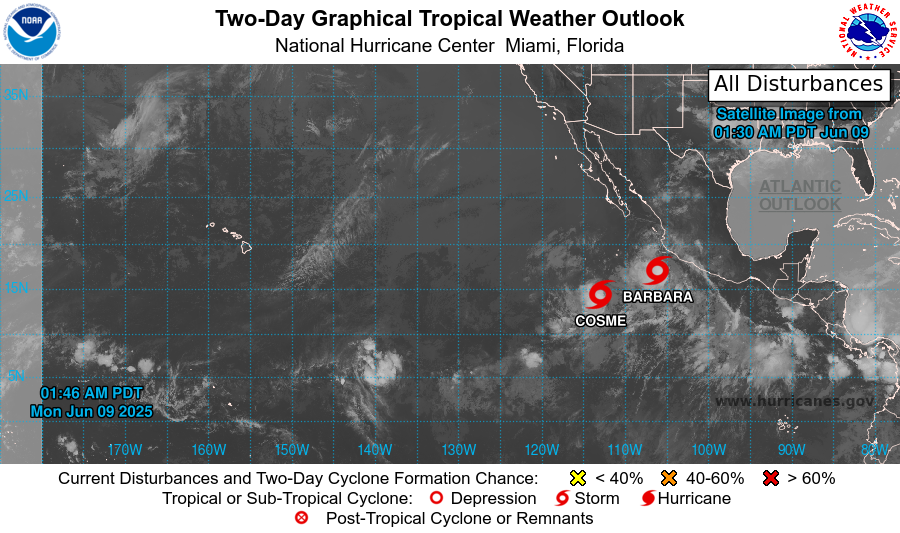
Cosme is swirling close to Tropical Storm Barbara, which also formed on June 8, west-southwest of Mexico. While Cosme will soon dissipate, Barbara is forecast to become the first hurricane of the 2025 eastern Pacific hurricane season today, potentially bringing heavy rainfall to coastal areas of Guerrero, Michoacán, Colima, and Jalisco.


Rishav Kothari is Editor-in-Chief of The Watchers, where he runs the newsroom and covers earthquakes, volcanoes, severe weather and space weather.
Published in the last 24 hours
- In September 1859, a solar storm lit up the night sky so brightly that gold miners in the Rocky Mountains woke up after midnight and started cooking breakfast, convinced the aurora glowing over their camp was the sunrise Epicenter
- A patch of warm Pacific water that could become the strongest El Niño in more than 70 years sits thousands of miles from any American town, yet it is already the main reason NOAA expects a wetter winter across the South and a milder one across the North
- A 19-year-old Nebraska teacher reportedly tied her pupils together with twine and led them to safety through a blizzard in January 1888 Epicenter
