
Strong eruption at Popocatepetl volcano, Mexico

Image credit: CENAPRED
A strong eruption took place at Mexico's Popocatepetl volcano at 03:38 UTC on March 19, 2019 (21:38 local time, March 18), ejecting a column of water vapor, gas and ash up to 4 km (13 123 feet).
The eruption also threw incandescent material 2.5 km (1.5 miles) from the crater of the volcano and caused fires. Ashfall was forecast in the towns near the eastern sector of the volcano.
Over the past 24 hours, Popocatepetl volcano monitoring systems detected 117 low-intensity exhalations accompanied by the emission of water vapor, gas and sometimes slight amounts of ash. In addition, the network recorded 139 minutes of harmonic tremor of low amplitude, CENAPRED said in their daily report issued 17:00 UTC, March 19.


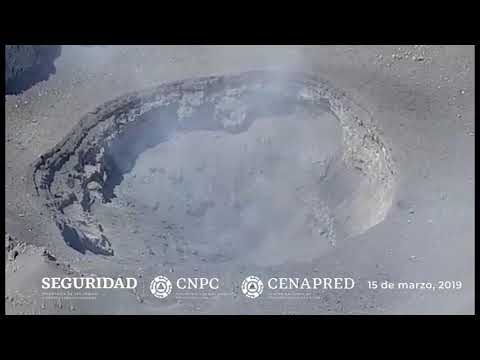
March 15th overflight confirmed that the lava dome 82 has been totally destroyed during March 13 and 14 explosions. The internal crater remains 300 m (984 feet) wide and 130 m (426 feet) deep.
Similar eruptive activity was observed in previous eruptive episodes, particularly since February 14, 2019.

Authorities urged residents not to approach the volcano (safety radius 12 km / 7.4 miles) and be attentive to the information issued by the National Coordination of Civil Protection through its channels and official accounts.
The Alert Level remains at Yellow, Phase Two (middle level on a three-color scale). Activity expected within this scenario: explosive activity from low to intermediate scale, mild to moderate ashfall in nearby towns, the possibility of pyroclastic flows and short-range mudflows.

Teo Blašković founded The Watchers in 2011 and edited it until 2026, covering seismic and volcanic activity, extreme weather, space weather and near-Earth objects. Articles on this page are his archive.
Published in the last 24 hours
- A fog linked to about 12 000 excess deaths in London in 1952 puzzled scientists for decades, until researchers reconstructed how coal smoke formed acidic haze Epicenter
- In 2012, cameras filming a thunderstorm in western China caught ball lightning by accident, and its 1.64-second glow carried iron, silicon, and calcium from the soil it rose out of Epicenter
- Strong El Niño reinforces above-normal winter precipitation outlook across southern and eastern U.S.
- Strong M6.8 earthquake hits Kepulauan Barat Daya, Indonesia, near Timor-Leste
