
One dead after heavy rainfall floods Puebla metropolitan area, Mexico
One person died and flooding reached depths of up to 70 cm (2.3 feet) across parts of the Puebla metropolitan area on June 28, 2026, following heavy rainfall.
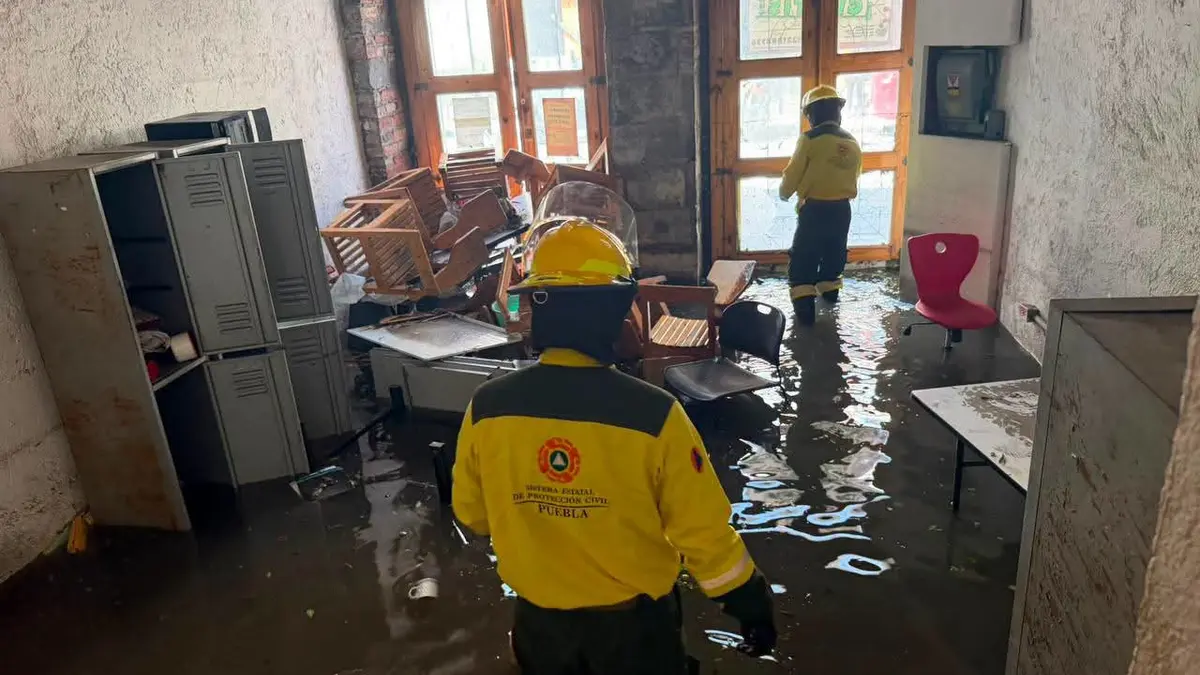
Emergency response to flash floods in central Puebla. Credit: Coordinación General de Protección Civil del Estado de Puebla
The Government of Puebla deployed personnel from the General Coordination of Civil Protection and Disaster Risk Management to municipalities across the Puebla metropolitan area on June 28 after heavy rainfall affected the region. The operation was coordinated with the Secretariat of Public Security and local authorities.
According to the coordination’s automatic weather station, 62 mm (2.4 inches) of accumulated rainfall was recorded at about 17:00 LT.
The incident caused the death of one person. State Civil Protection personnel, together with State Police and Firefighters, carried out rescue and assistance at the scene.
Flooding reached depths of up to 70 cm (2.3 feet) at different locations in Puebla city. Civil Protection personnel assisted with the preventive evacuation of elderly residents, and authorities reported no injuries during those operations.
Civil Protection personnel also assisted motorists stranded on Diagonal Defensores de la República, Boulevard Carlos Camacho Espíritu, Vía Corta a Santa Ana, and streets in Puebla’s Historic Center.
Verification tours continued across the Puebla metropolitan area as authorities assessed conditions following the rainfall. The Government of Puebla urged the public to exercise caution and report emergencies through the 911 emergency line.
References:
1 Protección Civil atiende afectaciones por lluvias en zona metropolitana – Gobierno de Puebla – June 28, 2026

I’m a science journalist and researcher at The Watchers, contributing to the Epicenter edition, where I cover peer-reviewed scientific research and emerging discoveries across Earth and space sciences. With a background in astronomy and a passion for environmental science, I’ve worked in shark and coral conservation in Fiji, conducting reef and shark-behavior research, contributing to mangrove restoration, and earning PADI Open Water and Coral Reef Certifications. I bring a blend of scientific rigor and storytelling to illuminate the discoveries shaping our planet and beyond.
Published in the last 24 hours
- Scientists directly observe how submarine landslides unfold in western Canada Epicenter
- Odisha evacuated 983,642 people before Phailin crossed near Gopalpur on 12 October 2013 with winds of 200-210 km/h gusting to 220, and 44 died, against 9,885 in the 1999 super cyclone. Cyclone Akvan crossed the same coast on 20 November 2026. Epicenter
- Lava fountains reached 1,900 feet (580 m) at Kīlauea Iki in 1959, the highest ever recorded at Kīlauea, as USGS forecasts episode 57 fountaining at Halemaʻumaʻu for November 22-26. Epicenter
- Novarupta in Alaska erupted about 3 cubic miles of magma in roughly 60 hours from 6 June 1912, 30 times Mount St. Helens in 1980, and strong northwesterly winds lifted that same loose ash on 16 November 2026, prompting an NWS SIGMET. Epicenter
