
EF-4 tornado, Havana: 1 238 affected homes, 4 people killed and 195 injured, Cuba

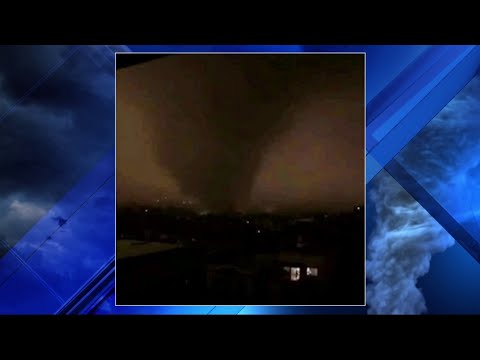
Image credit: Havana tornado January 27, 2019
The tornado that hit Cuba's capital city, Havana on January 27, 2019, had wind speeds of 300 km/h (186 mph) and was rated EF-4 on the Enhanced Fujita Scale. Four people were killed and 195 injured.
The tornado touched down between 20:30 and 21:00 local time, and was on the ground for 16 minutes.
Its width was initially 500 m (546 yards) but then it increased to 1 000 m (1 093 yards) with a length of 11.5 km (7.1 miles).
It moved ashore from the NE, crossing the municipalities of Cerro, 10th October, Guanabacoa, San Miguel del Padron and Regla. This is where most of the material damage from the storm and tornado is concentrated.
In addition, parts of these areas are still without basic services such as electricity, water, butane gas and telephony.
CUBA | Intenso tornado destruye varias zonas de La Habana. Se reportan decenas de heridos y la cifra de muertos aún no ha sido confirmada. #Luyanó #Cuba pic.twitter.com/dyT0nQPNZr
— Yusnaby Pérez (@Yusnaby) January 28, 2019
A man looks at a car hit by a post after a #tornado ripped through a neighborhood in #Havana, #Cuba. pic.twitter.com/iJpdnfVQ2i
— Hans Solo (@thandojo) January 30, 2019
#CUBA: It's hard to see all the damage in #Regla, a town across the bay from #Havana. Even more heartbreaking are the lives lost. A woman tell us she lost her 80-year old father when his home collapsed during the #tornado. @WPLGLocal10 #TornadoEnLaHabana pic.twitter.com/MTqevE0OwI
— Hatzel Vela (@HatzelVelaWPLG) January 29, 2019
Strongest #tornado in 8 decades hits #Cuba; 3 dead, 172 hurthttps://t.co/zwciqGLwaC pic.twitter.com/hCn21wx4ts
— Emirates 24|7 (@Emirates247) January 29, 2019
The tornado affected a total of 1 238 homes, of which 123 were totally destroyed and 625 partially. 224 homes completely lost the roof and 124 partially. There are 46 schools, 11 health institutions, 21 daycare centers, 2 sports centers and 2 student residences affected.
An estimated 220 000 people are still affected by power outages. Full restoration is expected on January 31.
This was the strongest tornado to hit Havana since December 1940.


Teo Blašković founded The Watchers in 2011 and edited it until 2026, covering seismic and volcanic activity, extreme weather, space weather and near-Earth objects. Articles on this page are his archive.
Published in the last 24 hours
- Scientists directly observe how submarine landslides unfold in western Canada Epicenter
- Odisha evacuated 983,642 people before Phailin crossed near Gopalpur on 12 October 2013 with winds of 200-210 km/h gusting to 220, and 44 died, against 9,885 in the 1999 super cyclone. Cyclone Akvan crossed the same coast on 20 November 2026. Epicenter
- Lava fountains reached 1,900 feet (580 m) at Kīlauea Iki in 1959, the highest ever recorded at Kīlauea, as USGS forecasts episode 57 fountaining at Halemaʻumaʻu for November 22-26. Epicenter
- Novarupta in Alaska erupted about 3 cubic miles of magma in roughly 60 hours from 6 June 1912, 30 times Mount St. Helens in 1980, and strong northwesterly winds lifted that same loose ash on 16 November 2026, prompting an NWS SIGMET. Epicenter
