
Waterspout hits Havana, damaging homes and downing power lines, Cuba

Image credit: R3 Boomerang
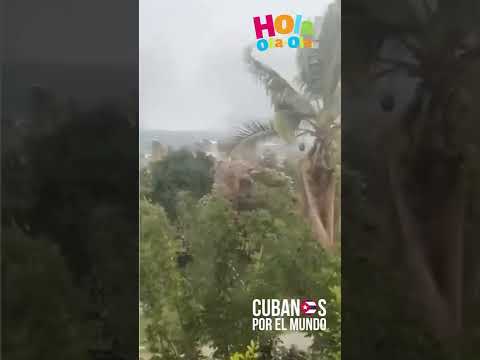
A large waterspout formed off the coast capital Havana, Cuba on February 9, 2022, and came ashore, damaging roofs of homes, and downing trees and power lines.
The waterspout hit the land between Tarara and Guanabo beaches at around 10:30 LT.
"We have set up a situation room to register all damages caused by the waterspout," community leader Beatriz Moro, said, adding that no human casualties were reported.1

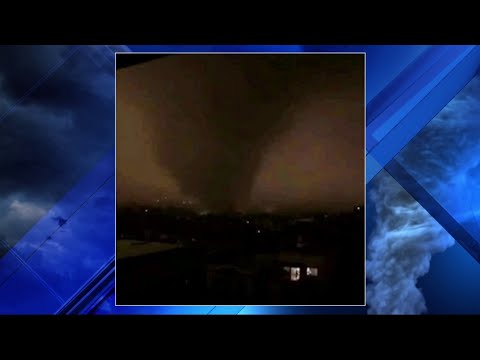
Havana was hit by a destructive EF-4 tornado on January 27, 2019 — the strongest to hit the city since December 1940. 2
The tornado touched down between 20:30 and 21:00 local time, and was on the ground for 16 minutes.
Its width was initially 500 m (546 yards) but then it increased to 1 000 m (1 093 yards) with a length of 11.5 km (7.1 miles).
It moved ashore from the NE, crossing the municipalities of Cerro, 10th October, Guanabacoa, San Miguel del Padron and Regla. This is where most of the material damage from the storm and tornado was concentrated.
Parts of these areas were left without basic services such as electricity, water, butane gas and telephony.
The tornado affected a total of 1 238 homes, of which 123 were totally destroyed and 625 partially. 224 homes completely lost the roof and 124 partially. There are 46 schools, 11 health institutions, 21 daycare centers, 2 sports centers and 2 student residences affected.
4 people were killed and 195 injured.
References:
1 Waterspout hits Havana's eastern littoral – Xinhua
2 EF-4 tornado, Havana: 1 238 affected homes, 4 people killed and 195 injured, Cuba – The Watchers

The Watchers team and our contributors bring the latest on extreme weather, earthquakes, volcanic eruptions, space weather, and all things science. We're all about making sense of the natural world and keeping you informed on what’s happening. Got a tip or a question? Hit us up using the form at newstips!
Published in the last 24 hours
- A crack up to 6 m (20 ft) wide is splitting the summit of the Hochvogel in the Allgäu Alps; 12 years of measurements now put the loose block at about 400,000 cubic metres, half the peak. Epicenter
- Hayli Gubbi in Ethiopia's Afar erupted on 23 November 2025, its first historically documented eruption; a year later scientists have traced it to magma from Erta Ale that travelled more than 30 km underground. Epicenter
- Typhoon Cempaka spun up over the western North Pacific on 7 November 2026; it is now the 32nd typhoon of the year, more than any year this century, one past the 31 counted in 2013. Epicenter
- A school bus driver in Paradise, California, drove 22 children through the 2018 Camp Fire for about five hours, and when the smoke thickened, he and two teachers tore his shirt into wet strips for them to breathe through Epicenter
