
40 SpaceX Starlink satellites lost after geomagnetic storm hits Earth
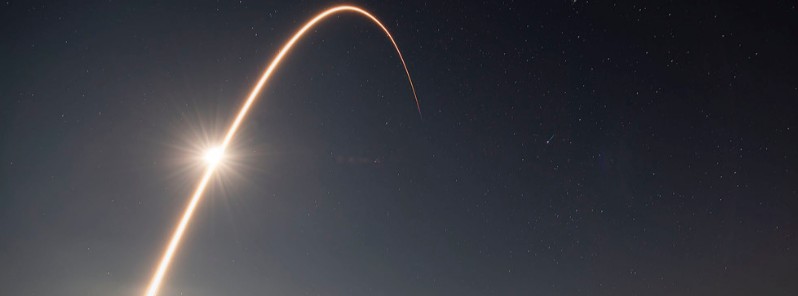
Image credit: SpaceX
A geomagnetic storm affecting Earth on Friday, February 4, 2022, significantly impacted 40 of 49 SpaceX Starlink satellites launched to low Earth orbit from Launch Complex 39A (LC-39A) at Kennedy Space Center in Florida on February 3. Preliminary analysis shows up to 40 launched satellites will reenter or already have reentered the Earth’s atmosphere.
According to SpaceX, Falcon 9’s second stage deployed the satellites into their intended orbit, with a perigee of approximately 210 km (130 miles) above Earth, and each satellite achieved controlled flight. SpaceX deploys its satellites into these lower orbits so that in the very rare case any satellite does not pass initial system checkouts it will quickly be deorbited by atmospheric drag.1
Unfortunately, the satellites were significantly impacted by a geomagnetic storm on Friday.
"These storms cause the atmosphere to warm and atmospheric density at our low deployment altitudes to increase. In fact, onboard GPS suggests the escalation speed and severity of the storm caused atmospheric drag to increase up to 50% higher than during previous launches," the company said.
The Starlink team commanded the satellites into a safe-mode where they would fly edge-on (like a sheet of paper) to minimize drag – to effectively 'take cover from the storm' – and continued to work closely with the Space Force’s 18th Space Control Squadron and LeoLabs to provide updates on the satellites based on ground radars.
Their preliminary analysis shows the increased drag at the low altitudes prevented the satellites from leaving safe-mode to begin orbit raising maneuvers, and up to 40 of the 49 launched websites satellites will reenter or already have reentered the Earth’s atmosphere.
"The deorbiting satellites pose zero collision risk with other satellites and by design demise upon atmospheric reentry – meaning no orbital debris is created and no satellite parts hit the ground."
The geomagnetic storm that hit Earth was only a minor G1.
"It was not a major space weather event," said Dr. Tony Phillips of SpaceWeather.com.2
"In fact, the weak impact did not at first spark any remarkable geomagnetic activity. However, as Earth passed through the CME's wake, some sputtering G1-class geomagnetic storms developed. It was one of these minor storms that caught the Starlink satellites on February 4."
The Sociedad de Astronomia del Caribe apparently caught one of the reentries over Puerto Rico on February 7:

References:
1 Geomagnetic storm and recently deployed Starlink satellites – February 8, 2022 – SpaceX
2 Geomagnetic storm brings down Starlink satellites – February 9, 2022 – SpaceWeather.com

Teo Blašković founded The Watchers in 2011 and edited it until 2026, covering seismic and volcanic activity, extreme weather, space weather and near-Earth objects. Articles on this page are his archive.
Published in the last 24 hours
- A crack up to 6 m (20 ft) wide is splitting the summit of the Hochvogel in the Allgäu Alps; 12 years of measurements now put the loose block at about 400,000 cubic metres, half the peak. Epicenter
- Hayli Gubbi in Ethiopia's Afar erupted on 23 November 2025, its first historically documented eruption; a year later scientists have traced it to magma from Erta Ale that travelled more than 30 km underground. Epicenter
- Typhoon Cempaka spun up over the western North Pacific on 7 November 2026; it is now the 32nd typhoon of the year, more than any year this century, one past the 31 counted in 2013. Epicenter
- A school bus driver in Paradise, California, drove 22 children through the 2018 Camp Fire for about five hours, and when the smoke thickened, he and two teachers tore his shirt into wet strips for them to breathe through Epicenter

Hey Keiran…
I couldn’t find anything about battery fires in Feb 2022.
There were two megapack fires last year in Australia, one in July and one in September. 300Mw and 45Mw respectively.
Could you post a link to the Feb fires you relate to?
Thanks.
Thank You for trying to wake up a SLEEPING WORLD?
Skynet fail. Slow clap for Elon.
Mars is going to be a graveyard.
Did the same storm ignite two caches of Tesla batteries in Melbourne?
Similar timing.