
Major X6.3 solar flare erupts from Region 3590

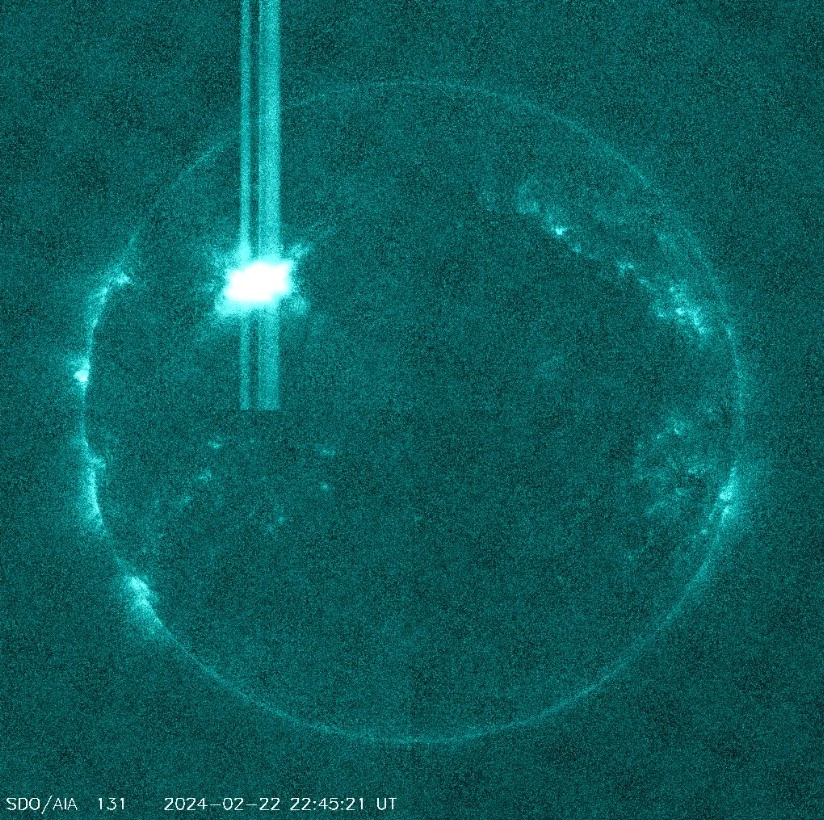
Image credit: NASA SDO/AIA 131, The Watchers
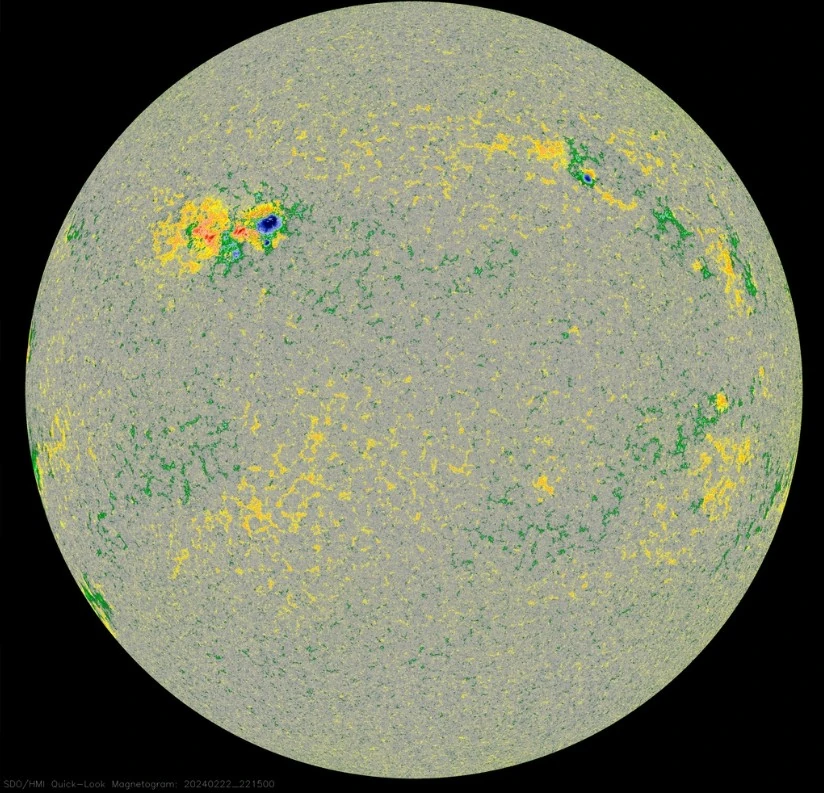
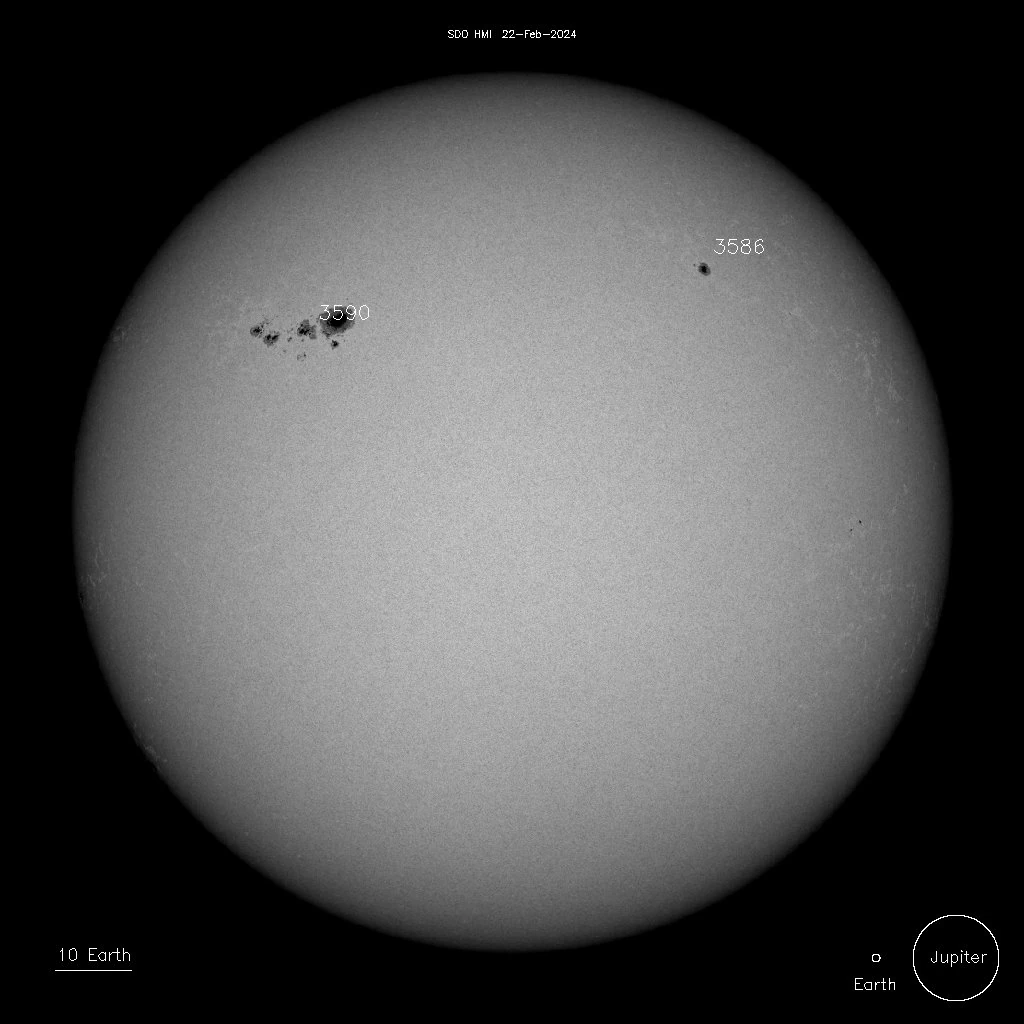
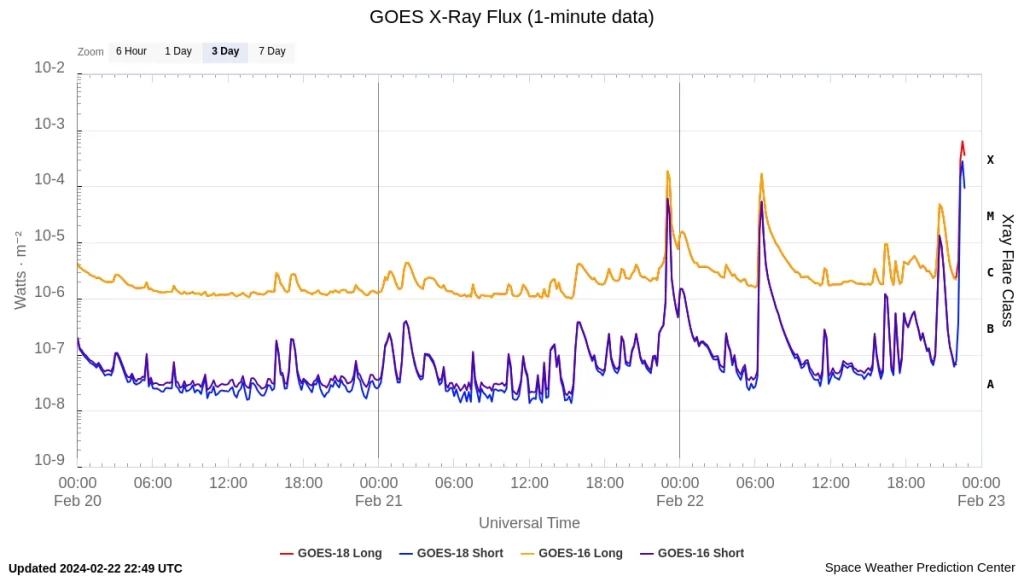
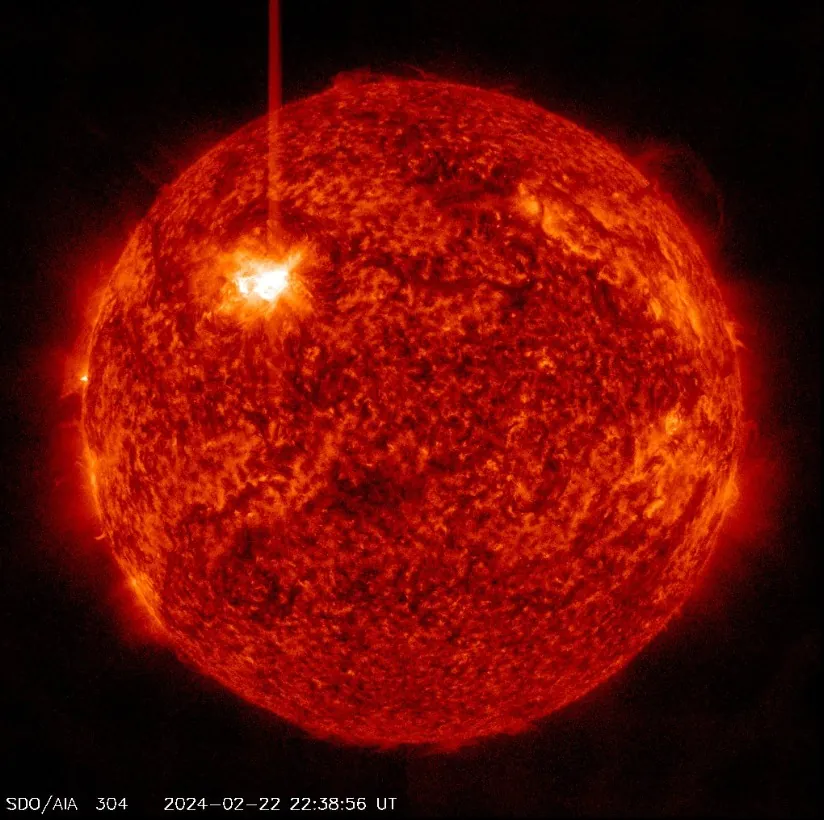
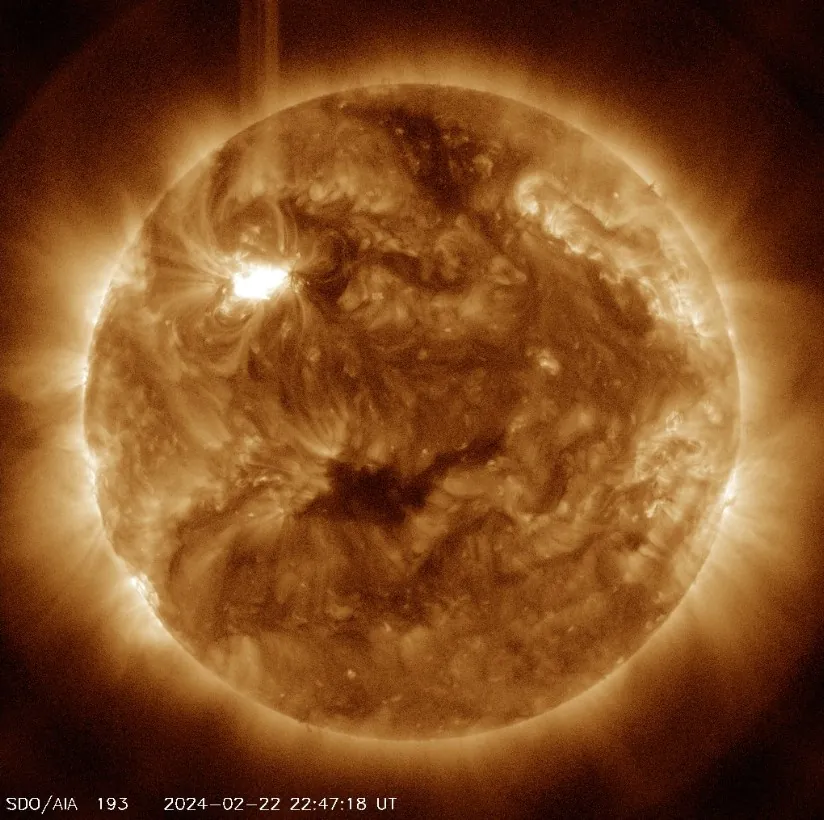
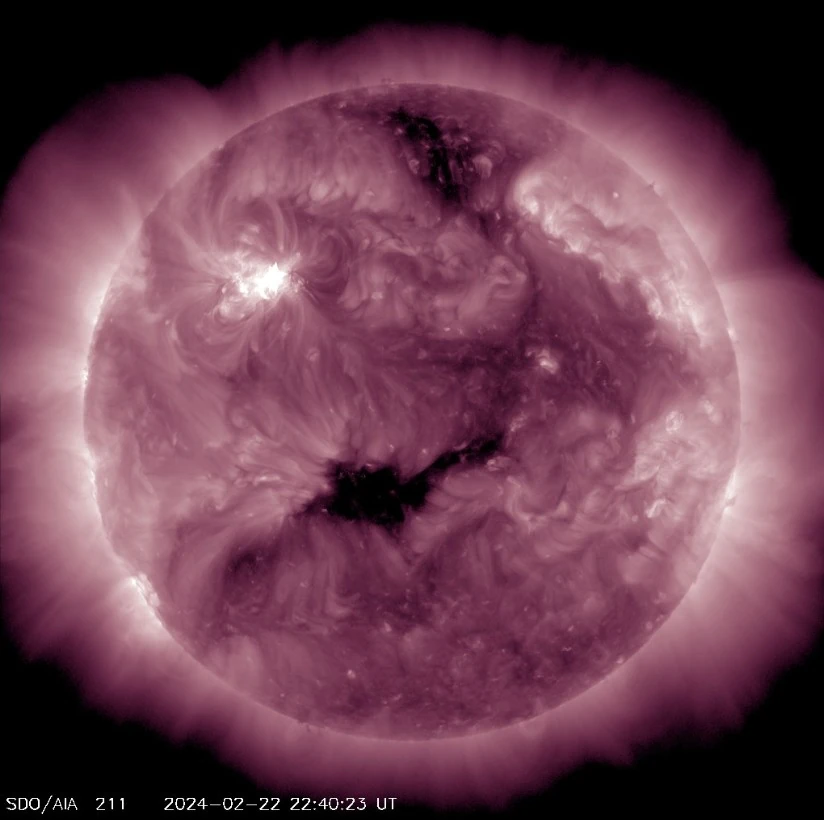
A major X6.3 solar flare erupted from Active Region 3590 at 22:34 UTC on February 22, 2024. The event started at 22:08 UTC and ended at 22:43.
This is now the second X-class solar flare of the day (UTC), the third in 24 hours, the strongest solar flare of Solar Cycle 25, and the 26th strongest since 1996.
It follows X1.8 at 23:07 UTC on February 21 and X1.7 at 06:32 UTC on February 22, 2024.
A 10cm Radio Burst lasting 11 minutes and with peak flux of 240 sfu was associated with the event. A 10cm radio burst indicates that the electromagnetic burst associated with a solar flare at the 10cm wavelength was double or greater than the initial 10cm radio background. This can be indicative of significant radio noise in association with a solar flare. This noise is generally short-lived but can cause interference for sensitive receivers including radar, GPS, and satellite communications.
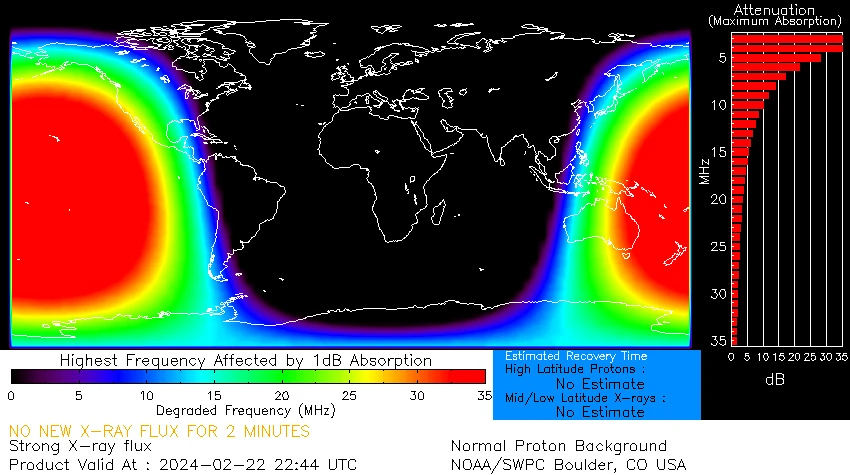
Radio frequencies were forecast to be most degraded over the Pacific Ocean at the time of the flare.

Analysis of this event is still in progress.

Teo Blašković founded The Watchers in 2011 and edited it until 2026, covering seismic and volcanic activity, extreme weather, space weather and near-Earth objects. Articles on this page are his archive.
Published in the last 24 hours
- Male toads abandoned a pond in Italy five days before a deadly 2009 earthquake, while a scientist was counting them Epicenter
- An asteroid was spotted 19 hours before it exploded over Sudan in 2008, and students picked its pieces off the desert Epicenter
- A wave up to 3 m (10 feet) high rose out of Lake Michigan on a sunny June morning in 1954 and swept fishermen off Chicago’s piers, and when a second came 10 days later, warnings had cleared the shore Epicenter
- Just 12 inches of rushing water can carry away most cars, and more than half of US flood drownings happen to people who drive into flood water Epicenter

## Comment SPAM Protection: ShieldPRO marked this comment as “Pending Moderation”. Reason: Human SPAM filter found “iphone1” in “user_agent” ##
Is anyone doing an analysis on what affects, if any these flares are doing if anything to our weather and environment? I feel that the solar winds generated by these flares should have some effect. I could be wrong but, even if I am it would be knowledge gained.
Yes. It’s being researched for a long time. This can be a good starting point, but there are plenty of other sources worth researching https://watchers.news/tag/solar-research/