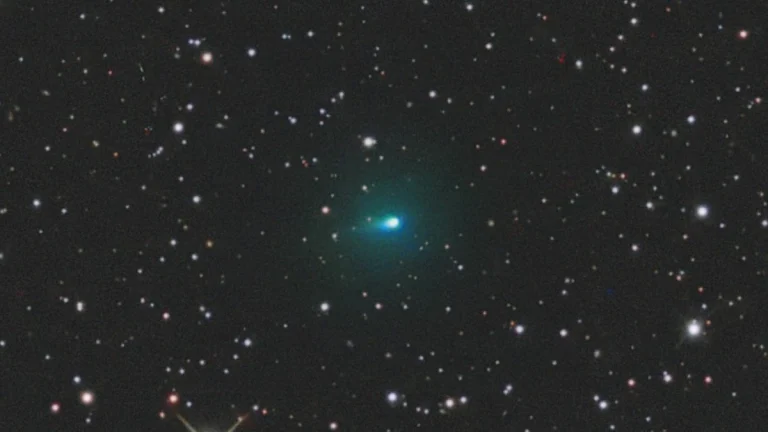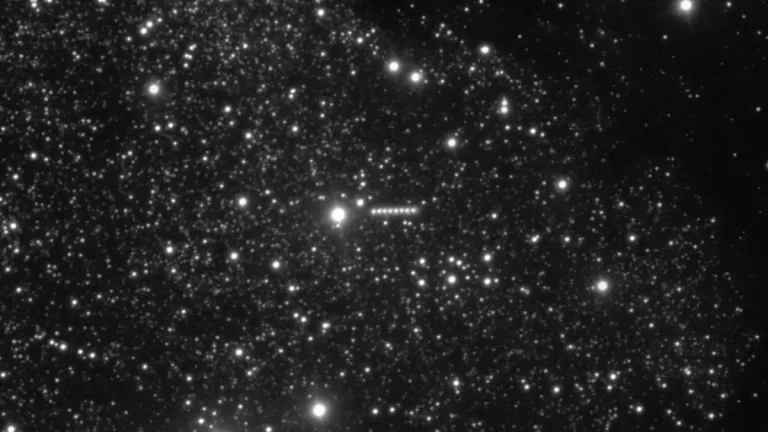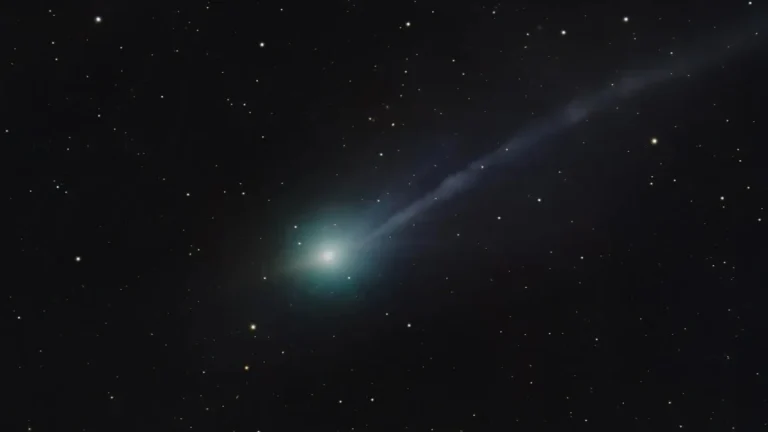
• 3I/ATLAS displays complex jet morphology, live stream scheduled for November 19

    Ground-based observations on November 16 and 17, 2025 captured multiple jets on the interstellar object 3I/ATLAS, including sunward jets and an extended anti-tail. The images were obtained from telescopes in New Mexico, USA and France. A public online observation by the Virtual Telescope Project is scheduled at 04:15 UTC on November 19, 2025.

  • 3I/ATLAS completes inbound leg of its Solar System passage on October 29

    Interstellar object 3I/ATLAS (C/2025 N1 ATLAS) will reach its perihelion distance of about 1.36 AU from the Sun on October 29, 2025, marking the midpoint of its one-time passage through the Solar System. The hyperbolic object will be unobservable from Earth during the event but will later pass within 97 million km (60 million miles) of Venus and 54 million km (34 million miles) of Jupiter on its way out of the system.

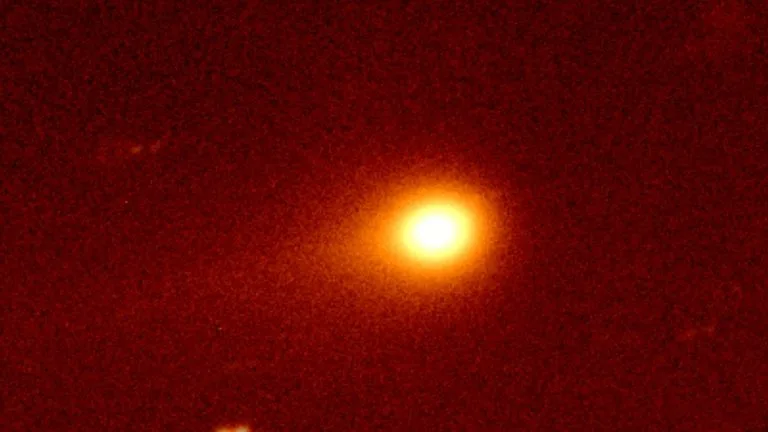
  • Unusual nickel and cyanide emissions detected around interstellar object 3I/ATLAS

    Spectroscopic observations with the Keck II telescope in Hawaii revealed distinct nickel and cyanide emissions surrounding the interstellar object 3I/ATLAS, extending several hundred kilometers from its nucleus. The data, presented by Hoogendam et al. (2025) and summarized by astrophysicist Avi Loeb, show an anomalous concentration of nickel and an absence of iron lines—behavior unseen in known comets. These results, together with earlier Hubble images showing an anti-tail oriented toward the Sun, further reinforce the object’s unusual nature.

  • CME forecast to strike interstellar Comet 3I/ATLAS on September 24-25

    A coronal mass ejection (CME) launched from the Sun on September 19 is forecast by NASA’s ENLIL model to strike interstellar Comet 3I/ATLAS on September 24 or 25, an extremely rare event that comes as the comet brightens 40-fold and prepares to disappear into the Sun’s glare.

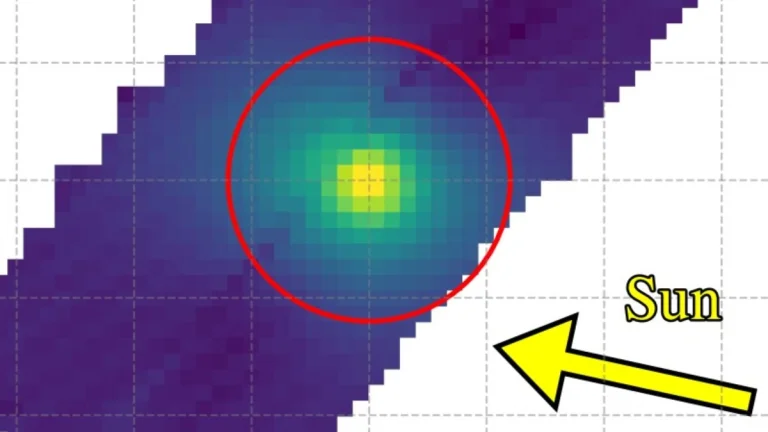
  • NASA telescopes detect unusual chemistry in interstellar comet 3I/ATLAS

    NASA released the first results of James Webb Space Telescope (JWST) observations of interstellar comet 3I/ATLAS on August 25, 2025, showing a coma dominated by carbon dioxide. The comet was observed on August 6, and complementary data from Hubble and SPHEREx confirm unusual volatile ratios.

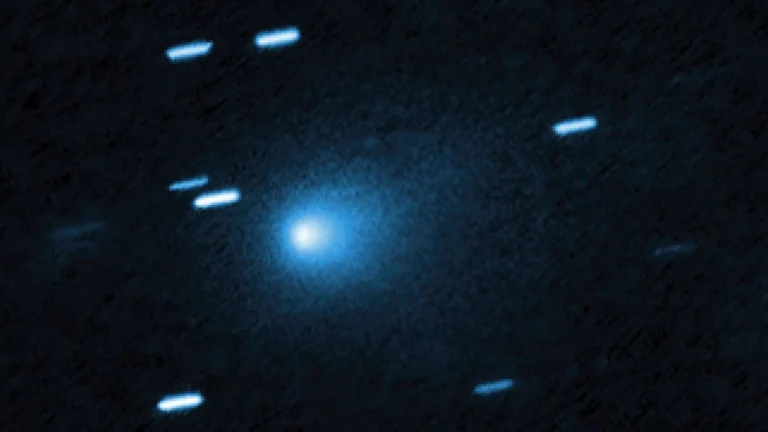
  • Ancient interstellar object 3I/ATLAS offers first glimpse into thick disk comet chemistry

    Interstellar comet 3I/ATLAS, first observed by the ATLAS survey in Chile on July 1, 2025, is the third confirmed object of its kind to enter the solar system. Analysis of its hyperbolic trajectory and inbound velocity of ~58 km/s confirms its extrasolar origin, while kinematic modeling suggests it formed in the Milky Way’s ancient thick disk, offering a rare opportunity to study early galactic comet chemistry.