
Male toads abandoned a pond in Italy five days before a deadly 2009 earthquake, while a scientist was counting them
A nightly survey of common toads at San Ruffino Lake in central Italy recorded a 96% collapse in active male numbers five days before the deadly M6.3 L’Aquila earthquake on April 6, 2009. Because the breeding study was already underway before the earthquake, researchers obtained an unusual pre-event record rather than relying on eyewitness recollections after the fact — but the observations did not establish that toads can predict earthquakes, and what caused the behavioral change remains unresolved.
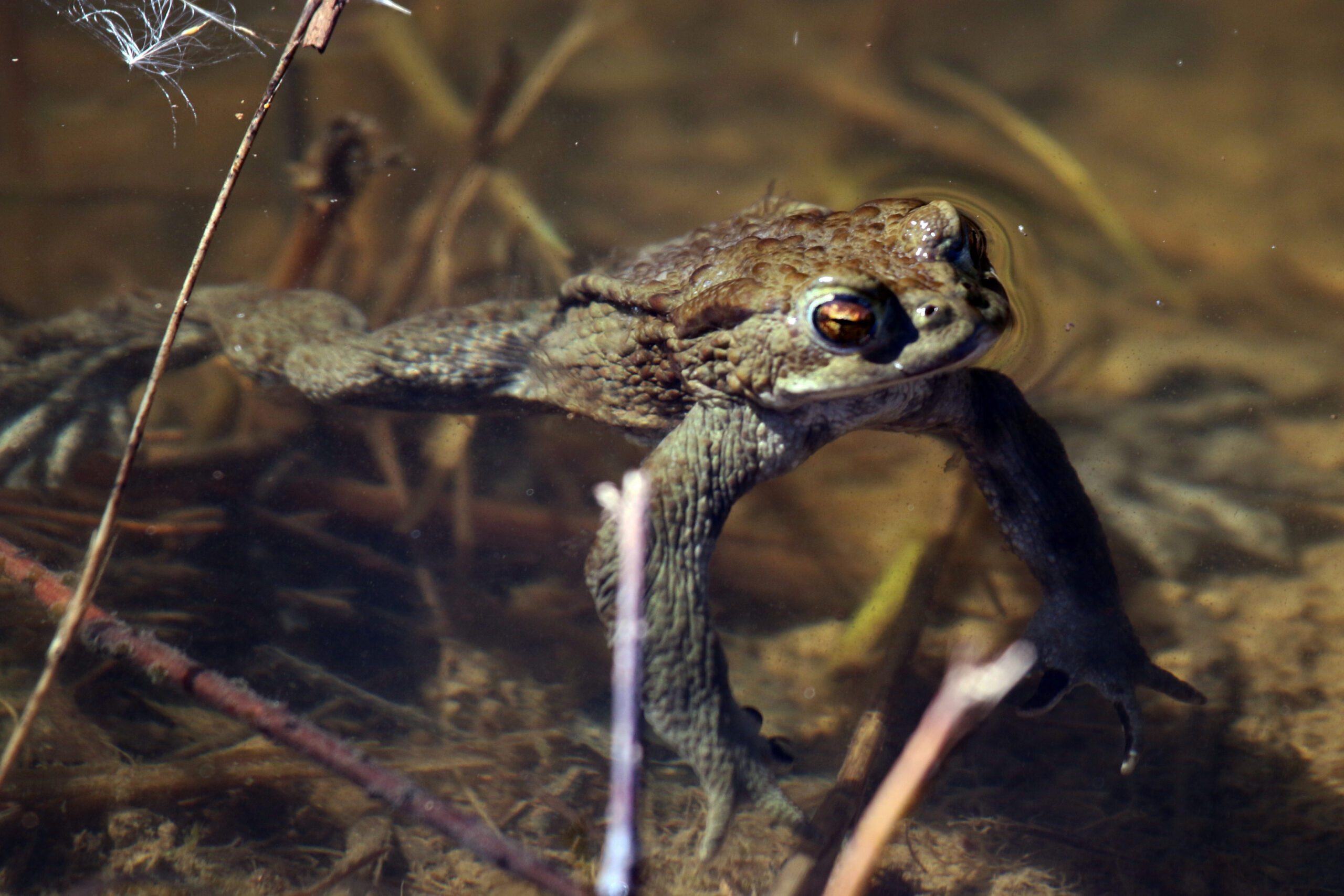
L'Aquila earthquake, common toad, Bufo bufo, earthquake precursors, animal behavior, San Ruffino Lake, earthquake prediction, groundwater chemistry, seismic activity, Italy. Credit: Charles J. Sharp / Wikimedia Commons, CC BY-SA 3.0
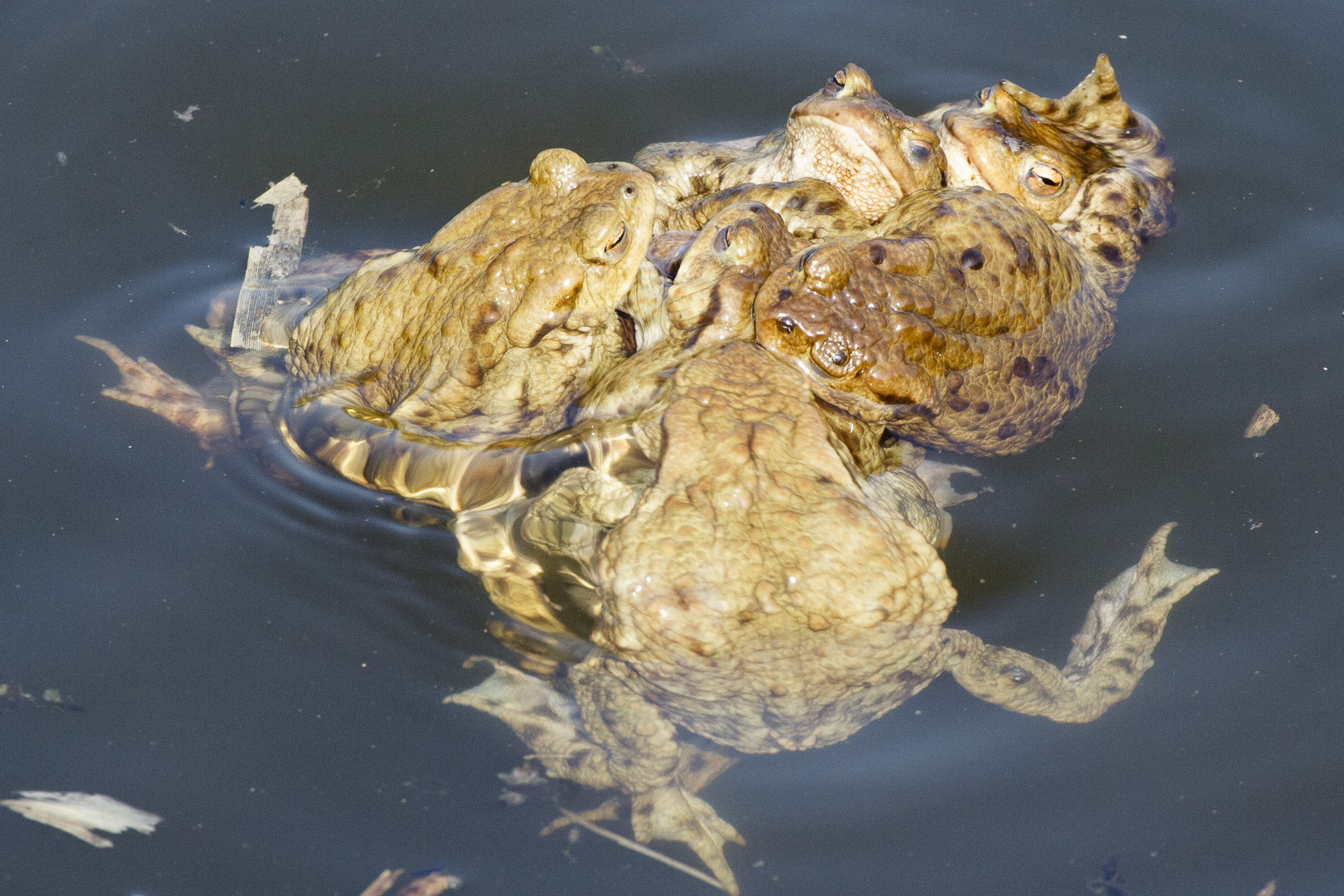
Rachel Grant was already conducting a breeding survey when the pattern changed. From March 27 to April 24, 2009, she walked a fixed 2.5 km (1.6 mile) transect at dusk each evening at a shallow breeding pool on the lakebed at San Ruffino Lake, recording male, female and amplexed, or paired, common toads (Bufo bufo).
The timing is what makes the dataset unusual. Reports that animals behave differently before earthquakes have existed for centuries, but many are reconstructed only after the earthquake has occurred. At San Ruffino, observations were already being collected before anyone knew that a destructive earthquake would follow, leaving a dated sequence covering the period before, during and after the mainshock.
The principal change began five days before the earthquake. Active male toad numbers around the breeding site fell by 96%, even though breeding had already begun. Grant and Tim Halliday described the decline as highly unusual because male common toads that reach a breeding site normally remain there in large numbers until spawning is complete.
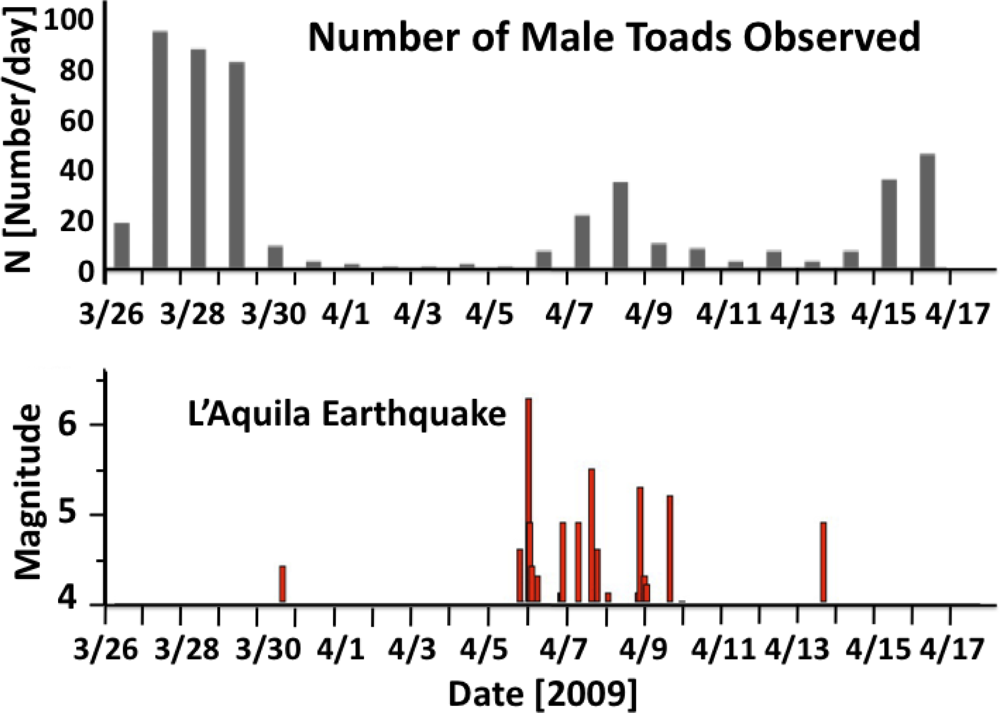
The reproductive pattern changed as well. Amplexed pairs declined to zero three days before the mainshock and remained scarce during the earthquake period defined by the researchers. Fresh spawn was observed before that interval and again afterward, while spawning activity was interrupted during the period surrounding the mainshock and major aftershocks.

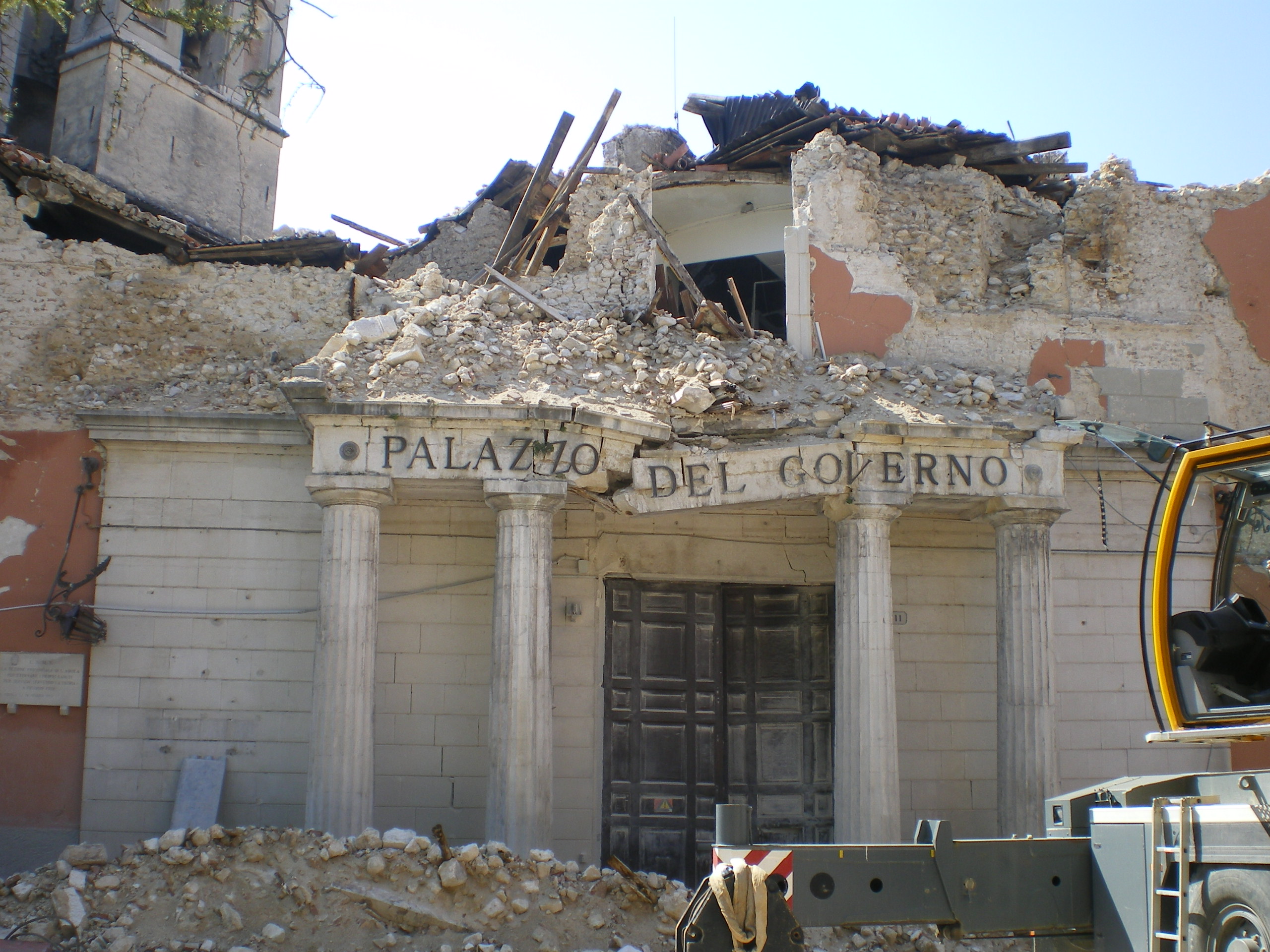
The mainshock struck at 03:32:39 local time (01:32:39 UTC) on April 6, 2009. Grant and Halliday reported a magnitude of M6.3, an epicentral depth of 8.8 km (5.5 miles) and a distance of 74.29 km (46.2 miles) between the epicenter and San Ruffino Lake. Italy’s Department of Civil Protection independently records a moment magnitude of Mw6.3 and the same 8.8 km (5.5 mile) depth.
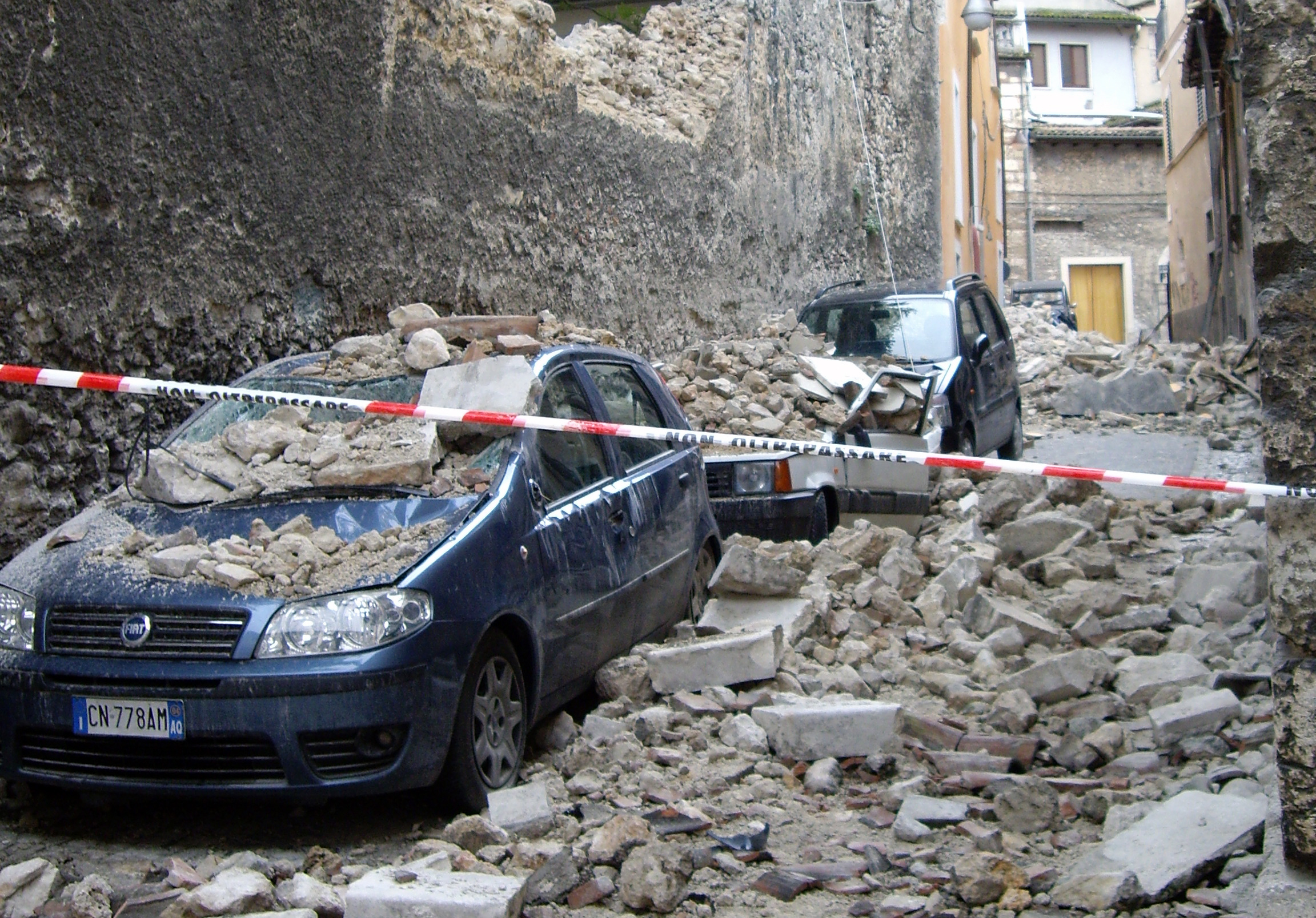
The earthquake killed 309 people and injured more than 1 500, with severe damage across L’Aquila and surrounding communities. The seismic sequence had already been underway for several months and continued after the mainshock, including earthquakes above magnitude 5 on April 7 and April 9.
Within one month of the mainshock, Italy’s national seismic network had recorded and located about 5 000 earthquakes in the sequence, including 150 above magnitude 3. The extended sequence matters when considering the animal observations because the breeding survey overlapped months of seismic activity rather than an isolated shock appearing without precursory earthquakes.
Weather was an obvious competing explanation because amphibian breeding activity responds strongly to temperature and moisture. Grant and Halliday examined maximum and minimum temperature, humidity, wind speed and rainfall records from a weather station at Servigliano, about 15 km (9.3 miles) from the breeding site. They reported no correlation between male toad numbers and any of the five weather variables tested.
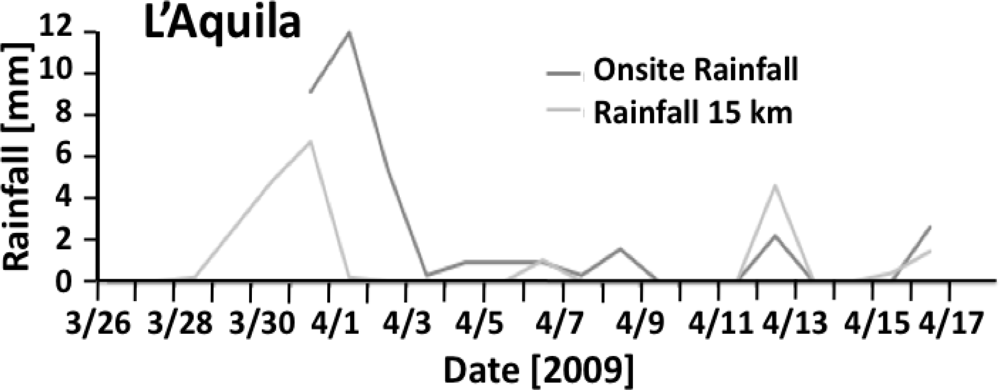
Rainfall made the observation more difficult to explain through ordinary breeding conditions. The later mechanism paper noted that the ground was highly saturated during the week before the earthquake. Damp conditions would ordinarily favor common toads because their permeable skin makes them vulnerable to water loss, yet activity at the breeding site had fallen sharply.
A M4.3 foreshock occurred on March 30 while the survey was underway. Grant and Halliday considered whether that earthquake had triggered the change, but single and paired toad numbers did not reach unusually low levels until three days later. They therefore did not identify the March 30 event as a straightforward explanation.
The five-day lead time also creates a physical problem for mechanisms associated only with the immediate arrival of earthquake shaking. Seismic P-waves reach a location shortly before stronger shaking, while other proposed cues such as rapid ground tilt operate over much shorter intervals than the behavioral change recorded at San Ruffino. The researchers therefore examined reports of environmental changes occurring farther in advance.
One comparison involved disturbances detected through very-low-frequency and low-frequency radio propagation. Radio signals sent from transmitters in Italy to a receiver in Moscow showed anomalous changes during the period before the L’Aquila earthquake. The reported ionospheric disturbances overlapped in time with the collapse in toad activity.
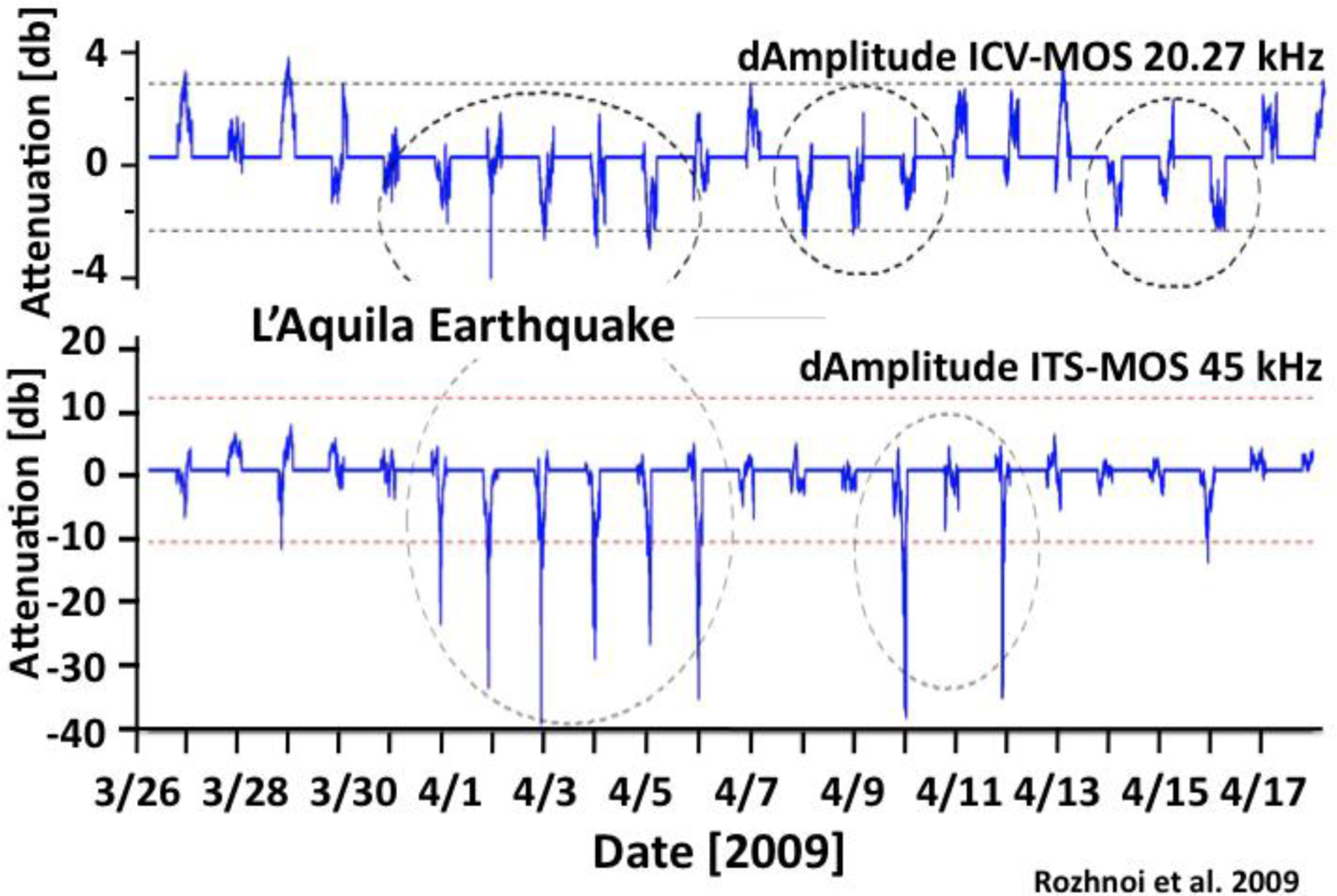
The timing did not establish a causal connection. Grant and Halliday stated that it remained unclear what environmental stimulus the toads were responding to, and the study did not show that the animals detected the ionosphere itself. The radio observations and animal counts were separate datasets whose timing could be compared, not components of a controlled experiment demonstrating that one phenomenon caused the other.
The distinction is central to any claim about earthquake prediction. A behavioral anomaly at one breeding colony before one earthquake does not demonstrate that the response reliably occurs before other earthquakes. It also does not identify a measurable signal that could be used to issue warnings. The San Ruffino study documents an unusual pre-earthquake observation, not an operational forecasting method.

Grant and colleagues returned to the mechanism question in 2011 with a broader paper examining how physical changes in stressed rock might alter the environment before some earthquakes. Their proposed mechanism begins with electronic charge carriers known as positive holes, which laboratory experiments show can become mobile when certain rocks are subjected to mechanical stress.
In the proposed process, positive holes migrate out of the stressed rock and can participate in chemical reactions when they reach a rock-water interface. The authors described reactions capable of oxidizing water to hydrogen peroxide and altering dissolved compounds or ion concentrations. Such changes would modify water chemistry rather than require an animal to sense tectonic stress directly.
The biological hypothesis follows from that chemistry. Amphibians have permeable skin and spend part of their reproductive cycle in direct contact with water, so sufficiently strong chemical changes could create an aversive environment. Under that interpretation, the San Ruffino toads would have been responding to deteriorating water conditions generated indirectly by processes in stressed rock.
The San Ruffino field data did not measure that pathway. No continuous pre-earthquake water-chemistry measurements from the breeding pool were reported in the original 2010 study, so the proposed hydrogen-peroxide, ion or organic-chemistry changes cannot be demonstrated retrospectively from the toad dataset.
The behavioral observation and the later mechanism therefore occupy different evidentiary levels. The decline in active male toads was directly recorded during an ongoing field survey. A link between that behavior and stress-induced chemical or electromagnetic processes before the earthquake remains a proposed interpretation requiring independent measurements and replication.
The case remains scientifically interesting precisely because its strongest evidence is narrower than the popular claim built around it. Grant’s survey turned an otherwise anecdotal type of report into a quantified pre-event record with nightly observations and weather controls. What it did not provide was a measured physical pathway connecting the developing earthquake with the animals.
Testing that question would require the kind of coincidence that made San Ruffino unusual to begin with, but on a much larger scale: continuous animal monitoring operating before earthquakes occur, combined with simultaneous measurements of water chemistry, ground deformation, electromagnetic conditions and seismicity. Repeated observations across independent sites and earthquakes would then be needed to determine whether the behavior contains reproducible information or was an unusual event that happened to precede one major earthquake.
References:
1 Grant, R. A., & Halliday, T. (2010). Predicting the unpredictable; evidence of pre-seismic anticipatory behaviour in the common toad. Journal of Zoology, 281(4), 263–271. DOI: 10.1111/j.1469-7998.2010.00700.x
2 Grant, R. A., Halliday, T., Balderer, W. P., Leuenberger, F., Newcomer, M., Cyr, G., & Freund, F. T. (2011). Ground water chemistry changes before major earthquakes and possible effects on animals. International Journal of Environmental Research and Public Health, 8(6), 1936–1956. DOI: 10.3390/ijerph8061936
3 The Abruzzo earthquake – Department of Civil Protection, Italy – Historical emergency record

I’m a science journalist and researcher at The Watchers, contributing to the Epicenter edition, where I cover peer-reviewed scientific research and emerging discoveries across Earth and space sciences. With a background in astronomy and a passion for environmental science, I’ve worked in shark and coral conservation in Fiji, conducting reef and shark-behavior research, contributing to mangrove restoration, and earning PADI Open Water and Coral Reef Certifications. I bring a blend of scientific rigor and storytelling to illuminate the discoveries shaping our planet and beyond.
Published in the last 24 hours
- A wave up to 3 m (10 feet) high rose out of Lake Michigan on a sunny June morning in 1954 and swept fishermen off Chicago’s piers, and when a second came 10 days later, warnings had cleared the shore Epicenter
- Just 12 inches of rushing water can carry away most cars, and more than half of US flood drownings happen to people who drive into flood water Epicenter
- People who hid under an Oklahoma highway overpass from a 1999 tornado lost fingers, ears and noses, and three people died near or under overpasses that day Epicenter
- In January 1862, California’s new governor took a rowboat to his own inauguration, after 45 days of storms had turned the Central Valley into a lake up to 300 miles long Epicenter
