
Pyroclastic density currents from Mayon volcano reach 4 km (2.5 miles), Philippines
A series of collapse-fed pyroclastic density currents descended the Mi-isi Gully at Mayon volcano, Philippines, on February 9, 2026, with the farthest runout reaching 4 km (2.5 miles) from the summit crater. The activity peaked between 10:35–11:37 local time (LT), culminating in a seven-minute event at 10:59 LT that generated ash clouds exceeding 2 km (about 6 560 feet) in height and causing ashfall across parts of Camalig and Guinobatan, Albay, during rainy conditions.
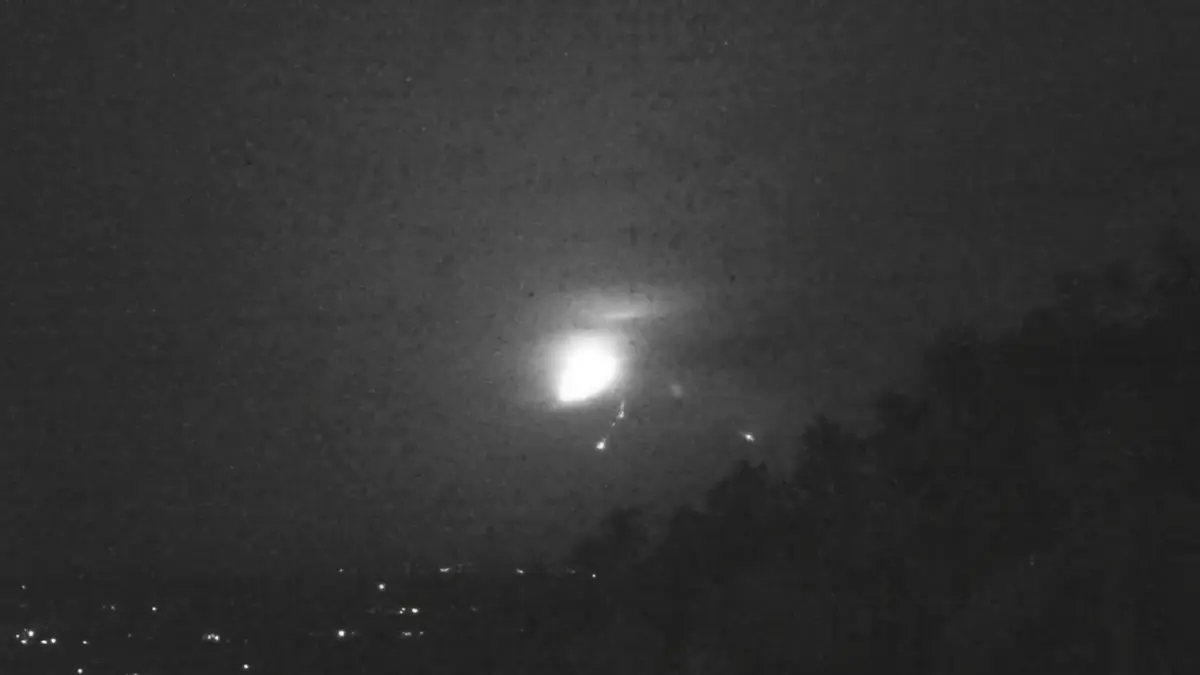
Lava effusion from the Mayon Volcano summit crater recorded at 22:18 LT February 10, 2026. Credit: PHIVOLCS
A series of large, collapse-fed pyroclastic density currents (PDCs), locally known as uson, descended the Mi-isi gully at Mayon volcano on February 9, during rainy and cloud-obscured conditions. The longest runout reached 4 km (2.5 miles) from the summit crater, marking the farthest PDC travel distance recorded so far during the ongoing 2026 eruptive episode.
The activity occurred in two distinct phases. Three major PDC events were generated between 02:30–02:44 LT on February 9, but these were largely hidden by cloud cover. Ashfall associated with this early-morning activity was later reported by residents of Tumpa, Camalig, and confirmed during routine field reconnaissance by the PHIVOLCS Quick Response Team on the western slopes of the volcano.
The main phase began at around 10:35 LT, when repeated lava-collapse events near the summit initiated a sustained sequence of major PDCs. From 10:35–11:37 LT, at least 12 successive large PDCs were recorded.
The most energetic individual event in this sequence occurred at 10:59 LT and lasted 7 minutes, according to seismic records. During this phase, PDCs travelled up to 4 km (2.5 miles) down the Mi-isi gully, the farthest runouts documented for the 2026 eruption to date.
Ash clouds generated by the late-morning PDC sequence rose to more than 2 km (about 6 560 feet) above the source area and were blown extensively westward by winds of approximately 40 km/h (25 mph). Earlier in the sequence, including the initial collapse at around 10:35 LT, ash plumes reached about 1 km (3 280 feet) in height.
While PDC-related ash plumes of this height have occurred previously at Mayon, such events have been relatively rare during the six weeks preceding February 9. Heavy and occasionally wet to trace ashfall affected numerous barangays in Camalig and Guinobatan, Albay Province.
The PDCs were generated by the collapse of lava accumulations near the summit crater and along active flow fronts. Partial observations indicate that the collapsing material consisted largely of oxidized and degassed lava, which contributed to the brownish coloration of the ash clouds.
Rockfall activity increased sharply prior to the February 9 PDC sequence, peaking at 469 events on February 8. This rise in activity preceded the eruption’s largest collapse-fed PDCs, indicating increasing mechanical instability of lava flows rather than a transition to explosive eruption.
Smaller-volume PDCs and rockfalls continued before and after the main sequence, with 52 PDC events and 396 rockfall events recorded on February 9 alone.
Mayon volcano has been in a state of magmatic eruption since January 6, 2026, characterized by persistent lava effusion from the summit crater, including effusion associated with the lava dome and active lava flows.
As of February 8, lava flows had advanced to distances of 1.3 km (0.8 miles), 1.6 km (1.0 miles), and 3.8 km (2.4 miles) along the Mi-isi, Bonga, and Basud gullies, respectively. Lava effusion had been ongoing for 34 days, and the total volume of erupted magma based on surface deposits was estimated at 22 million m3 (about 28.8 million yards3).
Monitoring data compiled by the Mayon Volcano Observatory show that from January 1 to February 9, a total of 1 690 PDCs, 9 941 rockfall events, and 1 346 volcanic earthquakes were recorded.
Seismicity during this period was dominated by low-frequency volcanic earthquakes associated with gas movement within shallow levels of the volcanic edifice. Average sulfur dioxide emissions measured 2 466 tonnes/day, with a peak of 6 569 tonnes/day recorded on February 4.
Ground deformation measurements from continuous GPS, electronic tilt, and campaign EDM surveys indicate ongoing inflation of the edifice, with extensional movement concentrated on the eastern to northeastern flanks.
Despite the intensity of the February 9 PDC activity, analysis of total seismic energy release indicates that the episode represents a brief intensification of unrest within otherwise near-steady eruptive conditions since the onset of eruption.
References:
1 MAYON VOLCANO ERUPTION UPDATE – PHIVOLCS – February 10, 2026

I’m a science journalist and researcher at The Watchers, contributing to the Epicenter edition, where I cover peer-reviewed scientific research and emerging discoveries across Earth and space sciences. With a background in astronomy and a passion for environmental science, I’ve worked in shark and coral conservation in Fiji, conducting reef and shark-behavior research, contributing to mangrove restoration, and earning PADI Open Water and Coral Reef Certifications. I bring a blend of scientific rigor and storytelling to illuminate the discoveries shaping our planet and beyond.

Commenting rules and guidelines
We value the thoughts and opinions of our readers and welcome healthy discussions on our website. In order to maintain a respectful and positive community, we ask that all commenters follow these rules.