
Slow-moving landslide damages hundreds of homes in Padasari, Central Java, Indonesia
A slow-moving landslide has damaged hundreds of homes in Padasari village, Tegal, Central Java, Indonesia, forcing large-scale evacuations since early February 2026. Local reporting indicates that ground deformation remains active, preventing residents from returning to affected areas.
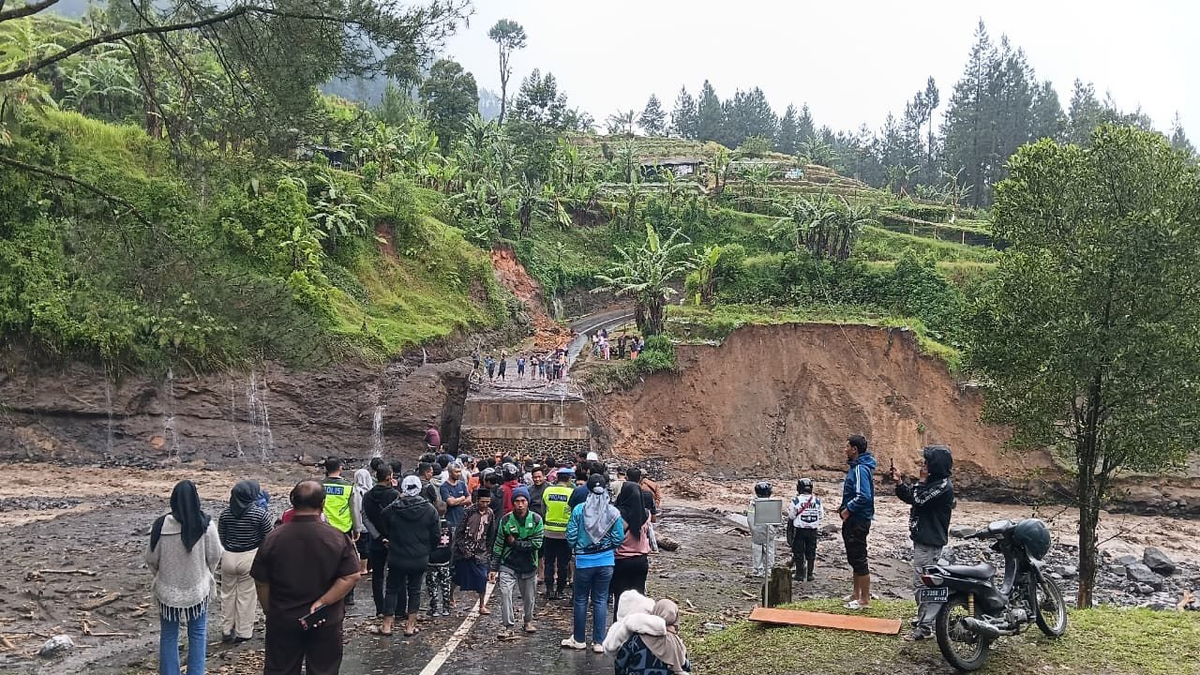
Destruction in Java, Indonesia caused by slow-moving landslide. Credit: BNPB
A slow-moving landslide has affected Padasari village since early February 2026, causing widespread damage to residential buildings and public facilities. Media reports citing village authorities and regional disaster data describe continued soil instability across several neighborhoods, with structural conditions remaining unsafe for habitation.
Ground movement was first observed around February 2, according to local reporting, and intensified over the following days. Between February 4 and February 6, soil deformation expanded to additional areas of the village, resulting in cracked and displaced road surfaces, tilted houses, and partial collapses linked to ongoing ground movement.
As of early February 2026, more than 2 400 residents have evacuated from affected areas. At least 464 houses are reported damaged, including 205 classified as heavily damaged or unsafe to enter, 174 moderately damaged, and 85 lightly damaged, based on figures cited by village leadership and reported by national media.
Local reporting indicates that more than 20 social, religious, and educational facilities have been affected. An Islamic boarding school identified in local media as Al-Adalah reportedly collapsed during the period of intensified ground movement, forcing the evacuation of its students. Several primary school buildings, including SDN Padasari 01, are reported to be unusable due to structural risk.
Evacuees are currently dispersed across multiple temporary shelter locations, including community buildings, schools, and prayer facilities in and around the affected area. Local authorities and community groups continue to coordinate sheltering and basic assistance while monitoring ongoing ground conditions.
Reports from residents and local observers indicate that ground movement continues at a slow but persistent rate, making it unsafe to re-enter damaged structures even where buildings remain partially standing. Access to the most affected zones remains limited due to the risk of further soil displacement.
References:
1 464 Rumah Rusak Akibat Tanah Gerak di Tegal, 2.460 Warga Mengungsi – detik news – February 9, 2025

I’m a science journalist and researcher at The Watchers, contributing to the Epicenter edition, where I cover peer-reviewed scientific research and emerging discoveries across Earth and space sciences. With a background in astronomy and a passion for environmental science, I’ve worked in shark and coral conservation in Fiji, conducting reef and shark-behavior research, contributing to mangrove restoration, and earning PADI Open Water and Coral Reef Certifications. I bring a blend of scientific rigor and storytelling to illuminate the discoveries shaping our planet and beyond.

Commenting rules and guidelines
We value the thoughts and opinions of our readers and welcome healthy discussions on our website. In order to maintain a respectful and positive community, we ask that all commenters follow these rules.