
Watertown drops to -38°C (-36°F) as Arctic air grips Upstate New York
An intense Arctic cold outbreak drove temperatures well below seasonal norms across Upstate New York on Sunday, February 8, 2026, with Watertown reaching −38°C (−36°F) at the airport. Several other communities matched or exceeded their lowest temperatures of the winter during the same period.
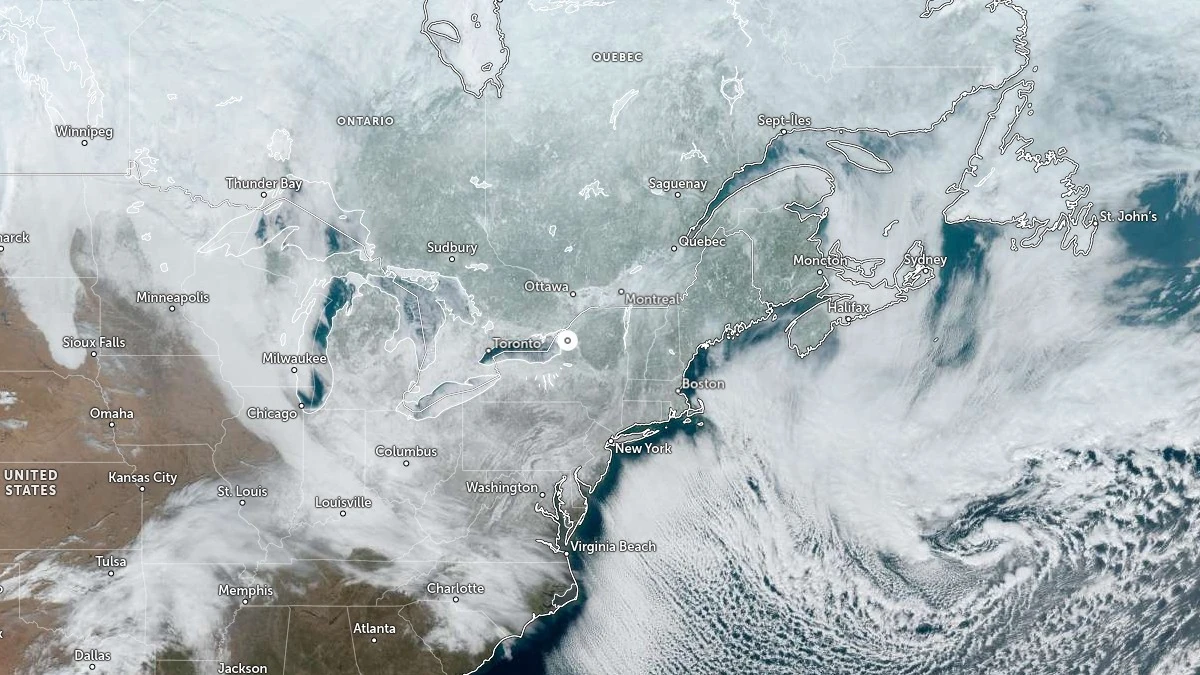
Satellite image centered over Watertown, NY at 16:50 UTC on February 8, 2026. Credit: NOAA/GOES-East, Zoom Earth, The Watchers
The city of Watertown, NY (population 24 685) recorded a minimum temperature of −38°C (−36°F) at the airport on Sunday, February 8, the lowest observed there this winter and the coldest reading at the site in nearly a decade. The value came only weeks after the airport reached −37°C (−34°F) during a previous cold episode last month.
The normal low temperature for early February in Watertown is −13°C (9°F), placing Sunday’s minimum roughly 25°C (45°F) below average.
Syracuse, located in central New York and with a population of about 148 000, dropped to −23°C (−9°F) on the same day, matching the city’s lowest temperature of the winter, which was also recorded on January 24. Normal temperatures for February 8 in Syracuse are a high of 0°C (32°F) and a low of −9°C (16°F).
Across Upstate New York, several communities matched or surpassed their coldest readings of the winter during the same Arctic outbreak. Rome fell to −27°C (−17°F), Cooperstown to −27°C (−16°F), Binghamton to −21°C (−5°F), and Buffalo to −20°C (−4°F), reflecting a broad region of subzero air extending from western to central parts of the state.
While the event did not set new all-time records, the −38°C (−36°F) measurement in Watertown placed the airport among the coldest readings observed there during recent winters.
Temperatures at this level significantly increase frostbite risk with prolonged exposure and place additional strain on vehicles, heating systems, and other infrastructure, particularly in northern communities where sustained subzero conditions occur.
Forecasts called for a gradual moderation beginning Monday and Tuesday, with daytime highs returning closer to seasonal averages across much of Upstate New York as the Arctic air mass retreated.

I'm a dedicated researcher, journalist, and editor at The Watchers. With over 20 years of experience in the media industry, I specialize in hard science news, focusing on extreme weather, seismic and volcanic activity, space weather, and astronomy, including near-Earth objects and planetary defense strategies. You can reach me at teo /at/ watchers.news.

Commenting rules and guidelines
We value the thoughts and opinions of our readers and welcome healthy discussions on our website. In order to maintain a respectful and positive community, we ask that all commenters follow these rules.