
Fourth eruptive episode at Kilauea volcano with lava fountains reaching 60 m (200 feet), Hawaii
The eruption at Kilauea volcano’s summit resumed at 09:15 LT (19:15 UTC) on January 15, 2025, with lava flowing from the 2 north vents at Halema’uma’u summit. It marks the fourth eruptive episode since December 23, 2024.

Panorama image of the north and south vents in the west portion of Kīlauea caldera are erupting lava fountains during the afternoon of January 15, 2025. Lava fountains are feeding lava flows that are moving in an eastward direction on the caldera floor. Image credit: USGS/M. Patrick
The eruption at Kilauea volcano’s summit resumed at 09:15 LT (19:15 UTC) on January 15, 2025, with lava flowing from the 2 north vents at Halema’uma’u summit. The eruption intensified by 19:50 UTC and by 19:55 UTC lava fountaining began with fountains reaching heights of 60 m (200 feet).
Approximately 10% of the summit floor is now covered in fresh lava.
The Hawaiian Volcano Observatory (HVO) confirmed that this marks the 4th episode of the summit eruption that started on December 23, 2024. The early phase of this episode progressed faster than previous ones with lower initial lava effusion rates compared to the second (3 to 4 hours) and third (2.5 days) episodes. No activity has been observed at the south vent.
HVO volcanologists observed the eruption restarting with low-level spattering giving way to sustained fountaining. The latest observations indicate rapid development compared to previous eruptive phases.
Tiltmeter readings at Uēkahuna indicate continued inflation beneath Halema’uma’u since 19:00 UTC on January 14, 2025, though signs suggest leveling off.
Seismic tremor levels increased with the onset of fountaining but remained lower than those recorded during the first 2 episodes which saw fountains exceeding 80 m (250 feet).
“If fountaining continues, it is possible that the fountain heights will increase as more gas-rich lava erupts. It is not possible to estimate how high the fountains may get or how long the fountaining will last, but prior episodes have produced fountains over 70 meters (200 feet) that last up to 24 hours,” HVO reported.
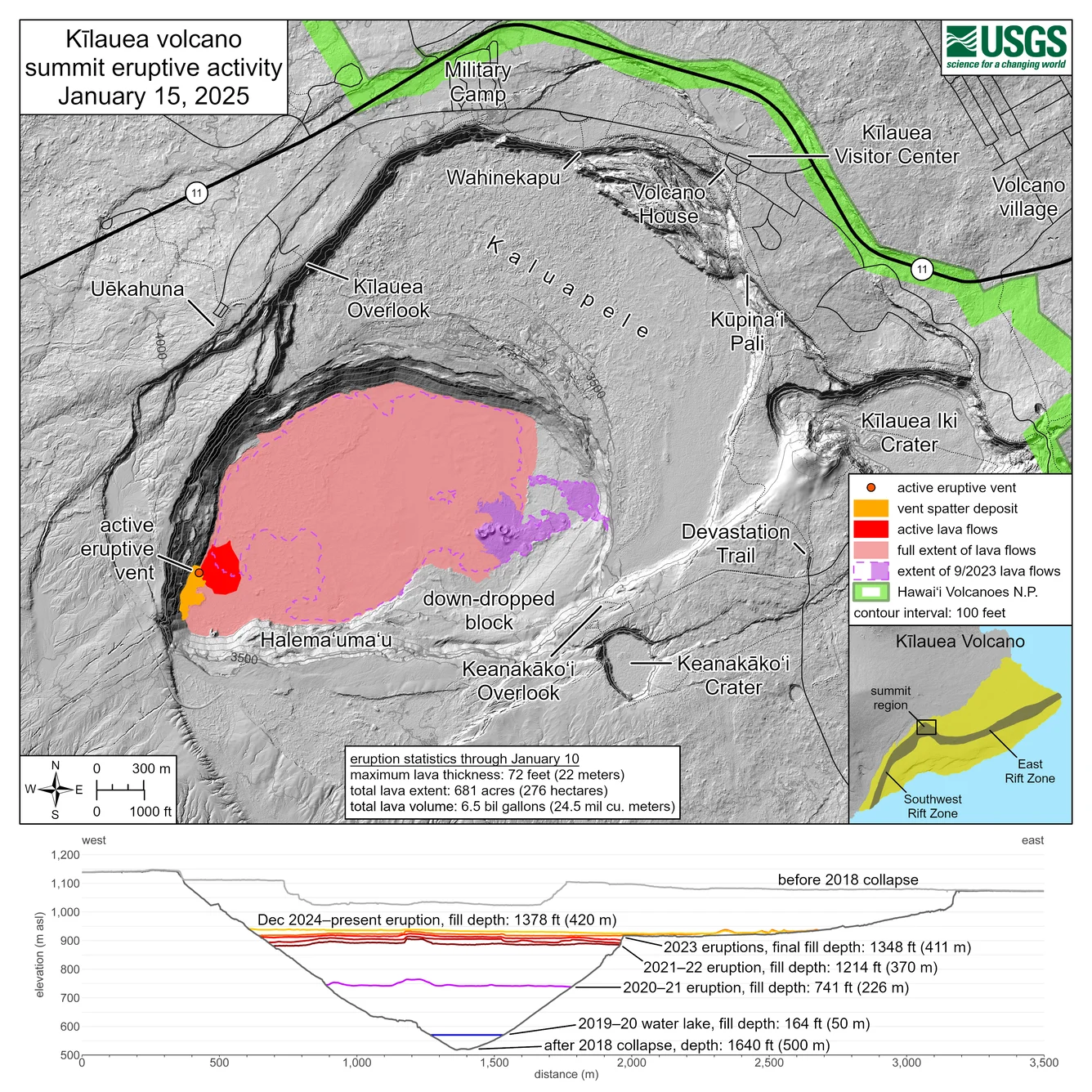
Each episode of this eruption has varied in duration with previous fountaining events lasting between 14 hours and 8 days and separated by pauses ranging from less than 24 hours to 12 days.
The current Alert Level remains at Watch and the Aviation Color Code is Orange, indicating ongoing volcanic activity with possible hazards to air travel.
Intermittent incandescence and low-level lava spattering were observed at the southwest margin of Halema’uma’u between January 8 and January 14.
On January 13, both north and south vents showed intermittent incandescence though spattering was not confirmed. The Aviation Color Code and Alert Level remained unchanged during this period.

Spattering was more active at night before dawn on January 12 when bursts of lava reached 5 to 20 m (16 to 66 feet). Monitoring instruments recorded summit floor subsidence followed by magma refilling at intervals of 60 to 90 minutes.
On January 11, minor spattering was reported at the north vent though it was not visible on webcams.
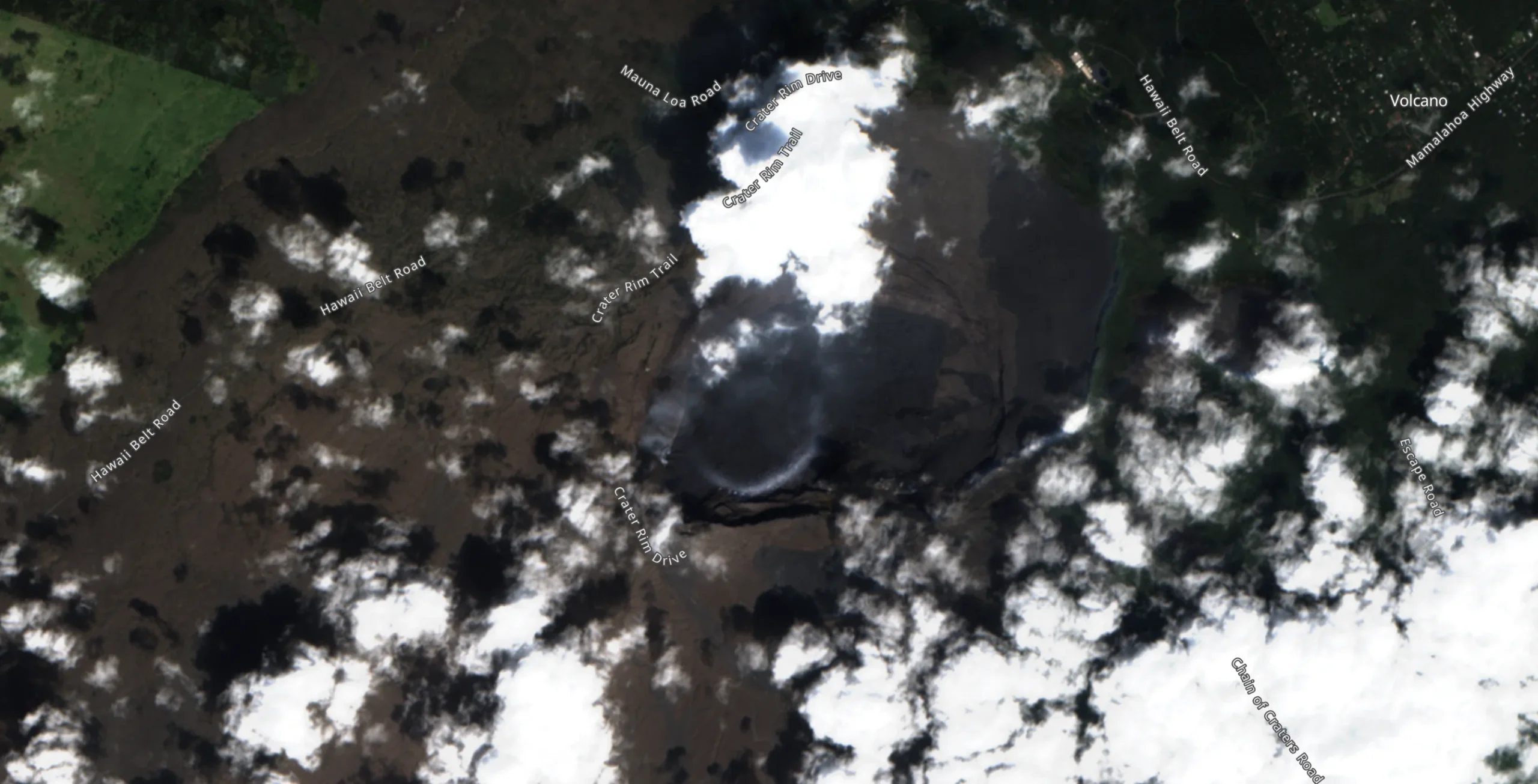
Slow-moving lava was observed just below the summit floor during an aerial survey on January 10.
A laser rangefinder detected about 4 m (13 feet) of summit floor subsidence in the first few days after fountaining stopped on January 3. The summit continued to show signs of slow inflation indicating magma accumulation beneath the surface.
Read more:
Kīlauea is one of the most active volcanoes on Earth overlapping the eastern flank of Mauna Loa on Hawai’i Island. The current eruption continues a long history of summit and rift zone activity.
The Halema’uma’u crater where the eruption is taking place was formed in stages around 1 500 years ago and underwent further collapse during the 18th century. Lava flows from Kīlauea cover about 90% of its surface with 70% being younger than 600 years.
A prolonged eruption at Kīlauea’s East Rift Zone produced lava flows covering more than 100 km2 (39 mi2) from 1983 to 2018, destroying homes and adding new land to the coastline. Recent activity remains confined to the summit caldera with no indications of new activity along the rift zones.
References:
1 Kilauea volcano – HVO/USGS – January 15, 2025
2 Kīlauea – GVP – Accessed on January 15, 2025

Rishika holds a Master’s in International Studies from Stella Maris College, Chennai, India, where she earned a gold medal, and an MCA from the University of Mysore, Karnataka, India. Previously, she served as a Research Assistant at the National Institute of Advanced Studies, Indian Institute of Science, Bengaluru, India. During her tenure, she contributed as a Junior Writer for Europe Monitor on the Global Politics website and as an Assistant Editor for The World This Week. Her work has also been published in The Hindu newspaper, showing her expertise in global affairs. Rishika is also a recipient of the Women Empowerment Award at the district level in Haryana, India, in 2022.

Commenting rules and guidelines
We value the thoughts and opinions of our readers and welcome healthy discussions on our website. In order to maintain a respectful and positive community, we ask that all commenters follow these rules.