
Continuous degassing, three ashing events observed at Kanlaon volcano, Philippines
The Kanlaon Volcano on Negros Island, Philippines, produced three brief ash eruptions from its summit crater on November 2, 2024. The plumes rose to approximately 400 m (1 310 feet) above the crater and drifted southwest. No seismic or infrasonic signals accompanied the events, indicating low-energy emissions.
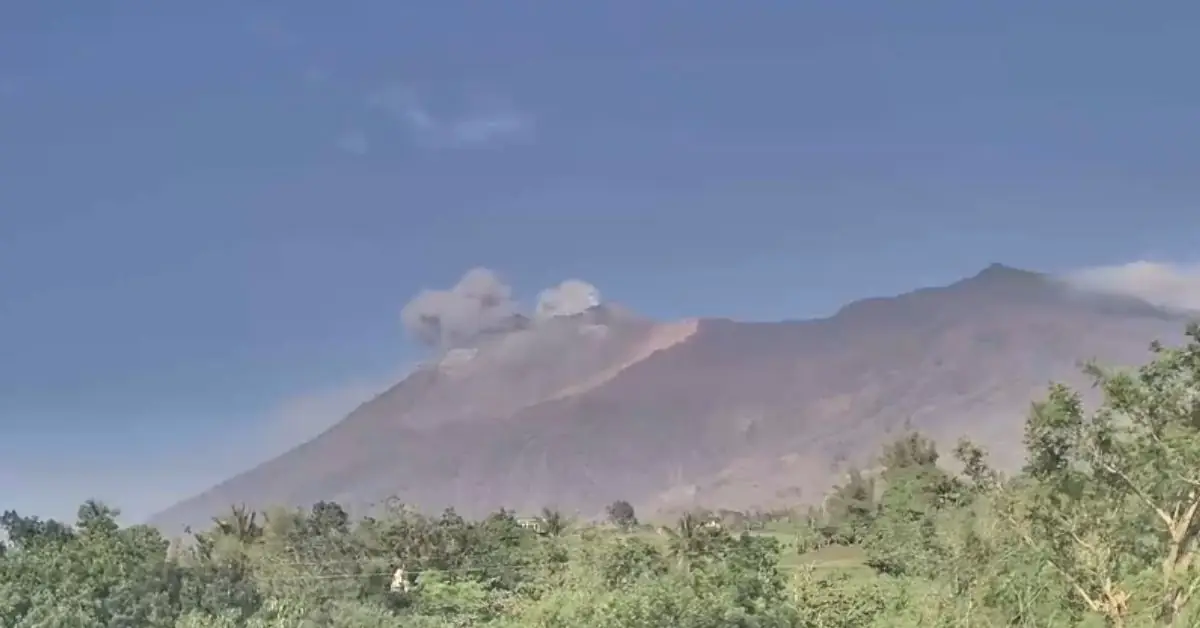
Ash eruption at Kanlaon volcano on November 2, 2024. Credit PHIVOLCS
The Kanlaon volcano on Negros Island in the Philippines, emitted three ash plumes from its summit crater on November 2, at 06:24, 07:05, and 07:27 local time.
Each ashing event lasted several minutes and produced grayish plumes reaching up to 400 m (1 310 feet) above the crater.
The emissions drifted southwest from the crater, though no seismic or infrasonic signals were detected, indicating relatively low energy levels in these eruptions.
LOOK: Time-lapse footages of gray ash being entrained or brought out by continuous degassing from the Kanlaon Volcano summit crater. The three (3) "ashing" events were observed at 06:24 AM, 07:05 AM and 07:27 AM today, and lasted four (4), twelve (12) and nine (9) minutes… pic.twitter.com/O3g0TmUmc6
— PHIVOLCS-DOST (@phivolcs_dost) November 2, 2024
Wind data provided by the Tokyo Volcanic Ash Advisory Center (VAAC) indicates the ash cloud would have been directed southwest at an altitude of approximately 3 000 m (10 000 feet).
At 10:30 LT on October 31, the Philippine Institute of Volcanology and Seismology (PHIVOLCS) reported increased seismicity at the volcano, with a total of 64 volcano-tectonic (VT) earthquakes recorded in 24 hours.
These VT events ranged in magnitude between ML0.9 and ML2.9 and occurred at depths of 2 – 8 km (1.2 – 5 miles) beneath the western flanks of the volcanic edifice. VT earthquakes result from rock fracturing, and the increase in activity strongly suggests ongoing rock fracturing as magma rises toward the surface.
Volcanic sulfur dioxide (SO2) emissions from Kanlaon’s summit crater, based on Flyspec measurements on October 30, averaged 7 087 tonnes per day. This year, Kanlaon’s SO2 emissions have averaged 1 273 tonnes per day before the June 3, eruption, but levels have since risen significantly, averaging 4 234 tonnes per day.
Eruption at Kanlaon on June 3 produced a powerful ash plume that reached 7.6 km (25 000 feet) above sea level, resulting in evacuations of residents in nearby communities. This explosive event (VEI 3) also generated pyroclastic flows that traveled up to 3 km (1.8 miles) down the slopes.
Approximately 50 000 people live within a 10 km (6.2 mile) radius of the volcano. This area includes several communities that could be directly affected by volcanic hazards, including ash fall, pyroclastic flows, and lahars.
PHIVOLCS is reminding the public that Kanlaon remains under Alert Level 2, indicating increasing unrest. However, current seismic activity may escalate into eruptive unrest, which could prompt an increase in the Alert Level.
Residents and visitors are strongly advised to stay alert and avoid entering the 4 km (2.5 miles) Permanent Danger Zone (PDZ) to reduce risks from potential volcanic hazards, including pyroclastic density currents, ballistic projectiles, and rockfall.
Communities near river systems on the southern and western slopes, especially those previously impacted by lahars or muddy streamflows, should take precautions during periods of heavy rainfall forecasted or already occurring over the volcano.
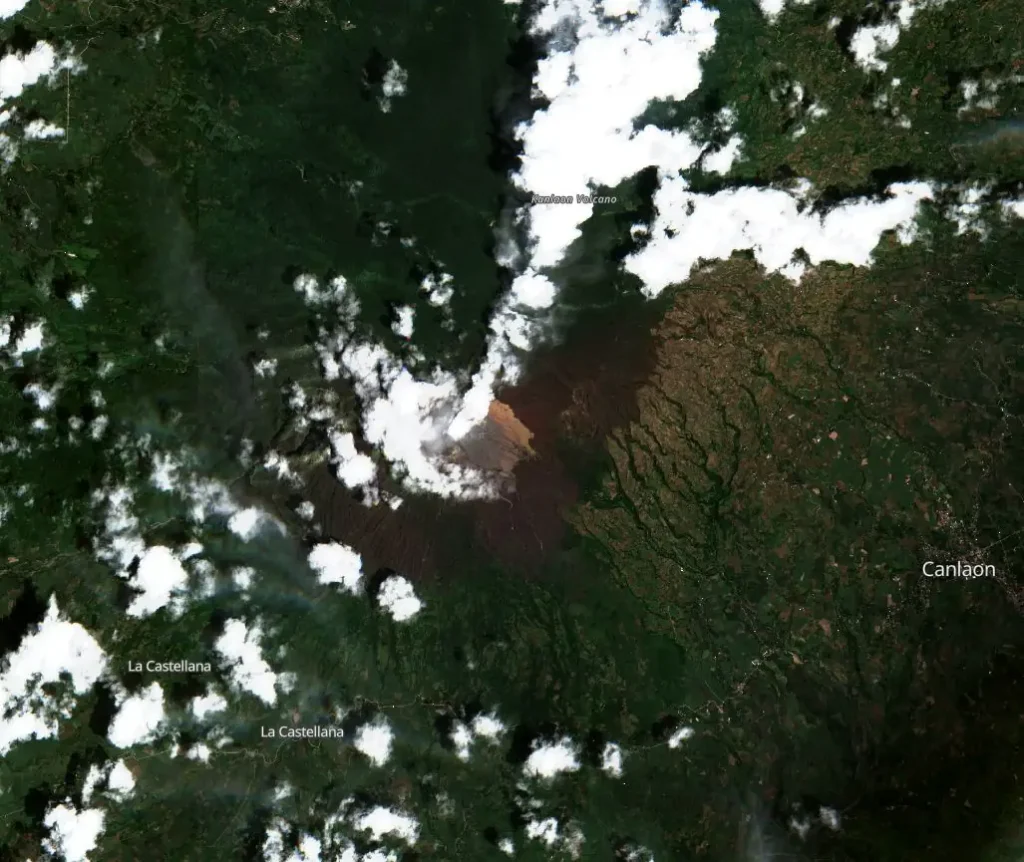
Kanlaon is a large andesitic stratovolcano with a summit featuring a 2 km (1.2 mile) wide caldera and a crater lake. It has numerous fissure-controlled pyroclastic cones and craters, some of which contain lakes.
The volcano is known for generating the Philippines’ largest debris avalanche, which traveled 33 km (20.5 miles) southwest from Kanlaon. Since 1866, Kanlaon’s eruptions have generally been small to moderate phreatic explosions, often producing minor ashfall in surrounding areas.
The Lugud crater, located south of the main caldera, remains the volcano’s active vent.
References:
1 Kanlaon Volcano Advisory – PHIVOLCS – October 31, 2024
2 VA Advisory for Kanlaon volcano – Tokyo VAAC – Issued at 04:09 UTC on November 2, 2024
3 Kanlaon volcano geological summary – GVP – Accessed November 2, 2024

I'm a dedicated researcher, journalist, and editor at The Watchers. With over 20 years of experience in the media industry, I specialize in hard science news, focusing on extreme weather, seismic and volcanic activity, space weather, and astronomy, including near-Earth objects and planetary defense strategies. You can reach me at teo /at/ watchers.news.

Commenting rules and guidelines
We value the thoughts and opinions of our readers and welcome healthy discussions on our website. In order to maintain a respectful and positive community, we ask that all commenters follow these rules.