
Magma accumulation under Svartsengi signals new volcanic eruption, Iceland
The Svartsengi volcanic system in southwest Iceland is showing increased volcanic activity due to magma accumulation beneath the surface. Magma is moving into shallow chambers, causing ground uplift and seismic activity. In recent days, seismic activity has slightly increased, with around five minor daily earthquakes along the dike, the most prominent being M1.5, indicating growing pressure.
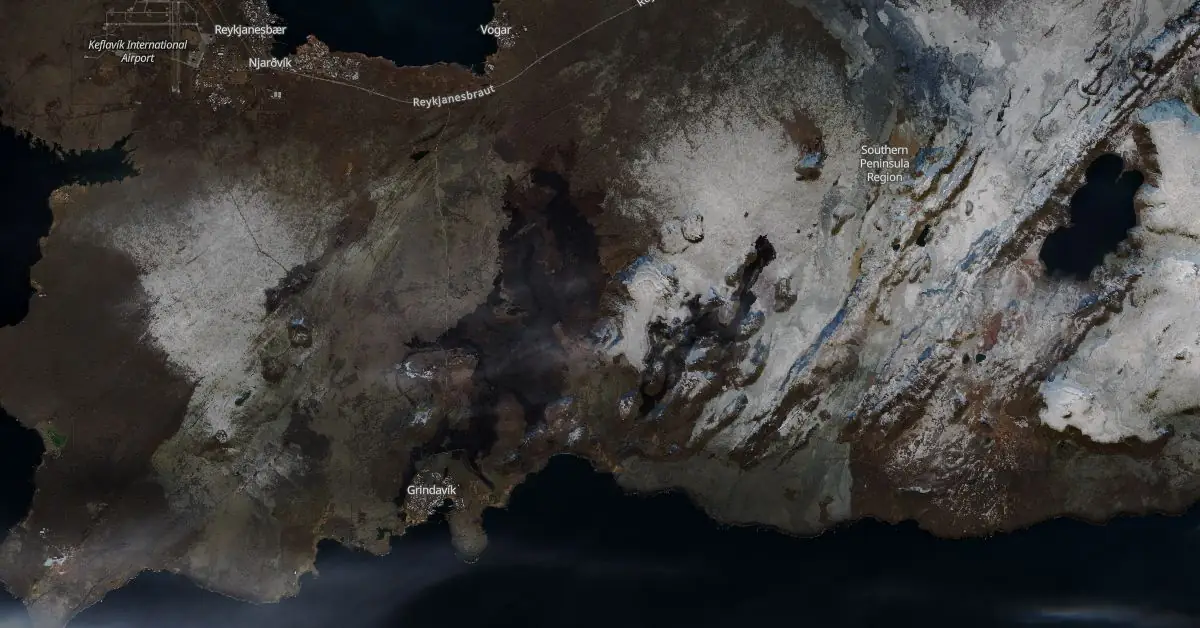
Image credit: Copernicus EU/Sentinel-2, EO Browser, The Watchers. Acquired on October 13, 2024
- This process has been ongoing since the system was reactivated in 2020, with the latest eruption on August 22, 2024. Scientists predict a potential eruption in early November.
- Iceland’s Met Office is closely monitoring, with local communities like Grindavík on alert.
The Svartsengi volcanic system in Iceland, part of the larger Eldvörp-Svartsengi region, continues to display symptoms of volcanic activity as magma accumulation beneath the surface persists.
According to the most recent GPS readings and model estimates, the volume of magma beneath Svartsengi is now predicted to be two-thirds of that which existed before the last eruption on August 22, 2024.
Seismic activity has increased slightly recently, with approximately five minor daily earthquakes happening along the dike beneath Svartsengi.
While none of these earthquakes have been felt, the largest recorded recently had an M1.5, indicating that pressure is increasing.
The most recent data has encouraged officials to retain the current hazard assessment until October 29, pending any new developments.
With around 14 million m3 (494 million feet3) of magma currently accumulated, the likelihood of an eruption is likely to grow in early November if the accumulation rate remains constant.
Svartsengi volcanic system is located in southwest Iceland’s Southern Peninsula. The system consists of fissures, cones, and volcanic craters and has remained inactive for centuries until resuming activity in 2020 when a series of magmatic intrusions started occurring.

According to the most recent model projections, the total magma volume is projected to be 14 million m3 (494 million cubic feet). For comparison, the August 22 eruption began when approximately 24 million m3 (847 million cubic feet) of magma exited the magma chamber.
Volcanologists have warned that a fresh eruption might occur in as little as 30 minutes based on prior eruptions in the vicinity. The August 22 eruption, for example, provided barely a 30-minute warning before magma breached the surface.
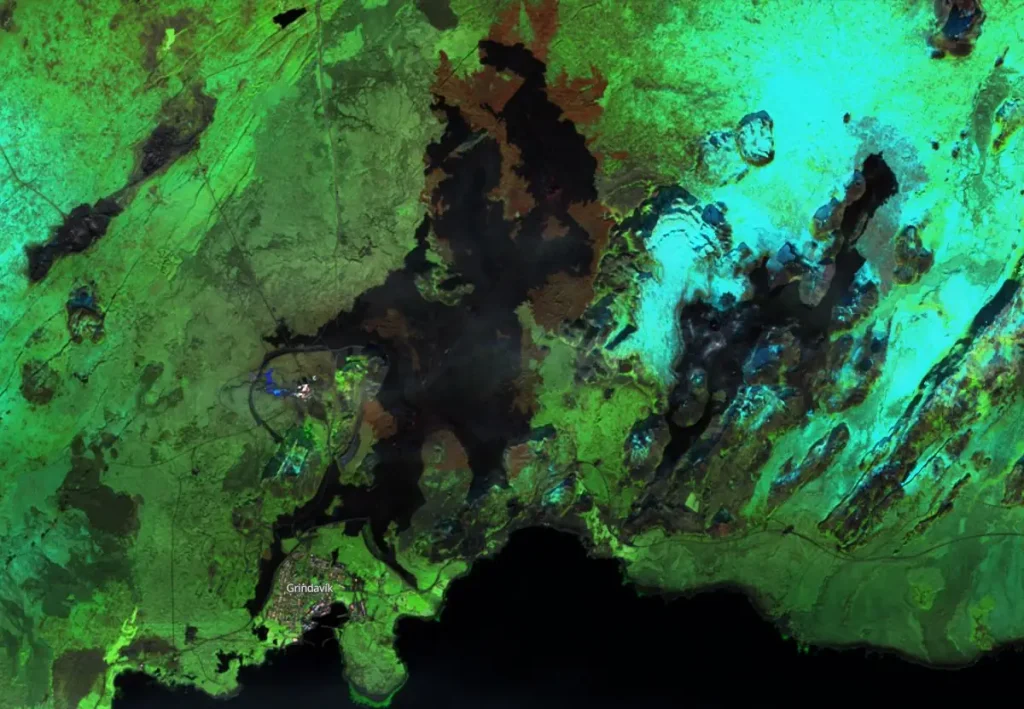
The Met Office and civil defense agencies are prepared for future eruptions at Sundhnúkar crater row, where previous eruptions have occurred.
Residents and civil defense officials in adjacent towns, including Grindavík, are on high alert due to volcanic activity, which raises concerns about future eruptions.
The resumed volcanic activity beneath Svartsengi is linked to magma moving from deep below the Earth’s crust into the volcanic system’s shallow magma chambers.
Over time, magma accumulates, causing pressure to grow, resulting in land surface uplift and increased seismic activity.
One key component is a rise in magma necessary to cause an eruption, indicating that the volcanic system is changing with time. Scientists predict that each eruption requires a higher volume of magma to build before the next eruption occurs.
The magma accumulation beneath Svartsengi is tracked chiefly using GPS and seismic data. These instruments enable scientists to monitor ground deformation (uplift) and earthquake activity, which are essential markers of volcanic activity. Despite recent activity, the timeline for a new eruption remains uncertain, but officials are prepared for a sudden escalation.
The Icelandic Met Office and civil defense agencies continue to monitor the situation closely, providing regular updates and hazard assessments to ensure the safety of residents in the affected areas.
References:
1 Magma accumulation beneath and land uplift above Svartsengi continue – Icelandic Met Office – October 22, 2024

Harsha Borah is an experienced content writer with a proven track record in the industry. Harsha has worked with LitSpark Solutions and Whateveryourdose, honing skills in creating engaging content across various platforms. A gold medalist in a state-level writing competition organized by Assam Tourism, Harsha’s travelogue on Tezpur was widely appreciated. Harsha’s article, "The Dark Tale of the Only Judge in India to Be Hanged," ranks second on Google and has garnered over 11 000 views and 8 900 reads on Medium. Outside of writing, Harsha enjoys reading books and solving jigsaw puzzles.

Commenting rules and guidelines
We value the thoughts and opinions of our readers and welcome healthy discussions on our website. In order to maintain a respectful and positive community, we ask that all commenters follow these rules.