
Severe storm hits Latvia, record rainfall and extensive damage reported
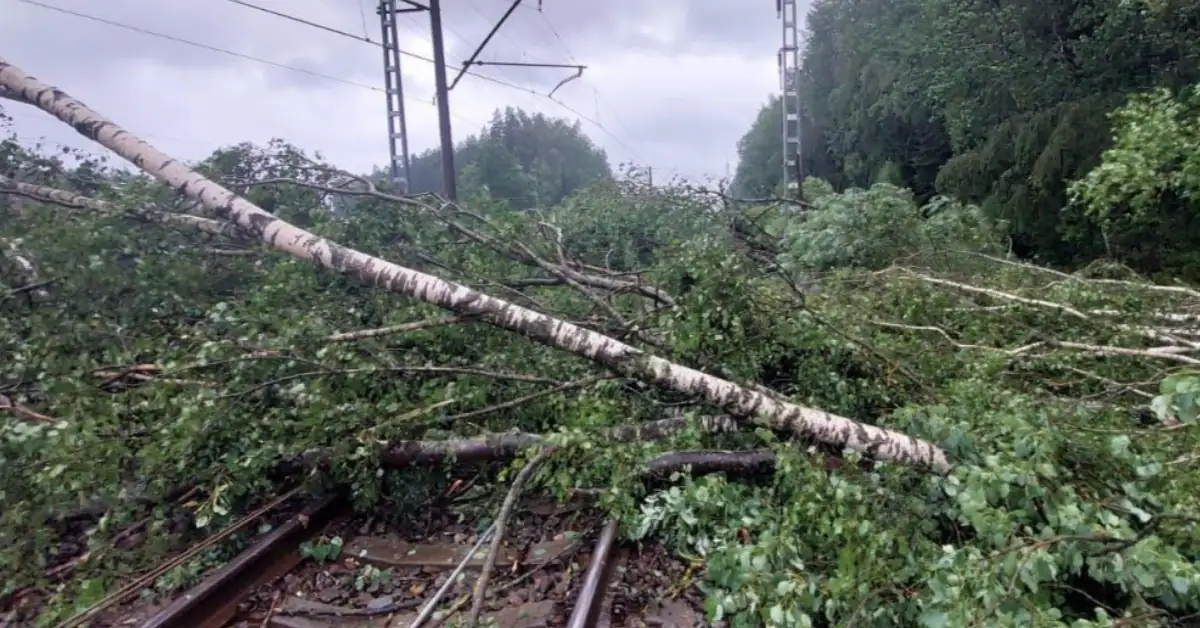
Image credit: Farnak
A severe storm hit Latvia on the night of July 28, 2024, resulting in significant damage and widespread power outages. By 05:00 local time (LT) on July 29, Kalnciems had recorded 180 mm (7.1 inches) of rain, setting a new national record. The storm caused severe flooding, blocked highways, and disrupted train and airplane services, leaving tens of thousands without electricity and leading officials to issue a yellow alert.
On the evening of July 28, a powerful storm hit Latvia, causing extensive damage across the country. Trees fell, power lines were cut, and streets flooded, leaving tens of thousands without electricity and causing telecommunications issues.
By 05:00 LT on July 29, Kalnciems recorded 180 mm (7.1 inches) of rain — 203% of the July norm and 26% of the annual norm. This set a new record for precipitation in Latvia, surpassing the previous record of 160.2 mm (6.3 inches) set on July 9, 1973, in Ventspils.
Dobele also saw record rainfall with 106.4 mm (4.2 inches), followed by Riga and Mersrags with 86 mm (3.4 inches) each. The strongest wind gusts were recorded in Jurmala and Dobele (90 km/h / 56 mph), Daugavgriva (95 km/h / or 58 mph), and central Riga (97 km/h / 60 mph).
Intense and prolonged rainfall has caused flooding in low-lying and urban areas, and river floodplains and low-lying areas along riverbanks have started to flood. No evacuations were necessary, but some roads, streets, parks, and the first floors of buildings and basements were flooded.
The fastest rise in water levels has been in the Lielupe River basin, according to the State Fire and Rescue Service (VUGD).
VUGD initially issued an orange flood warning, which was downgraded to a yellow alert on July 30. It will remain in effect from 10:00 LT on July 30 to 14:00 LT on August 2.
The storm led to devastating consequences in the former Soviet Republics of Latvia and Lithuania.
— Farnak (@Farnakyboy) July 29, 2024
Social media users are sharing footage: flooded streets and houses, blocked roads, crushed cars and even a yacht abandoned near Klaipeda. pic.twitter.com/KFmMDYxqd8
Approximately 30 000 consumers were left without electricity, and rescuers received about 600 calls for assistance. Traffic on several highways was blocked or restricted, and train and airplane services were disrupted. The Riga City Council recommended residents stay home on July 30.
Forecasts indicated that heavy rains in Zemgale and Riga will continue through the first half of Monday, July 29, with Riga possibly receiving two months’ worth of rainfall.
Prevailing strong winds in Latvia are expected to continue raising water levels along the Gulf of Riga’s coast, potentially causing the Daugava River to flood. Riga’s Dome Square was closed due to wind damage risk to the Dome Cathedral’s roof.
Jelgavā izskatās šādi.
— Delfi (@DelfiLV) July 29, 2024
Vētras dēļ pirmdien ir apturēta vilcienu kustība dzelzceļa posmā Olaine – Jelgava un gandrīz visā Tukuma līnijā, galvaspilsētā Rīgā ir apgrūtināta sabiedriskā transporta kustība. Savukārt vairākos ceļu posmos Zemgalē un Pierīgā ir slēgta vai ierobežota… pic.twitter.com/cruqiToT17
The storm also heavily impacted Lithuania, where a 50-year-old woman was killed by a falling tree on July 29 in Vilnius. Approximately 200 000 households were left without electricity.
Fire and rescue officials in both Latvia and Lithuania received hundreds of emergency calls for fallen trees, damaged cars, and flooded roads and fields. Lithuanian authorities advised people to travel only for urgent situations due to severe winds and heavy rain affecting most regions.
A powerful storm raged in Lithuania since Sunday evening. Firefighters are still removing fallen trees, and many people are without electricity. All Monday, trains, public transport were delayed, some flights were delayed. https://t.co/s3RykluFMD
— Lithuania Strong (@LithuaniaStrong) July 30, 2024
Photo Credit: 15min pic.twitter.com/FU0aTdaSvI
In Šiauliai, Telšiai, and Šilalė districts, a month’s worth of rain was recorded over July 28 and 29, according to Lithuanian meteorologists.
In Vilnius, dozens of large trees were downed, causing damage to roads, cars, and houses. Several flights were canceled or diverted from Vilnius and Kaunas due to the storm, leading to delays and cancellations on the rail network.
References:
1 Record rainfall in Latvia: streets flooded, roads blocked, tens of thousands of people without power – UNN – July 29, 2024
2 1 person dies as Latvia and Lithuania are hit by a powerful storm – AP – July 29, 2024
3 Flood warning downgraded from orange to yellow in Latvia – LSM – July 30, 2024

Rishav Kothari is Editor-in-Chief of The Watchers, where he runs the newsroom and covers earthquakes, volcanoes, severe weather and space weather.
Published in the last 24 hours
- A 19-year-old Nebraska teacher reportedly tied her pupils together with twine and led them to safety through a blizzard in January 1888 Epicenter
- NASA built the Opportunity rover to last 90 days on Mars, and Martian winds helped keep it alive for nearly 15 years by blowing dust off its solar panels, until a planet-wide dust storm in 2018 blocked sunlight and silenced the rover Epicenter
- In the winter of 1811–12, earthquakes near New Madrid, Missouri, shook so hard that witnesses saw the Mississippi River flow backward, and the shaking left a brand-new lake in Tennessee Epicenter
- On 28 August 1859 a solar storm shocked telegraph operators and threw sparks on other lines, and on 2 September Boston to Portland clerks unhooked their batteries and kept sending for more than two hours on the aurora's current alone. Epicenter
