
Large tornado hits New Orleans, causing extensive damage, Louisiana
A destructive wedge tornado ripped through parts of New Orleans, Louisiana Tuesday night, March 22, 2022, causing extensive damage, killing at least one person, and leaving several others injured. This raised the number of fatalities related to the severe weather outbreak affecting the Deep South over the past few days to 2. Severe storms with the potential for damaging winds and brief tornadoes can be expected across the Southeast today. Strong to severe storms will be possible into the Ohio Valley and southern Mid-Atlantic. Some storms may produce locally heavy rain and flash flooding.
The tornado touched down at approximately 19:35 CDT in a New Orleans suburb and then moved east across the Mississippi River into the Lower 9th Ward of New Orleans and parts of St. Bernard Parish before moving northeast. It was on the ground for about 15 minutes.
St. Bernard Parish appears to have taken the brunt of the storm. This is where the fatality and injuries were reported but officials are yet to give details.1
The New Orleans Fire Department has requested a major EMS response following the tornado. The damage was said to be significant in parts of Lower Ninth Ward and nearby suburb Arabi.2
A Fox 8 New Orleans report from the area shows immense structural damage, overturned cars, and downed power lines.
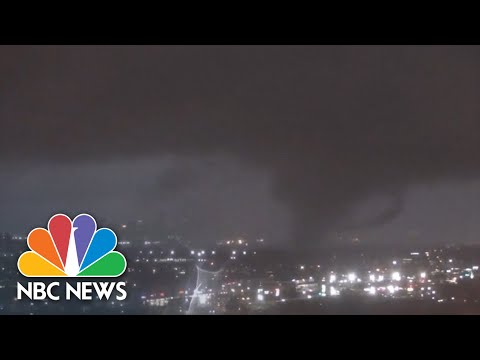
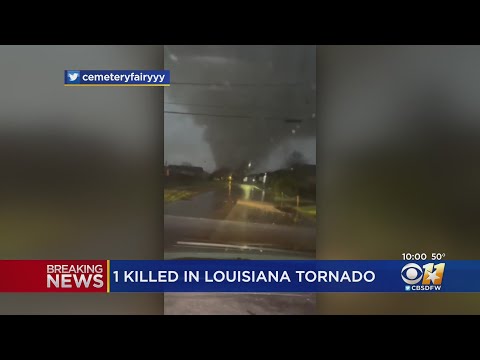
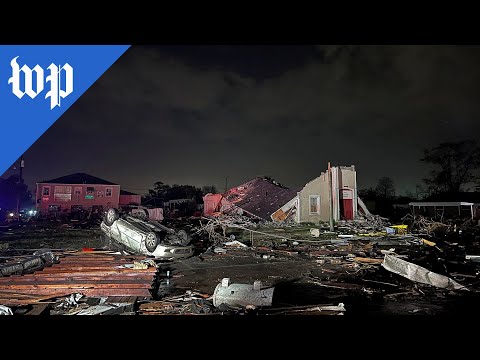
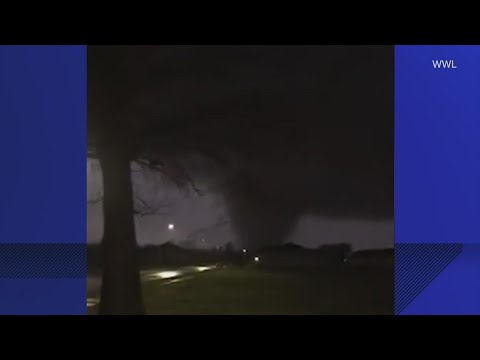
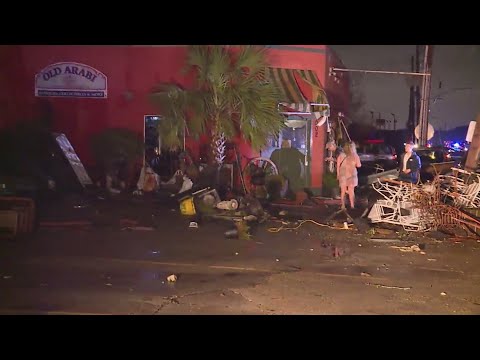
The tornado and the associated storm were a part of the same system that hit parts of Texas and other south-central states this week, leaving at least 1 fatality and more than a dozen people injured.2
“The same storm system which brought widespread severe weather and heavy rainfall the past couple of days across the Deep South will continue into the Eastern U.S. today, although the severe and flash flood threat should wane somewhat as the environment becomes less favorable,” NWS forecaster Santorelli noted on March 23.3
Even still, heavy rainfall is possible along the front across the Southeast and Mid-Atlantic today, with WPC highlighting this with a marginal to slight risk for excessive rain/flash flooding.
SPC also has a slight risk for severe thunderstorms across much of the Southeast, as well as farther north and west into parts of the Ohio Valley.
Rainfall will also expand across the Midwest and into the Northeast with modest snow and ice accumulations continuing on Wednesday for parts of the northern Great Lakes.
Rain should exit the East Coast with the front by Thursday, though may linger across the Northeast/New England as a secondary low forms and lifts up the coast.
Some wintry weather is likely in the highest elevations of New England.
In the wake of this expansive system, a colder air mass should settle in, with below-normal temperatures spreading from the Plains on Wednesday into the Midwest/Ohio Valley Thursday and Friday.
References:
1 Tornado rips through New Orleans and its suburbs, killing 1 – AP
2 Tornado seen tearing through Lower Ninth Ward in New Orleans – AccuWeather
3 Short Range Forecast Discussion – NWS Weather Prediction Center – College Park MD – 345 AM EDT Wed Mar 23 2022

Teo Blašković founded The Watchers in 2011 and edited it until 2026, covering seismic and volcanic activity, extreme weather, space weather and near-Earth objects. Articles on this page are his archive.
Published in the last 24 hours
- A crack up to 6 m (20 ft) wide is splitting the summit of the Hochvogel in the Allgäu Alps; 12 years of measurements now put the loose block at about 400,000 cubic metres, half the peak. Epicenter
- Hayli Gubbi in Ethiopia's Afar erupted on 23 November 2025, its first historically documented eruption; a year later scientists have traced it to magma from Erta Ale that travelled more than 30 km underground. Epicenter
- Typhoon Cempaka spun up over the western North Pacific on 7 November 2026; it is now the 32nd typhoon of the year, more than any year this century, one past the 31 counted in 2013. Epicenter
- A school bus driver in Paradise, California, drove 22 children through the 2018 Camp Fire for about five hours, and when the smoke thickened, he and two teachers tore his shirt into wet strips for them to breathe through Epicenter
