
Tropical Cyclone “Iris” passing between Australia and New Caledonia
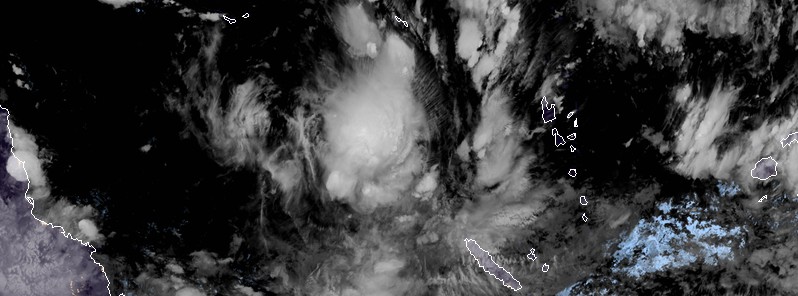
Featured image: Tropical Cyclone "Iris" at 12:40 UTC on March 26, 2018. Credit: JMA/Himawari-8
Tropical Cyclone "Iris" formed south of Solomon Islands on March 24, 2018 as the fourth named storm of the 2017/18 South Pacific ocean cyclone season. While this system is not expected to make landfall, orange alert for heavy rain and thunderstorms is in effect over the eastern coast of New Caledonia.
At 09:00 UTC on March 26, the center of Tropical Cyclone "Iris" was located approximately 980 km (610 miles) WNW of Noumea, New Caledonia and has tracked southward at 18 km/h (11 mph) over the past 6 hours. Its maximum sustained winds were 65 km/h (40 mph) with gusts to 85 km/h (50 mph).
The cyclone is expected to slowly strengthen over the next 24 hours. However, increasing vertical wind shear after that will mainly be responsible for its rapid decay and eventual dissipation by 09:00 UTC on March 28.
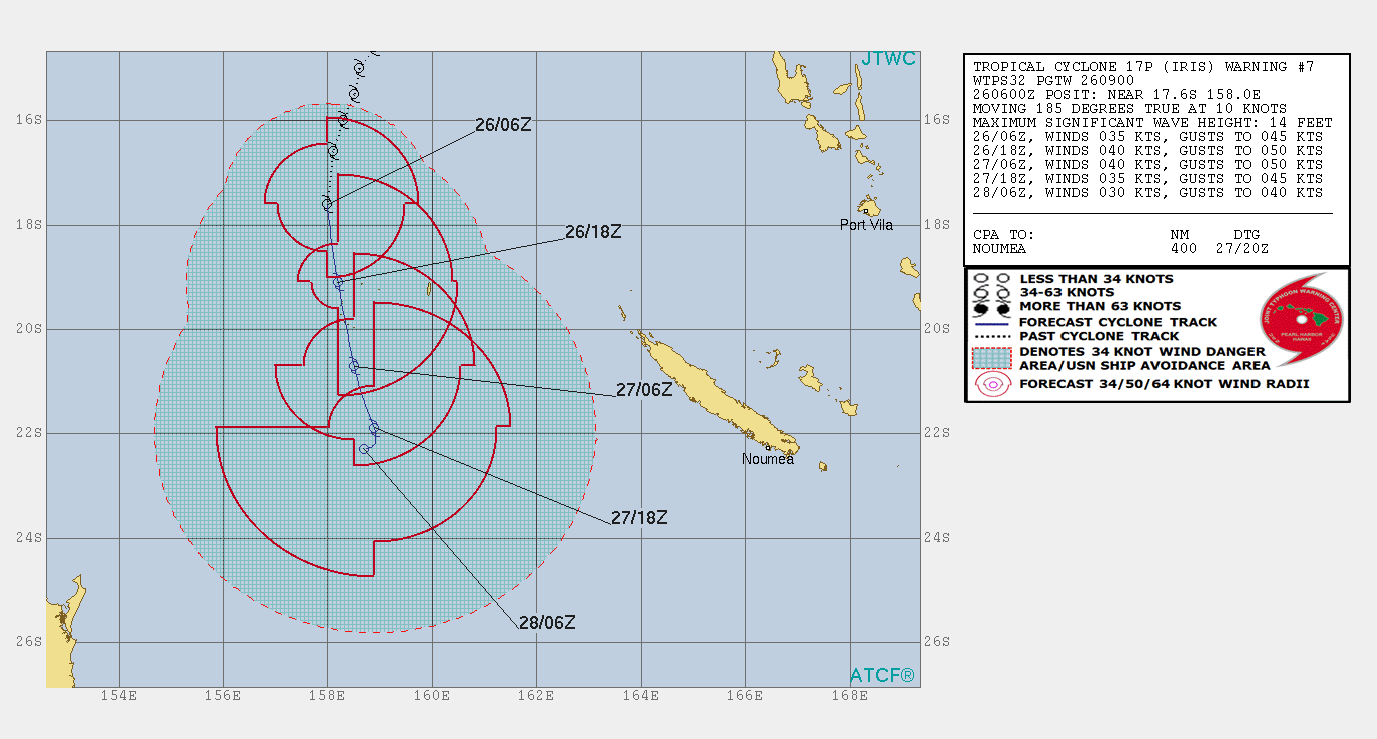
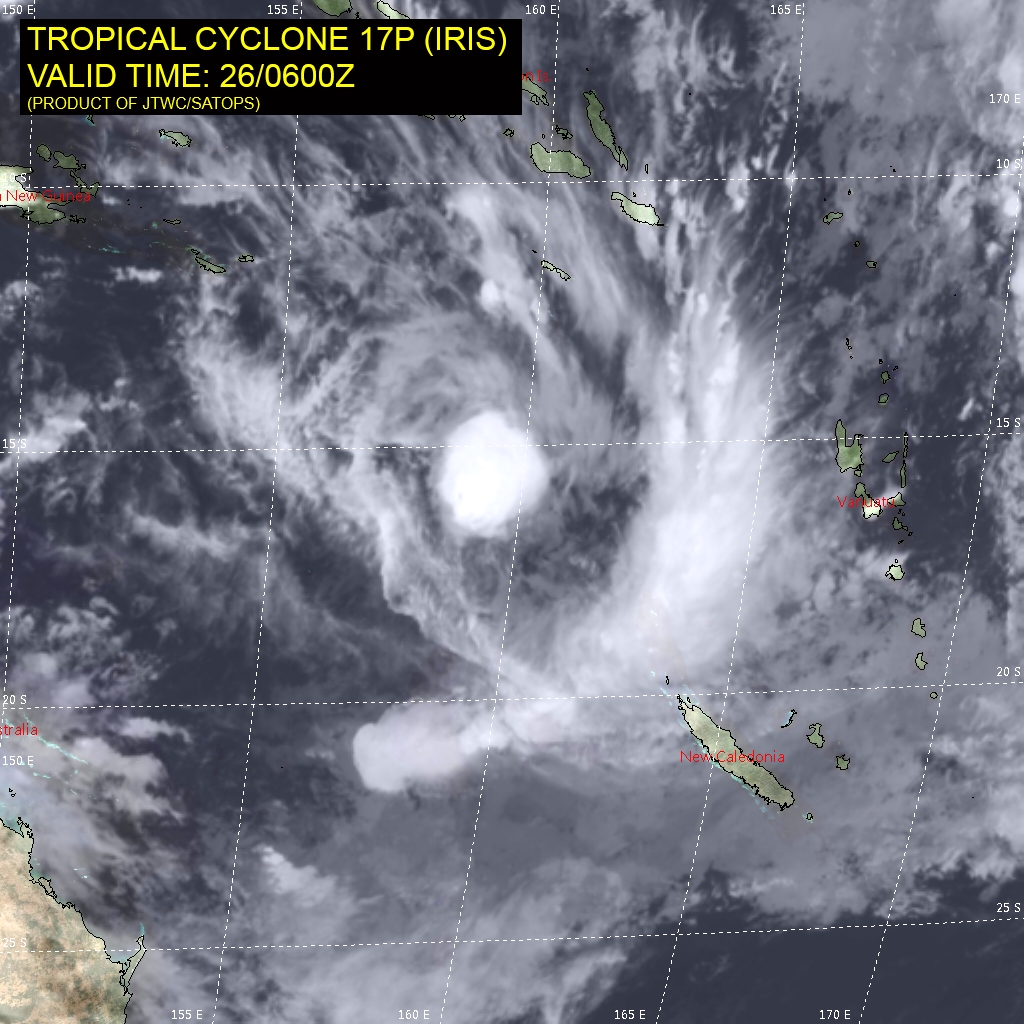
Iris is forecast to pass between the eastern coast of Australia and the western coast of New Caledonia over the next 24 hours, staying away from land.
Heavy rain, thunderstorms and strong winds may affect New Caledonia over March 25 – 31 as well as the eastern coast of Australia.
Meteo France New Caledonia has issued an orange alert for heavy rains and thunderstorms over the eastern coast of the country.

Teo Blašković founded The Watchers in 2011 and edited it until 2026, covering seismic and volcanic activity, extreme weather, space weather and near-Earth objects. Articles on this page are his archive.
Published in the last 24 hours
- Scientists directly observe how submarine landslides unfold in western Canada Epicenter
- Odisha evacuated 983,642 people before Phailin crossed near Gopalpur on 12 October 2013 with winds of 200-210 km/h gusting to 220, and 44 died, against 9,885 in the 1999 super cyclone. Cyclone Akvan crossed the same coast on 20 November 2026. Epicenter
- Lava fountains reached 1,900 feet (580 m) at Kīlauea Iki in 1959, the highest ever recorded at Kīlauea, as USGS forecasts episode 57 fountaining at Halemaʻumaʻu for November 22-26. Epicenter
- Novarupta in Alaska erupted about 3 cubic miles of magma in roughly 60 hours from 6 June 1912, 30 times Mount St. Helens in 1980, and strong northwesterly winds lifted that same loose ash on 16 November 2026, prompting an NWS SIGMET. Epicenter
