
Fast-moving thunderstorm hits metro Omaha, dumps baseball-sized hail

Image credit: SVLMedia LLC.
A fast-moving thunderstorm dumped heavy rain and very large hail across metro Omaha, Nebraska late June 29, 2017. Reports mention hail of many sizes left a widespread trail of damage – shattered windshields, pierced skylights, and damaged roofs.
According to the Omaha World-Herald, hailstorms came in waves, first across central Omaha, Benson and midtown, and on to the east into Council Bluffs. Then hail moved across southwest Omaha and Sarpy County and, finally, Glenwood and others points in southwest Iowa. Most of the hail reported ranged from marble- to egg-sized.
Barrett’s Benson neighborhood took on some of the largest hailstones, up to baseball-sized and larger. Barrett measured a hailstone that was 9.5 cm (3.75 inches) in diameter.
Comparing hail sizes in the 21st century: Watch out for i-Phone-sized hail! ⛈#hail #newx #omahawx #ouch pic.twitter.com/qF5N4wpRmH
— Chinh Doan (@ChinhDoan) June 30, 2017
The two supercell storms that delivered the barrage of hail intensified as they reached the Omaha metro because they encountered what is known as the nocturnal low level jet, said Becky Kern, a NWS meteorologist. A summertime phenomenon in the Great Plains, the low level jet is a stream of warm, moist air rushing northward from the Gulf of Mexico. It flows in at about 915 – 1500 m (3 000 to 5 000 feet) and provides lift to the atmosphere. As the storms arrived, they encountered this warm, rising air, which gave the storms “lift,” a crucial ingredient to severe weather and hail.
"One indication of how powerful the updrafts were with these storms is the heights of their tops," Kern said. These storms rose to 14.3 km (47 000 feet).
"The good news with this storm was wind – it was negligible," she said. "Had there been strong winds with these large hail stones, homes would have been badly damaged, with holes in siding and windows."

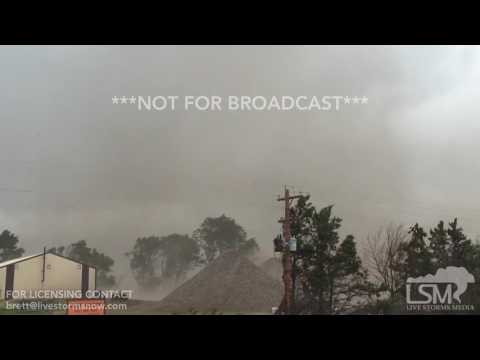
The storms then rolled into Iowa with the same intensity and hail just as large.


Teo Blašković founded The Watchers in 2011 and edited it until 2026, covering seismic and volcanic activity, extreme weather, space weather and near-Earth objects. Articles on this page are his archive.
Published in the last 24 hours
- A broad low over southeastern Florida and the northwestern Bahamas has a 30 percent chance of subtropical or tropical development within 48 hours and a 50 percent chance within 7 days, the National Hurricane Center says
- Male toads abandoned a pond in Italy five days before a deadly 2009 earthquake, while a scientist was counting them Epicenter
- An asteroid was spotted 19 hours before it exploded over Sudan in 2008, and students picked its pieces off the desert Epicenter
- A wave up to 3 m (10 feet) high rose out of Lake Michigan on a sunny June morning in 1954 and swept fishermen off Chicago’s piers, and when a second came 10 days later, warnings had cleared the shore Epicenter
