• Polar vortex winds at 60°N drop from 22.13 to 5.44 m/s in eight days in rare November disruption; major SSW remains forecast

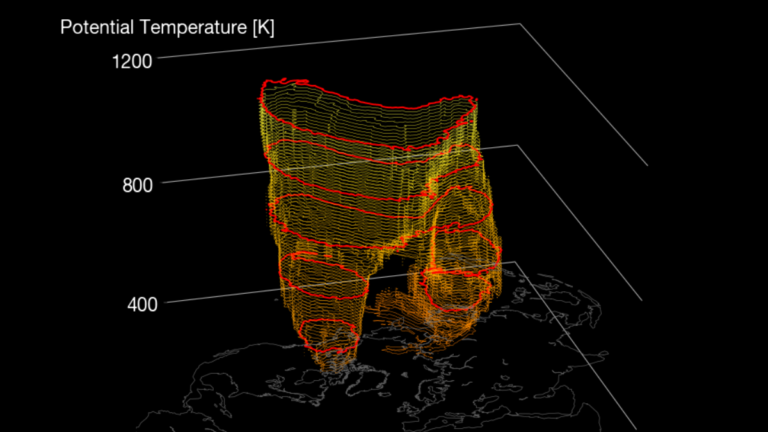
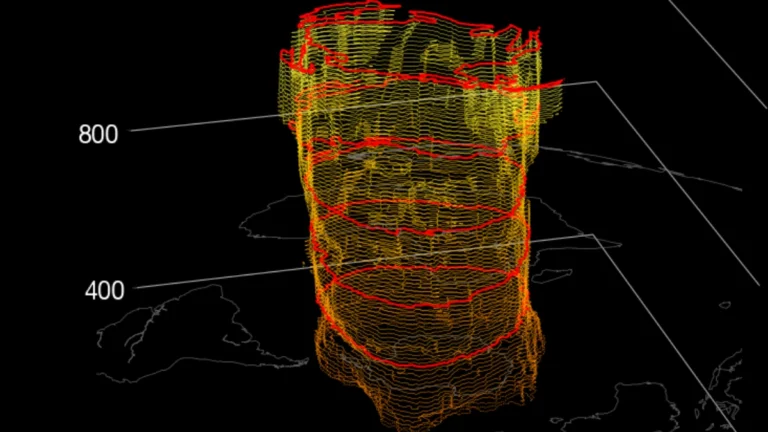
    A rare November disruption of the Northern Hemisphere stratospheric polar vortex is underway, with the daily-mean wind at 60°N and 10 hPa weakening from 22.13 m/s (49.5 mph) on October 25 to 5.44 m/s (12.2 mph) on November 2. Forecast guidance continues to indicate a possible brief reversal during the second week of November, which would meet the defining wind-reversal threshold used to identify a major sudden stratospheric warming, while any surface-weather response remains uncertain.

  • Very strong El Niño favors wetter South and warmer North in NOAA’s 2026–27 winter outlook, U.S.

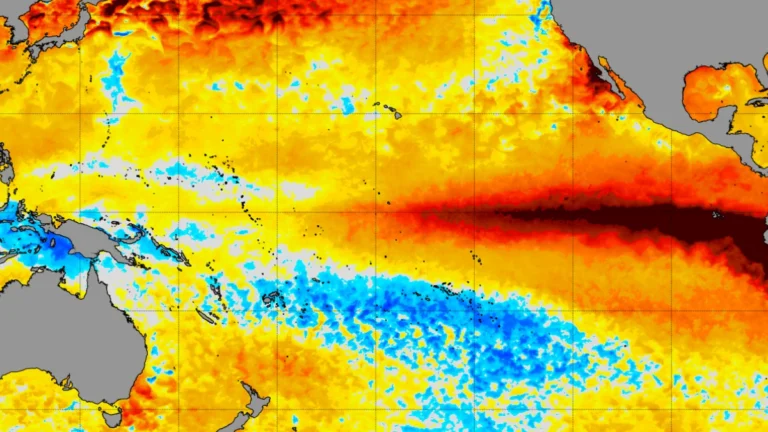
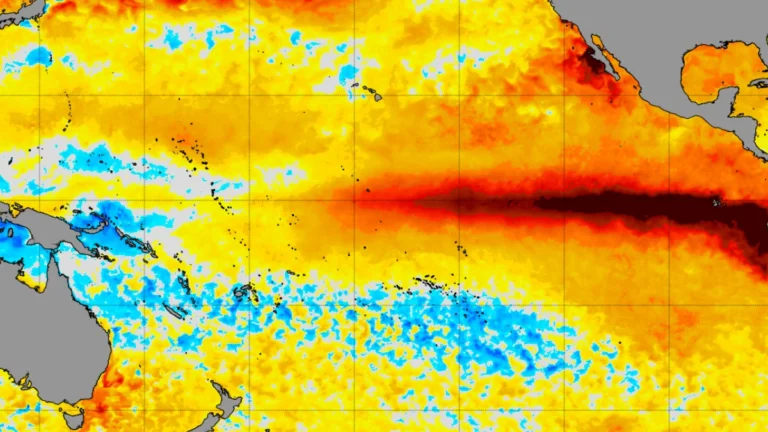
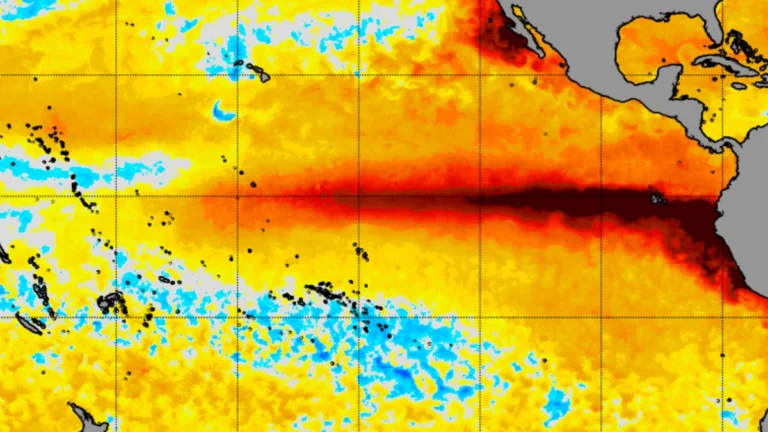
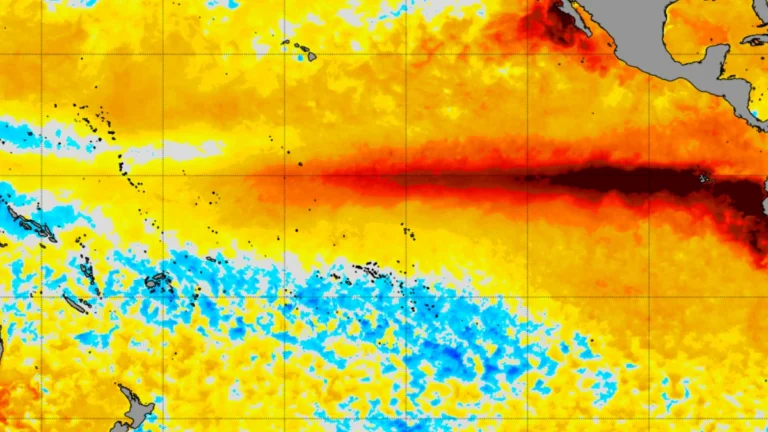
    A strengthening El Niño is shifting the odds toward wetter-than-average conditions across the southern United States and East Coast during winter 2026–27, according to NOAA. The Climate Prediction Center (CPC) reported that the latest weekly Niño-3.4 sea-surface temperature anomaly had reached +2.4°C (+4.3°F), while warmer-than-average conditions are favored across much of the northern United States.

  • NOAA gives El Niño an 83% chance of reaching historic strength in late 2026

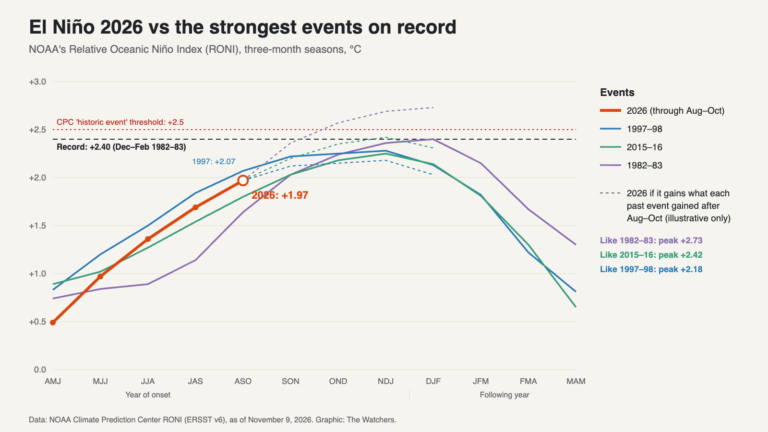
    El Niño strengthened further across the equatorial Pacific in September 2026, and NOAA’s Climate Prediction Center (CPC) said on October 8 that the October–December Relative Oceanic Niño Index (RONI) has an 83% chance of reaching at least +2.5°C (+4.5°F)—a level that would exceed previous El Niño events in its record dating to 1950. The World Meteorological Organization (WMO) separately forecast a Niño-3.4 anomaly of approximately +3.7°C (+6.7°F) for the same period.

  • El Niño heat could cause 451 000 additional deaths worldwide by February 2027 as Pacific temperatures reach record levels

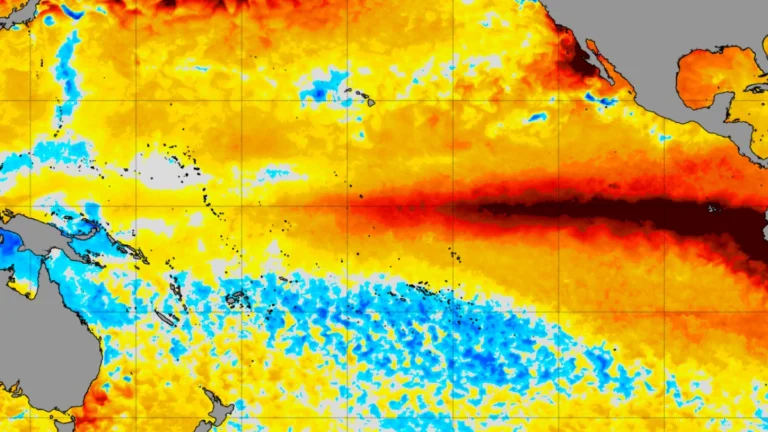
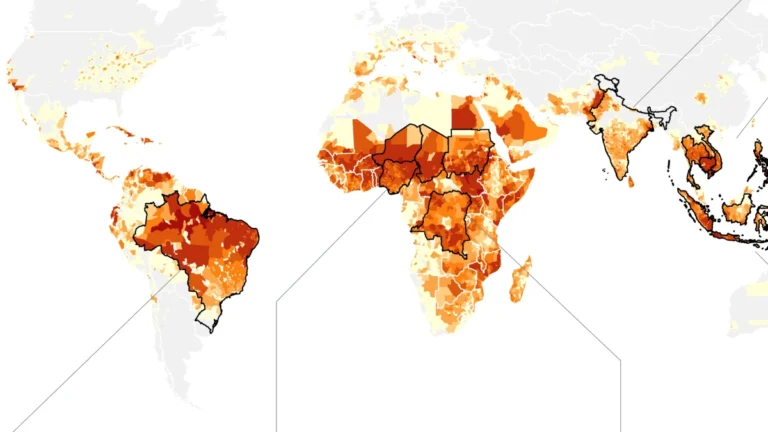
    A new Climate Impact Lab assessment estimates that heat associated with El Niño could contribute to 451 000 additional deaths worldwide from June 2026 through February 2027, including 239 000 ± 11 000 during September 2026–February 2027. The September 23 report comes as NOAA measurements show central Pacific sea-surface temperatures reaching levels last seen during the 2015–16 El Niño, while multiple media reports indicate a new daily temperature-anomaly record.

  • California declares statewide emergency as very strong El Niño develops ahead of 2026-27 winter

    California Governor Gavin Newsom proclaimed a statewide emergency on September 21, 2026, to accelerate preparations for potential flooding, landslides, coastal hazards and other winter impacts as a strengthening El Niño develops in the tropical Pacific. NOAA said there is a greater than 90% chance the event will become very strong during Northern Hemisphere autumn and winter 2026–27.

  • Polar vortex strengthens over Arctic, very strong El Niño supports mid-winter weakening signal

    The Northern Hemisphere polar vortex is forming normally over the Arctic and was stronger than average by NASA’s wind diagnostic in mid-September 2026. The developing very strong El Niño could favor atmospheric wave patterns that weaken the vortex later in winter, with seasonal guidance showing a possible weakening during January and February 2027.

  • NOAA raises chance of historic-strength El Niño to 75% for October–December 2026

    The Climate Prediction Center (CPC) raised the probability of a historic-strength El Niño during October–December 2026 to 75% on September 10, up from 69% in August, after the coupled ocean-atmosphere event strengthened further across the tropical Pacific. CPC also raised the probability of a very strong event during the same three-month period from 95% to 98%.

  • El Niño forecast to become very strong by late 2026, raising extreme weather risks into 2027

    El Niño is forecast to strengthen to very strong intensity during late 2026, with the World Meteorological Organization (WMO) indicating an exceptionally high likelihood of nearly 100% that El Niño conditions will persist through February 2027. NOAA’s Climate Prediction Center (CPC) separately gives a greater than 90% chance of a very strong event during Northern Hemisphere fall and winter 2026–27. A very strong El Niño increases the likelihood of major shifts in rainfall and temperature patterns across many regions, although the severity of impacts varies by location and season.

  • El Niño prompts drought alerts in El Salvador and Honduras, Panama declares national emergency

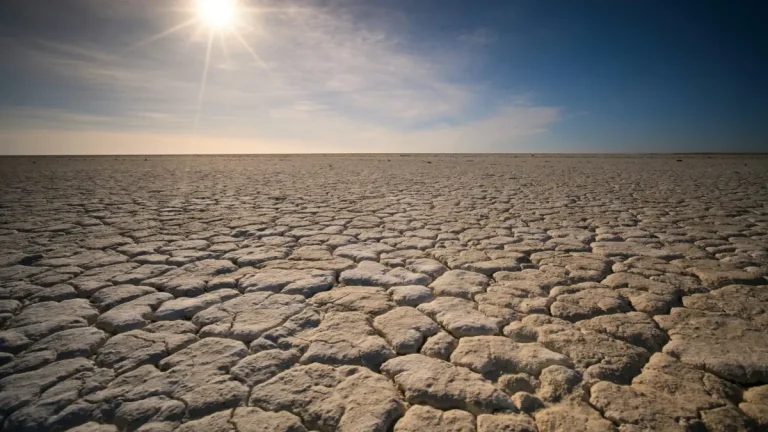
    El Salvador declared a nationwide Red Alert for meteorological and agricultural drought on August 25, while Honduras expanded its drought Red Alert from 75 to 103 municipalities on August 26. Panama also declared a national state of emergency under Resolution No. 102-26 in response to El Niño-related risks, including drought, flooding and landslides. The measures come amid rainfall deficits, prolonged dry periods and increasing water stress as El Niño continues to strengthen.