
El Niño chances rise as La Niña fades, WMO says neutral phase to persist until mid-2026
The World Meteorological Organization (WMO) reported on March 3, 2026, that the recent weak La Niña is fading, with ENSO-neutral conditions expected to prevail until at least July 2026. Forecast models show about a 40% chance of El Niño emerging by mid-year, although confidence remains limited because of the boreal-spring predictability barrier.
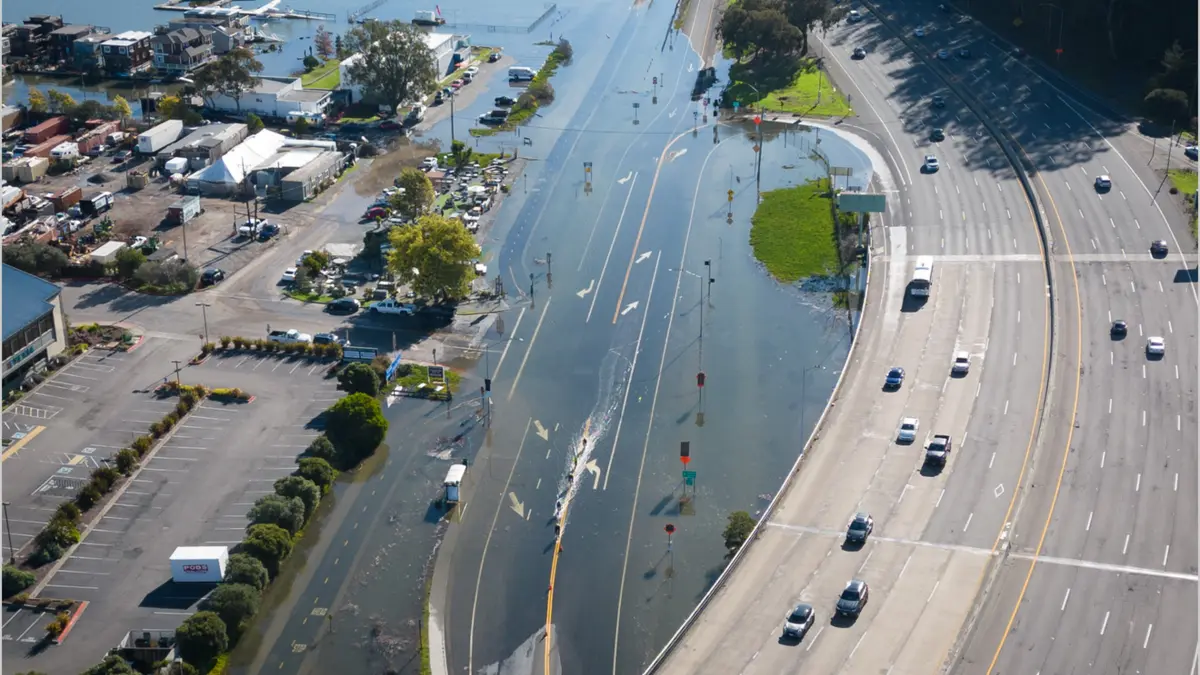
An unusually high tide, called a King Tide, floods a highway on-ramp in Northern California in January 2023. Credit: California King Tides Project
The WMO’s latest ENSO Update, issued on March 3, shows that the tropical Pacific Ocean is returning to near-average conditions after several months of cooling linked to La Niña.
Model analyses indicate a 60% likelihood of neutral conditions during March–May, rising to 70% for April-June. Between May and July, neutrality remains near 60%, while the probability of El Niño increases to roughly 40%. Forecast reliability is typically lower during March-May because seasonal reorganization in the Pacific masks early signals of phase change.
WMO Secretary-General Celeste Saulo said the organization will continue to monitor conditions closely to inform governments and humanitarian partners.
Saulo noted that the 2023–24 El Niño was among the five strongest on record and contributed to the record global temperatures observed in 2024, adding that accurate seasonal forecasting helps avert millions of dollars in losses and is essential for agriculture, health, energy, water management, and disaster-risk reduction.
For March-May 2026, WMO forecasts widespread above-average land-surface temperatures. Rainfall in the equatorial Pacific still shows traces of La Niña influence, while patterns elsewhere are mixed.
Probabilistic maps, based on the 1993–2009 baseline period, show broad surface warming and regionally variable precipitation signals.
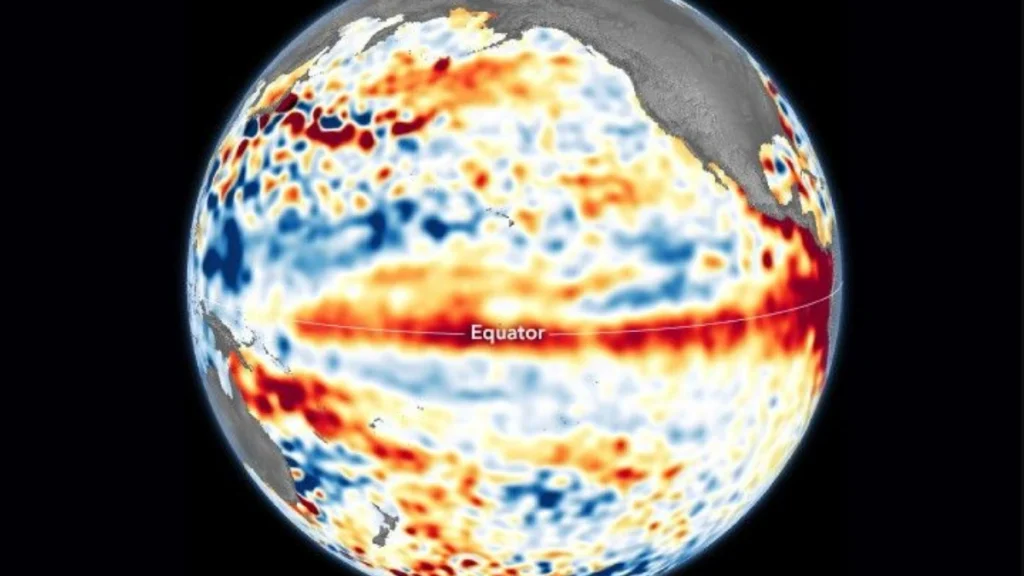
El Niño refers to the periodic warming of sea-surface temperatures in the central and eastern equatorial Pacific Ocean, linked to shifts in tropical winds, pressure, and rainfall.
It generally brings wetter conditions to western South America and drier weather to Australia and Indonesia, opposite to La Niña’s impacts. ENSO-neutral conditions describe a balance in ocean-atmosphere interactions, often marking the transition between the two extremes.
Observations now show increasing subsurface heat in the central Pacific, indicating a gradual build-up of warm water that could trigger El Niño later in 2026. If this develops, global mean temperatures may rise further, and rainfall distribution could shift across the tropics and subtropics. Forecast confidence is expected to improve after June when the spring barrier subsides.
To deliver integrated seasonal guidance, WMO issues Global Seasonal Climate Updates that combine ENSO monitoring with other large-scale variability patterns such as the North Atlantic Oscillation, the Southern Annular Mode, and the Indian Ocean Dipole.
The updates provide early warning for governments, climate-sensitive industries, and humanitarian agencies preparing for possible temperature and rainfall shifts in the coming months.
References:
1 ENSO neutral conditions expected as La Niña fades, but El Niño chances rise – WMO – March 3, 2026

I’m a science journalist and researcher at The Watchers, contributing to the Epicenter edition, where I cover peer-reviewed scientific research and emerging discoveries across Earth and space sciences. With a background in astronomy and a passion for environmental science, I’ve worked in shark and coral conservation in Fiji, conducting reef and shark-behavior research, contributing to mangrove restoration, and earning PADI Open Water and Coral Reef Certifications. I bring a blend of scientific rigor and storytelling to illuminate the discoveries shaping our planet and beyond.

Commenting rules and guidelines
We value the thoughts and opinions of our readers and welcome healthy discussions on our website. In order to maintain a respectful and positive community, we ask that all commenters follow these rules.