Rare tornado damages flower nurseries and greenhouses in Fujian, China
A rare tornado struck Yongfu Town in Zhangping, China’s Fujian Province, on the afternoon of May 12, 2026, damaging dozens of flower nurseries and greenhouses in the area.


A rare tornado struck Yongfu Town in Zhangping, China’s Fujian Province, on the afternoon of May 12, 2026, damaging dozens of flower nurseries and greenhouses in the area.

Torrential rainfall inundated urban districts in Qinzhou, Guangxi, southern China, on April 27, 2026, forcing more than 200 residents to evacuate after streets turned into fast-moving channels and floodwaters spread into residential areas. A reported 538 mm (21.1 inches) of rain fell in 12 hours across Qinzhou and Beihai, with peak 1-hour rainfall reaching 147.7 mm (5.8 inches).

Heavy rainfall and strong convective weather affected southern China on March 29–30, with severe thunderstorms, hail, and wind gusts exceeding 110 km/h (70 mph) reported in Guangdong and surrounding regions. According to the China Meteorological Administration (CMA), further heavy rain and strong convection will continue from the evening of March 30 through March 31, with rainfall totals of 50–70 mm (2–3 inches), locally exceeding 100 mm (4 inches).

A large-scale sandstorm affected southern Xinjiang, China, on March 13, 2026, as strong winds associated with a regional cold wave mobilized desert dust across the southern edge of the Taklamakan Desert.

Northern China experienced widespread snowfall on March 1, 2026, with snow cover exceeding 250 000 km² (96 525 mi²) and a maximum snow depth of 23 cm (9 inches). The event prompted emergency responses across several provinces, including Hebei, Shanxi, and Gansu, according to official reports.

A sudden ice flood occurred on January 5, 2026, in the Kanas Scenic Area of Xinjiang, China, sending large ice blocks rushing downstream in the Kanas River. The short-lived event was captured on video and later described by local authorities as a localized “ice flood” caused by ice breakup due to warmer temperatures.
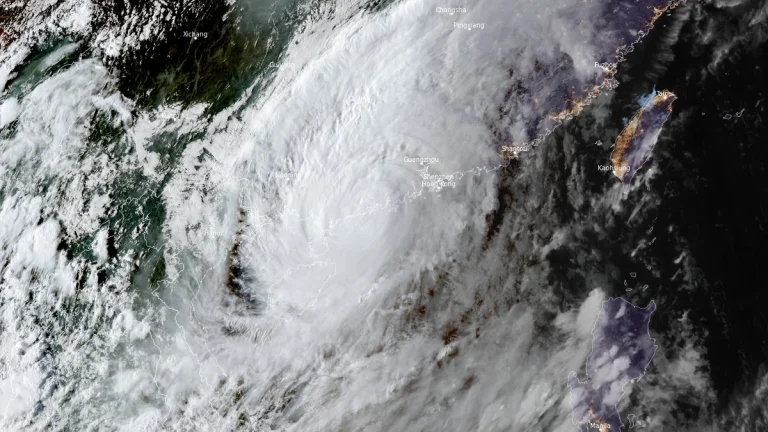
Ragasa made landfall over the coast of China’s Guangdong Province at 17:00 LT (09:00 UTC) on September 24, 2025, as a severe typhoon, with sustained winds of 145 km/h (90 mph). The storm caused widespread disruption across southern China, Hong Kong, and Taiwan, where at least 17 people were killed in flooding a day earlier.
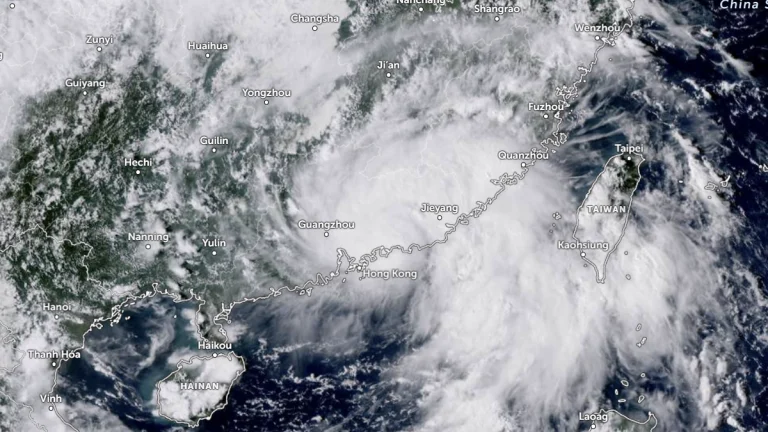
Typhoon Mitag made landfall on the coast of Shanwei, Guangdong Province, at 14:50 LT (06:50 UTC) on September 19, 2025, bring along heavy rains and severe weather. Authorities raised Level III emergency response as the storm prompted school and other closures.

A severe hailstorm impacted Zhuoni County in Gansu Province, China, on September 16. Local reports and video evidence indicate intense rainfall reaching 40 mm (1.57 inches) per hour, combined with a surface temperature of 6°C (43°F). Large amounts of hail accumulated on the ground, covering roads, farmland, and residential areas. Video footage shared on social…
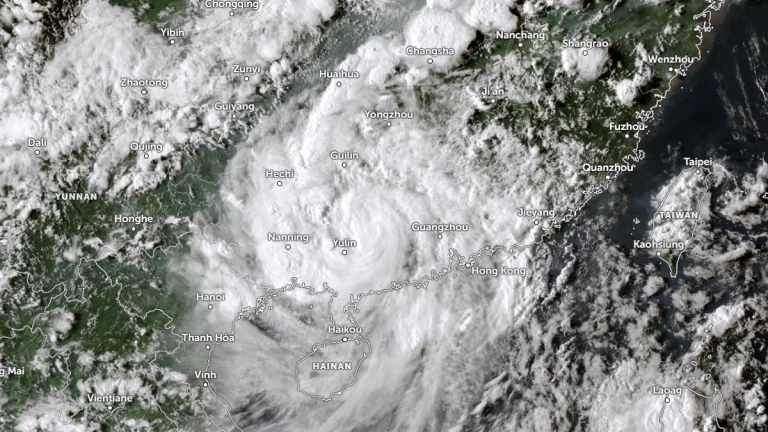
Over 60 000 people were evacuated as Tropical Storm Tapah made landfall near China’s Taishan (Jiangmen), Guangdong Province, at about 00:50 UTC on September 8, 2025. The storm brought severe weather across the province, causing traffic disruption and leaving at least 12 people injured.
