
Lightning killed 323 wild reindeer at once on a Norwegian mountain plateau in 2016, and the crows and ravens that came to eat them left droppings full of crowberry seeds that could still sprout, clustered around the bodies
Lightning killed 323 wild tundra reindeer on Norway’s Hardangervidda plateau on August 26, 2016, leaving hundreds of carcasses concentrated across a small area of alpine tundra. Researchers later found bird droppings concentrated toward the carcasses and viable crowberry seeds in 21 of 24 seed-containing corvid faecal samples tested there; a follow-up at the same site recorded 43 ericaceous seedlings and found cadaver density was the strongest predictor of where seedlings occurred.
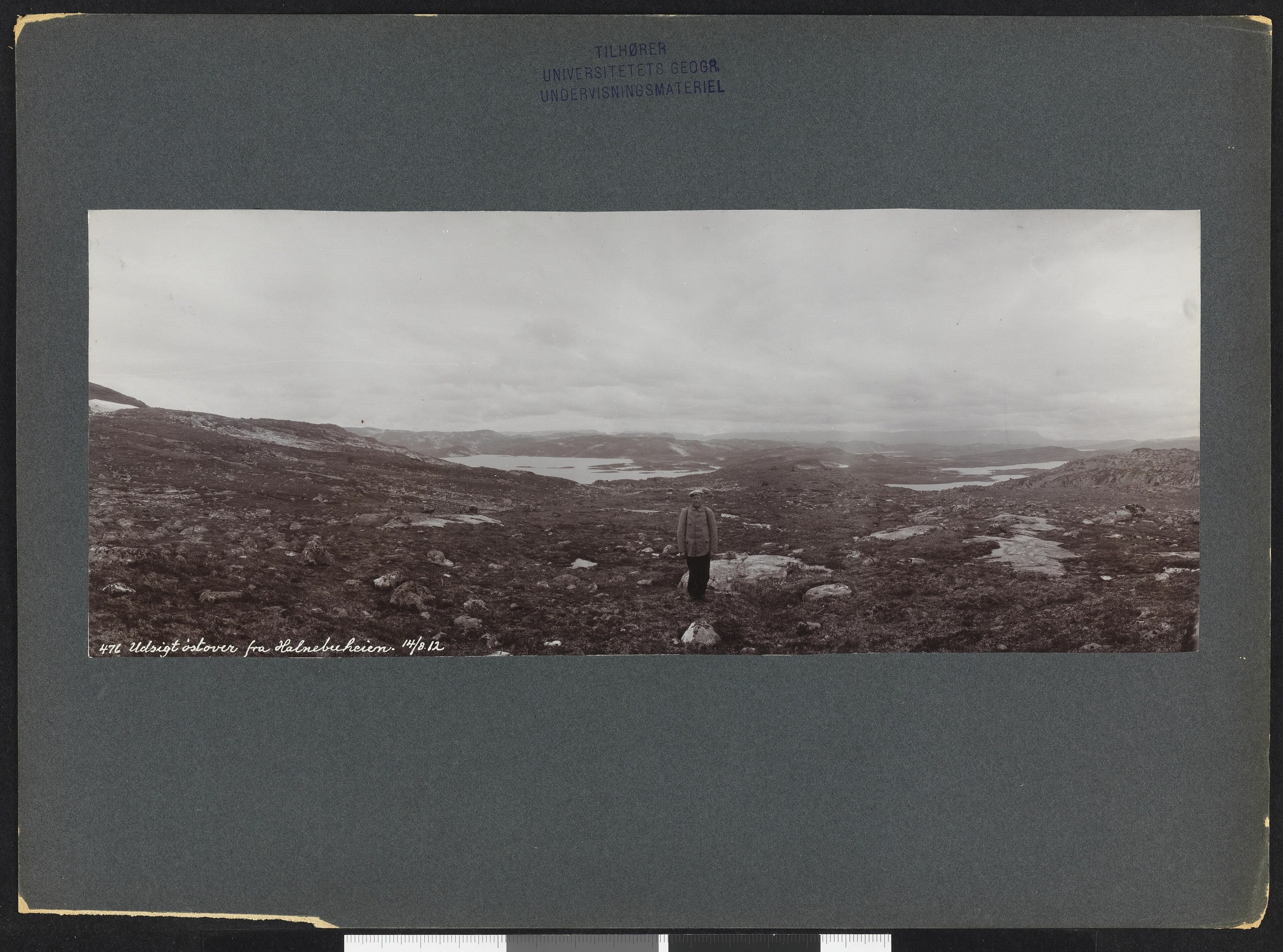
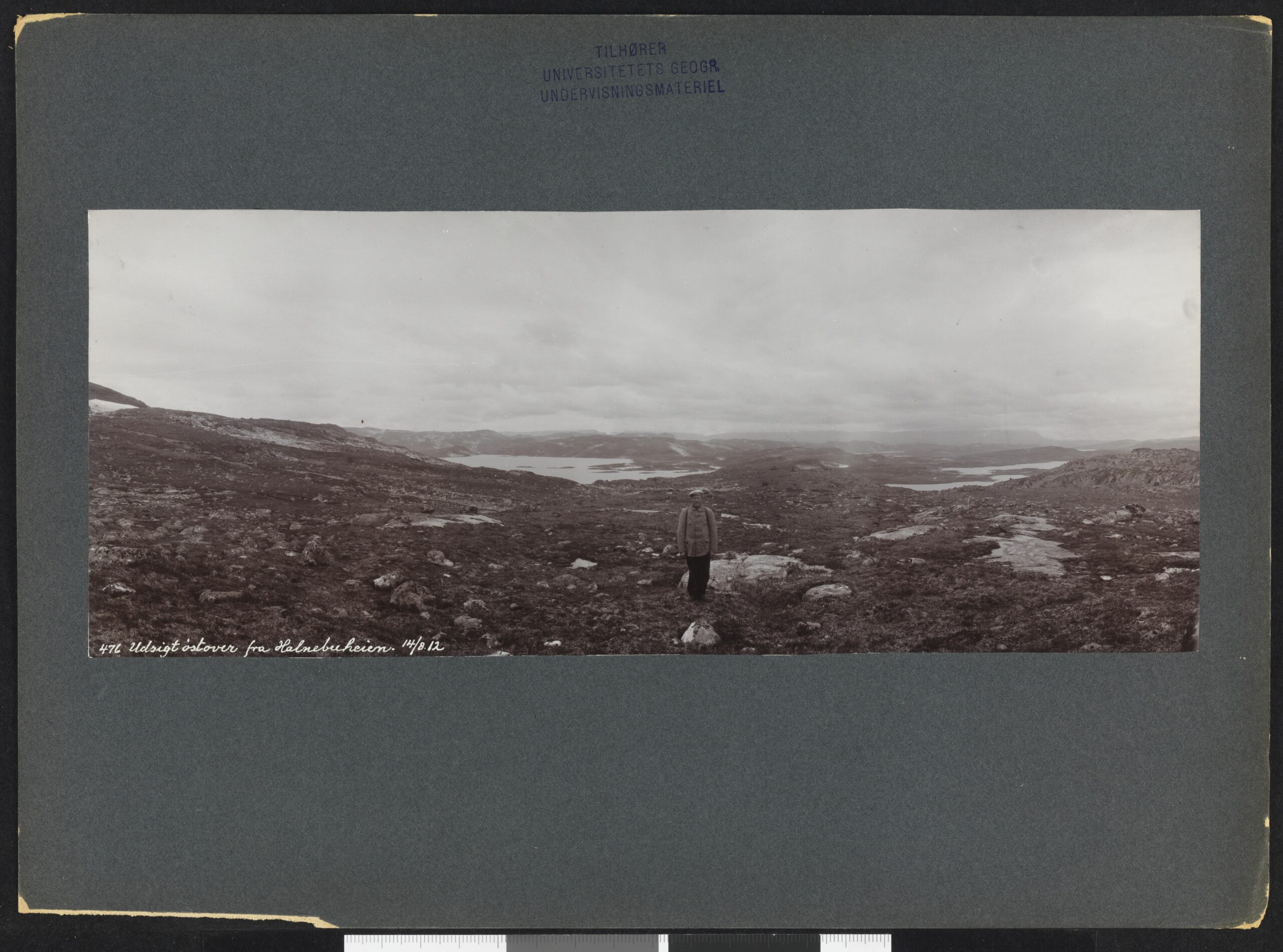
View eastward from Halnebuheim across Hardangervidda, photographed on August 14, 1912. Credit: Jørgen Grundtvig-Olsen / National Library of Norway, public domain, via Wikimedia Commons.
The mortality site lies near Vesle Saure Lake on Hardangervidda in southeastern Norway, at approximately 60.021°N, 8.034°E and 1 220 m (4 003 feet) above sea level. The 323 carcasses covered an area of roughly 240 × 100 m (787 × 328 feet), with the highest concentration inside an area of approximately 50 × 50 m (164 × 164 feet). Norwegian authorities removed the heads of the dead reindeer for disease screening but left the remaining biomass at the site.
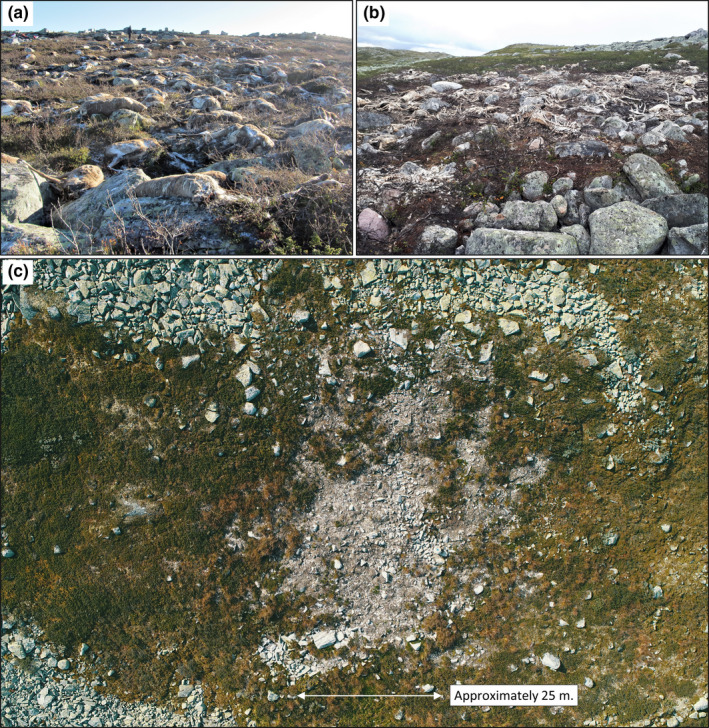
The concentration of animal remains gave ecologists an unusual opportunity to examine how a large mortality event can alter both animal activity and plant recruitment. Decomposition of large carcasses can smother vegetation and produce abrupt changes in soil nutrients and acidity, leaving vegetation-poor, nutrient-rich patches known as cadaver decomposition islands. Scavengers attracted to the carcasses can then move biological material into those disturbed patches.
In the 2018 Biology Letters study, researchers established 75 survey plots measuring 1 × 1 m (3.3 × 3.3 feet) in a semi-regular grid across the mortality site. Two observers searched each plot systematically and recorded 22 mesopredator scats and 87 bird faeces, while rodent faecal pellet groups were detected in 37 plots. The researchers then compared those observations with carcass density and distance from the nearest carcass.
Bird faeces were strongly associated with both greater carcass density and shorter distance to a carcass. Mesopredator scats also increased with carcass density. Rodent pellets showed the opposite pattern, with the probability of detecting them decreasing as carcass density increased. The authors proposed that rodents could have been responding to reduced vegetation around decomposition islands or to increased presence of scavenging predators.
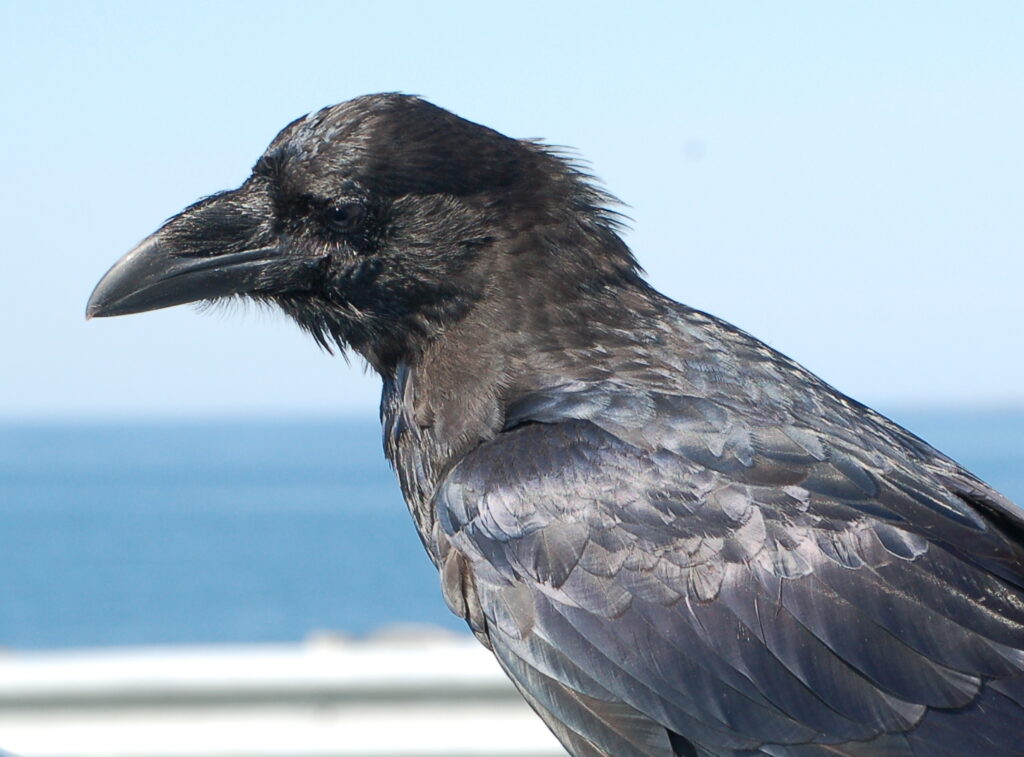
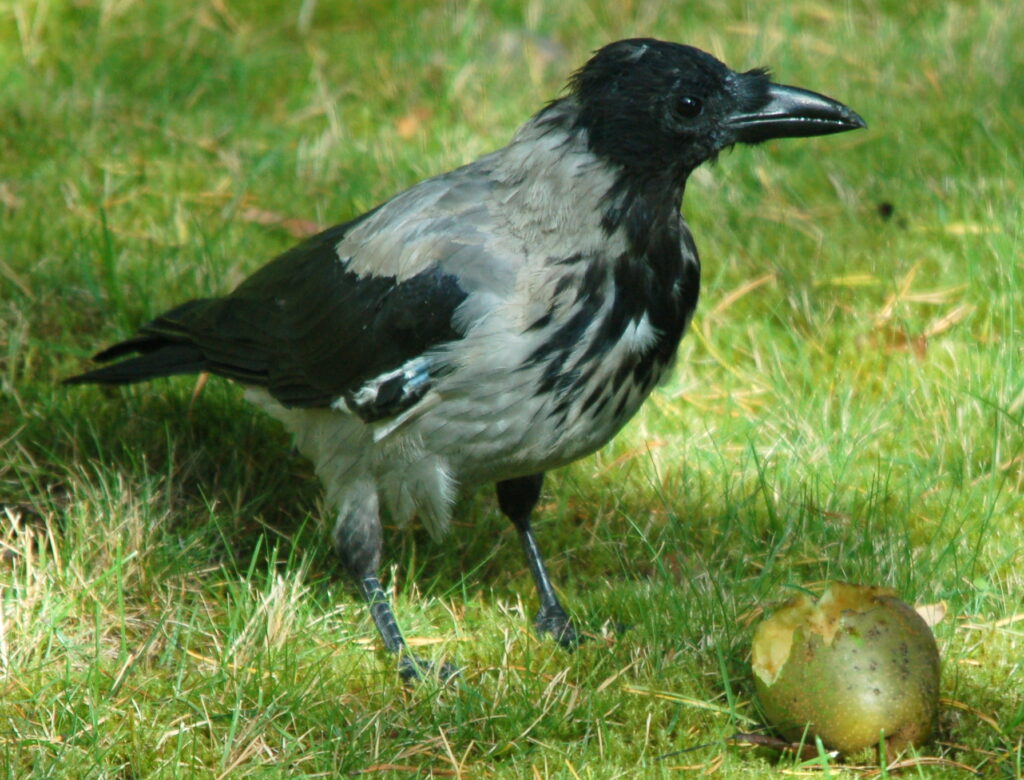
Common ravens (Corvus corax) and hooded crows (Corvus cornix) were among the corvids using the mortality site. Other recorded carcass users and scavengers included golden eagles, red and Arctic foxes, wolverines and rodents.
Crowberry (Empetrum nigrum) became the focal plant species because its seeds are readily recognizable and the shrub reproduces heavily through vegetative growth despite producing berries containing viable seeds. Researchers collected corvid faecal samples at cadaver decomposition islands that contained crowberry seeds, extracted between five and 20 seeds from each sample and assessed them with a standard tetrazolium viability test.
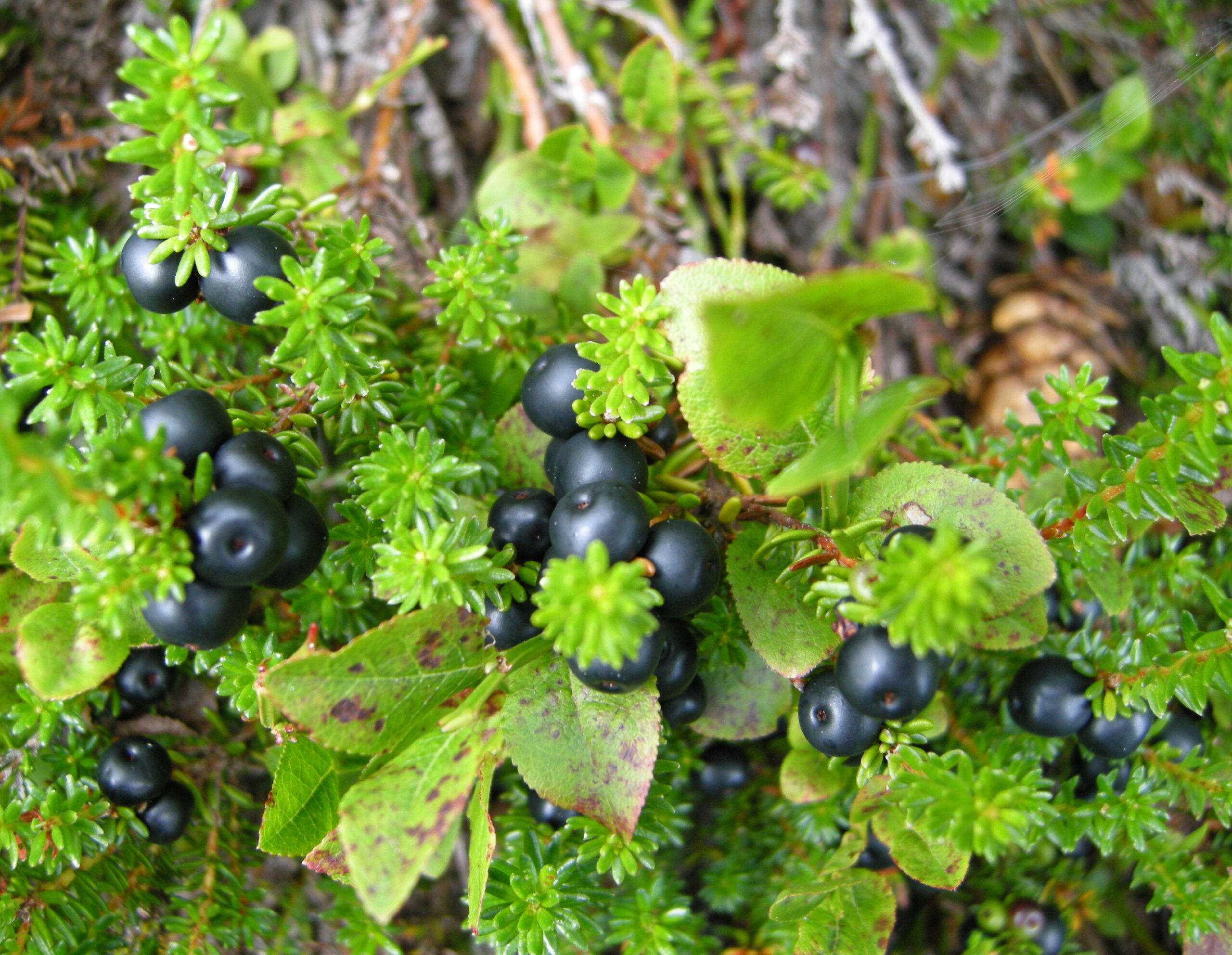
The tetrazolium procedure tests whether seed tissue is alive; it is not a germination trial. Viable crowberry seeds were present in 21 of the 24 seed-containing corvid faecal samples examined, or 87.5%. Within those samples, the mean proportion of tested crowberry seeds classified as viable was 0.385, equivalent to 38.5%.
The distinction is important because the 24 samples were not a random sample of all corvid droppings at the mortality site. Researchers specifically collected corvid faeces containing crowberry seeds for the viability analysis. The study therefore established that viable seeds survived passage through the birds’ digestive systems, not that 87.5% of all corvid droppings at the site contained viable crowberry seeds.
The combination of seed-bearing faeces and scavenger aggregation led the researchers to describe a mechanism called directed endozoochory. Endozoochory occurs when an animal eats fruit, transports the seeds internally and later deposits them in faeces. It becomes directed when the animal’s movements cause seed deposition to be concentrated toward particular locations rather than distributed randomly across the landscape.
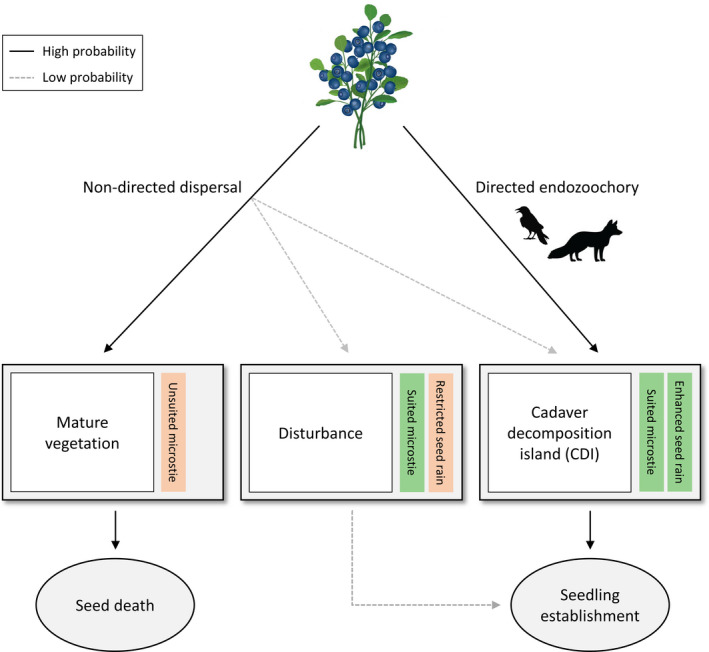
At Hardangervidda, carcasses attracted scavengers while decomposition simultaneously created disturbed microsites. The proposed mechanism therefore joins two processes at the same location: animals transport seeds toward the carcasses, while the carcasses alter vegetation and soil conditions in ways that can create short-lived recruitment opportunities for plants.
The 2018 study did not show that the seeds recovered from corvid faeces subsequently germinated or established in the tundra. The authors explicitly identified field germination and establishment as an unresolved step. They also cautioned that the mortality site represented an exceptional mass die-off, leaving uncertain whether directed seed dispersal works in the same way around single, widely separated carcasses produced by predation, hunting, starvation or other causes.
A 2022 study in Ecology and Evolution returned to the same Hardangervidda mortality site to examine seedling establishment. Over the three years after the lightning event, vegetation in the carcass-dense area changed substantially. By 2019, decomposition had produced one large cadaver decomposition island measuring roughly 25 × 25 m (82 × 82 feet), surrounded by several smaller disturbed patches dominated in places by bare soil and re-establishing bryophytes and graminoids.
Scavengers also continued to use the site after 2016. The follow-up paper reports that corvid and mesopredator occurrence remained concentrated around the most carcass-dense area during later fieldwork, although corvid scat density had declined by 2018. Observations coincided with the August ripening and dispersal period for ericaceous berries.
For the 2019 seedling survey, researchers examined 67 plots measuring 0.5 × 0.5 m (1.6 × 1.6 feet). Each plot was divided into 16 smaller sections and searched systematically. Seedlings were distinguished from shoots produced through clonal growth by the presence of seed leaves and other early developmental features.
The survey recorded 43 ericaceous seedlings in 12 of the 67 plots, with between one and 10 seedlings in an occupied plot. Crowberry was the most abundant species with 22 seedlings, followed by 11 lingonberry (Vaccinium vitis-idaea), seven bog bilberry (Vaccinium uliginosum) and one bilberry (Vaccinium myrtillus). Two seedlings were too young to identify beyond the genus Vaccinium.
Seedling ages were not individually recorded. Many plants observed in 2019 had clearly germinated that year because only their seed leaves and first leaves were present, while some more elongated seedlings appeared to belong to an earlier cohort. Researchers noted seedlings during vegetation work in 2018 but not in 2016 or 2017, although seedlings were not systematically inventoried during those earlier surveys.
Cadaver density was the best-supported predictor of whether seedlings occurred. Using carcass density calculated within a 2 m (6.6 feet) search radius, the probability of seedling presence increased significantly with increasing cadaver density (β = 7.224, SE = 2.296, p < 0.01). Cadaver density appeared in every model within the top-supported model set.
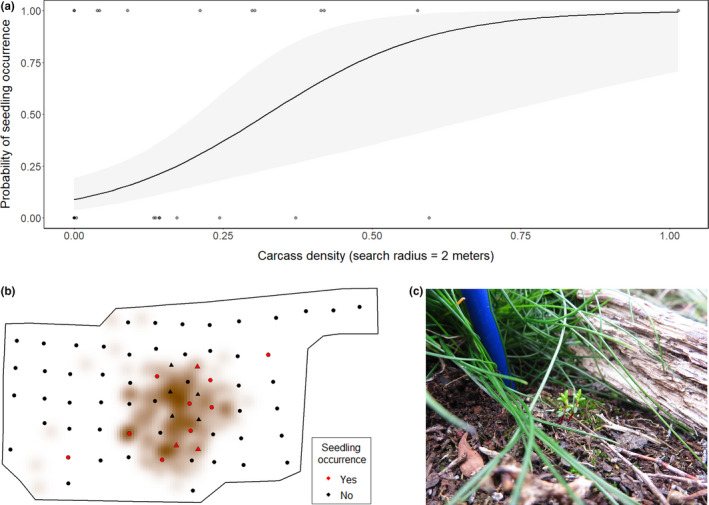
Measures of bare soil and vascular-plant cover did not explain seedling occurrence as well on their own. The authors also observed disturbed plots with low vegetation cover near mature berry-producing shrubs where seedlings were absent unless those plots were also near cadavers. Their interpretation was that a suitable disturbed microsite was not sufficient by itself; elevated seed delivery toward the carcasses was also an important part of the recruitment process.
The follow-up study does not trace any individual seed tested in 2018 to any particular seedling observed later. Instead, the two studies document consecutive stages of the proposed ecological pathway at the same site: scavengers deposited seed-bearing faeces around a concentrated carcass field, crowberry seeds recovered from corvid faeces remained viable, and ericaceous seedlings later occurred preferentially where carcass density was higher.
The mechanism is relevant to crowberry and related northern berry shrubs because these plants can produce large crops of fruit while much of their local expansion occurs clonally. Their seedlings are rarely observed in the wild and their seeds are poorly represented in soil seed banks, creating what ecologists have described as a reproductive paradox. Directed transport by wide-ranging scavengers offers one mechanism by which seeds can reach temporary patches where establishment is more favorable.
Hardangervidda provided an unusually concentrated test because hundreds of carcasses persisted within a small area and continued attracting scavengers through berry-producing seasons. Whether the same pathway operates around individual carcasses, in other ecosystems or with different scavenger communities remains unresolved. The 2022 researchers identified those conditions as the next major limits on determining how broadly cadaver-directed seed dispersal contributes to plant reproduction.
References:
1 Steyaert, S. M. J. G., Frank, S. C., Puliti, S., Badia, R., Arnberg, M. P., Beardsley, J., Økelsrud, A., & Blaalid, R. (2018). Special delivery: scavengers direct seed dispersal towards ungulate carcasses. Biology Letters, 14(8), 20180388. DOI: 10.1098/rsbl.2018.0388
2 Arnberg, M. P., Frank, S. C., Blaalid, R., Davey, M. L., Eycott, A. E., & Steyaert, S. M. J. G. (2022). Directed endozoochorous dispersal by scavengers facilitate sexual reproduction in otherwise clonal plants at cadaver sites. Ecology and Evolution, 12(1), e8503. DOI: 10.1002/ece3.8503
3 Data from: Special delivery: scavengers direct seed dispersal towards ungulate carcasses – Dryad Digital Repository – July 25, 2018

I’m a science journalist and researcher at The Watchers, contributing to the Epicenter edition, where I cover peer-reviewed scientific research and emerging discoveries across Earth and space sciences. With a background in astronomy and a passion for environmental science, I’ve worked in shark and coral conservation in Fiji, conducting reef and shark-behavior research, contributing to mangrove restoration, and earning PADI Open Water and Coral Reef Certifications. I bring a blend of scientific rigor and storytelling to illuminate the discoveries shaping our planet and beyond.
Published in the last 24 hours
- Helicopters plucked almost 100 people from the Cornish village of Boscastle when a flash flood hit in 2004, and not one person died Epicenter
- A Kansas farmer looked straight up into a tornado in 1928 and saw a hollow tube at least half a mile tall, its walls lit by constant flashes of lightning Epicenter
- New Mexico’s Navajo Reservoir rose nearly 60 feet in seven weeks this fall, after a winter with almost no snow, as storms flooded the San Juan River Epicenter
- Malawi continues Bris AI weather forecasting tests ahead of operational integration Epicenter
