
Malawi continues Bris AI weather forecasting tests ahead of operational integration
Malawi’s Department of Climate Change and Meteorological Services (DCCMS) is continuing to test a locally deployable AI weather-prediction system built around MET Norway’s Bris model and ECMWF’s Forecast-in-a-Box. WMO marks the CREWS-funded project as completed in June 2026, while MET Norway reported on November 12 that model refinement, local-data integration and preparation for operational implementation are continuing.
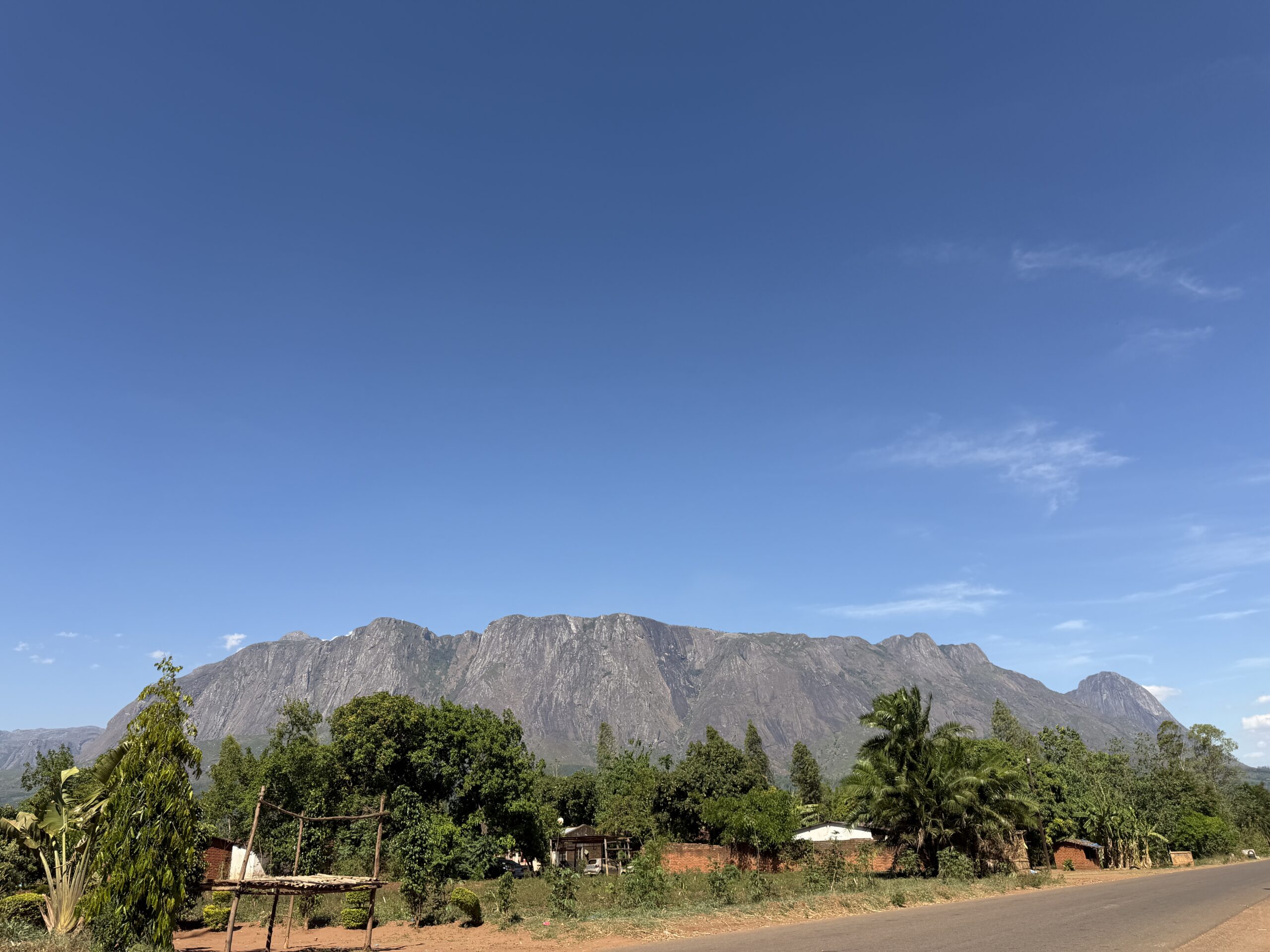
Mount Mulanje in southern Malawi. The photograph provides geographic context for MET Norway's Malawi forecasting project and does not depict the AI forecasting system. Credit: Mai-Linn Finstad Svehagen / MET Norway
The World Meteorological Organization (WMO) lists the CREWS Artificial Intelligence for Early Warnings for All Malawi project as completed, with project dates from July 2025 through June 2026. WMO records Bris and Forecast-in-a-Box as tested outputs and lists staff training, forecaster feedback on operational integration, technical support and a roadmap for possible scale-up among the project’s achievements.
MET Norway’s November 12 update shows that completion of the funded project did not end technical testing. DCCMS can now run a version of Bris tuned for Africa through Forecast-in-a-Box, while continuing work includes adapting the model to Malawi’s needs, broadening its geographic coverage for tropical-cyclone monitoring, refining the AI system and integrating local data.

Forecast-in-a-Box is an all-in-one weather-forecasting application developed by the European Centre for Medium-Range Weather Forecasts (ECMWF) for running AI-based prediction models across different computing infrastructure. MET Norway says the Malawi work is intended to allow DCCMS to run AI forecasting locally and independently. Local execution addresses one infrastructure constraint; it does not by itself establish forecast skill.
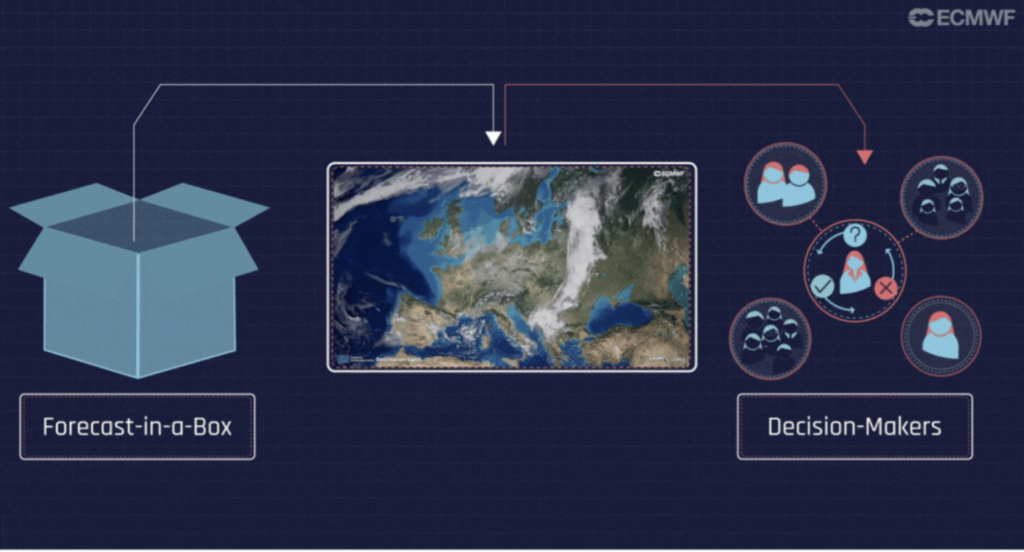
Nipen et al. (2026) described Bris in the peer-reviewed journal Artificial Intelligence for the Earth Systems. In its published Nordic configuration, Bris places a 2.5 km (1.6 miles) regional grid inside a coarser 31 km (19 miles) global framework and advances forecasts at 6-hour intervals. Its graph-based architecture lets the model concentrate resolution over a target region while retaining lower-resolution atmospheric information over the rest of the globe.
The researchers pretrained Bris on 43 years of ERA5 global data and refined it using 3.3 years of 2.5 km (1.6 miles) regional operational analyses from the Meteorological Cooperation (MetCoOp) Ensemble Prediction System (MEPS). They evaluated the model against surface observations from measurement stations across Norway and compared its forecasts with short-range MEPS forecasts.
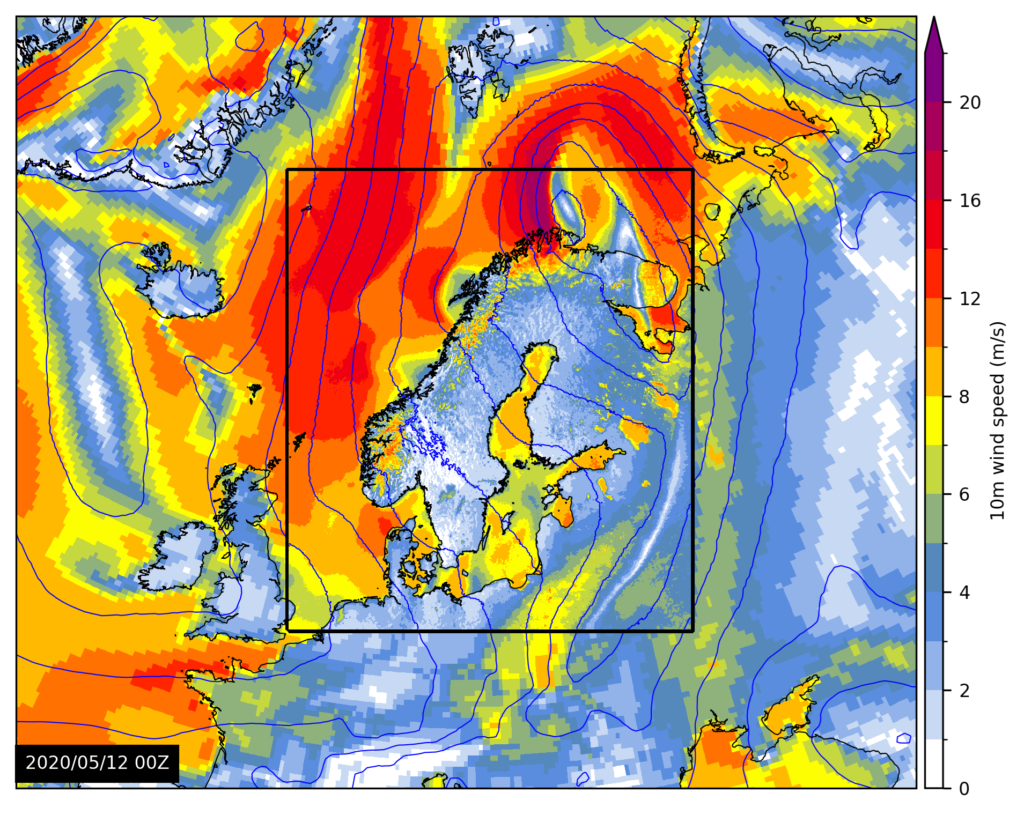
Bris produced lower root-mean-square errors for 2 m (6.6 feet) temperature than both the MEPS control forecast and ensemble mean, while precipitation and wind-speed forecasts were competitive with the operational system. Forecast skill for 10 m (33 feet) wind remained close to MEPS at most thresholds but weakened above 15 m/s (34 mph), where Bris produced too few strong-wind events. The authors found that the model tends to underestimate extremes.
Those results do not establish Bris forecast performance in Malawi. The peer-reviewed evaluation used Norwegian surface observations and a Nordic regional configuration. MET Norway’s November update says the latest changes make the model good enough for the Malawi pilot while explicitly noting that further adjustments are expected.

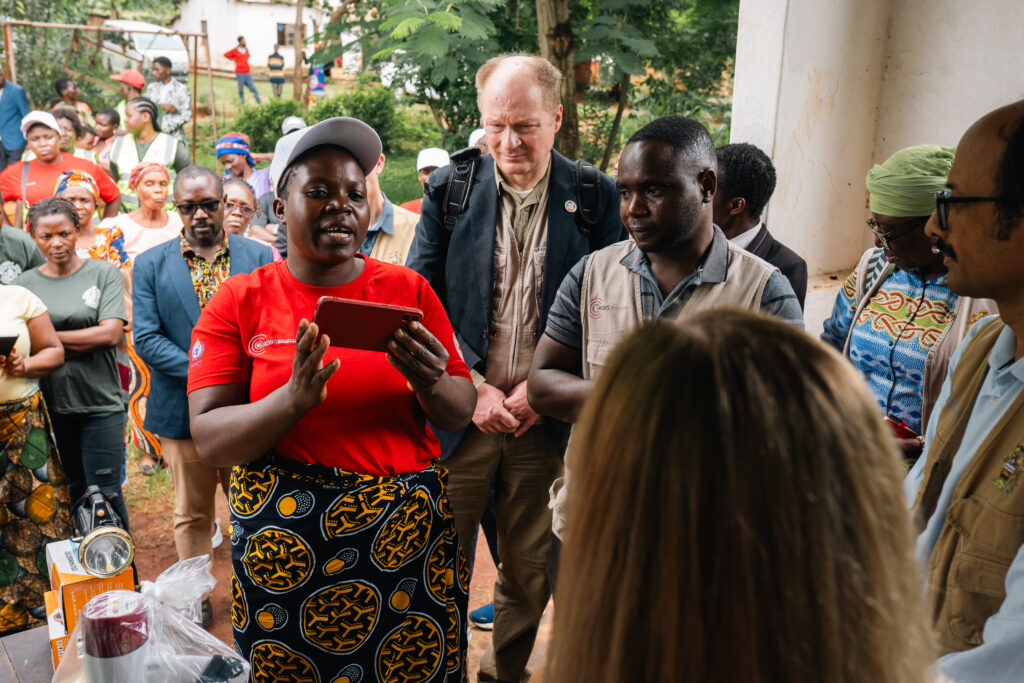
MET Norway has worked with DCCMS since 2019. The cooperation has included access to and training in meteorological analysis systems and development of a weather application using data from the Norwegian public forecasting service Yr. The current implementation work also includes educational material, continued capacity building and measures intended to support sustainable local operation.
WMO’s project record shows why validation remains the main operational question. The project objectives included evaluating changes in forecast accuracy, lead time and usability and gathering feedback from forecasters on operational integration. Its project page lists improved accuracy, lead time and usability as expected outcomes rather than providing numerical Malawi-specific forecast-skill scores.
MET Norway says the road to full implementation still involves model refinement and local-data integration and gives a goal of reaching implementation within a year of its November 2026 update. DCCMS Director General Lucy Mtilatila said the service is piloting and testing the technology and intends to integrate Bris and Forecast-in-a-Box into its meteorological and climate services.
The current evidence supports a narrower conclusion than the original claim that AI is already revolutionizing forecasting in Malawi. Bris and Forecast-in-a-Box have reached local testing and implementation work, but the WMO project record and MET Norway’s November update do not provide numerical Malawi-specific skill scores demonstrating improved forecast accuracy, warning lead time or extreme-event performance. Local verification remains the evidence needed to establish how much operational value the system adds under Malawi’s weather conditions.
References:
1 Nipen, T. N., Haugen, H. H., Ingstad, M. S., Nordhagen, E. M., Salihi, A. F. S., Tedesco, P., Seierstad, I. A., Kristiansen, J., Lang, S., Alexe, M., Dramsch, J., Raoult, B., Mertes, G., & Chantry, M. (2026). Regional data-driven weather modeling with a global stretched grid. Artificial Intelligence for the Earth Systems, 5(2). DOI: 10.1175/AIES-D-25-0001.1
2 How AI Revolutionizes Weather Forecasting in Malawi – Norwegian Meteorological Institute – November 12, 2026
3 Climate Risk and Early Warning Systems (CREWS) Artificial Intelligence (AI) for Early Warnings for All (EW4ALL) Malawi Project – World Meteorological Organization – Last updated October 5, 2026

I’m a science journalist and researcher at The Watchers, contributing to the Epicenter edition, where I cover peer-reviewed scientific research and emerging discoveries across Earth and space sciences. With a background in astronomy and a passion for environmental science, I’ve worked in shark and coral conservation in Fiji, conducting reef and shark-behavior research, contributing to mangrove restoration, and earning PADI Open Water and Coral Reef Certifications. I bring a blend of scientific rigor and storytelling to illuminate the discoveries shaping our planet and beyond.
Published in the last 24 hours
- A fireball over northern China on 6 November 2026 punched a crater into a wheat field at Beigucheng village in Hebei; the Institute of Geochemistry has now classified the fallen stones as L6 ordinary chondrites. Epicenter
- Right about now, Voyager 1 is crossing a line no human-made object has ever reached, a full light-day from Earth, which means a message NASA sends tonight won't arrive until tomorrow night, and the spacecraft's answer won't make it home until the night after that
- G1 geomagnetic storm watch remains in effect as NOAA forecasts Kp 4.67 late on November 17 and early on November 18
- Atmospheric river brings moderate risk of heavy rain, mountain snow and high winds to northern California and southwest Oregon on November 24-25
