
Three Australian estuarine fish species maintain performance across thermal extremes
Three estuarine fish species sampled from 20 sites along approximately 1 000 km (620 miles) of eastern Australia maintained broadly comparable physiological performance across sharply different thermal environments, according to research published in Global Change Biology on October 19, 2026. In controlled trials, yellowfin bream and sand whiting also showed no broad physiological or behavioral decline during +2°C (+3.6°F) and +4°C (+7.2°F) simulated marine heatwaves.
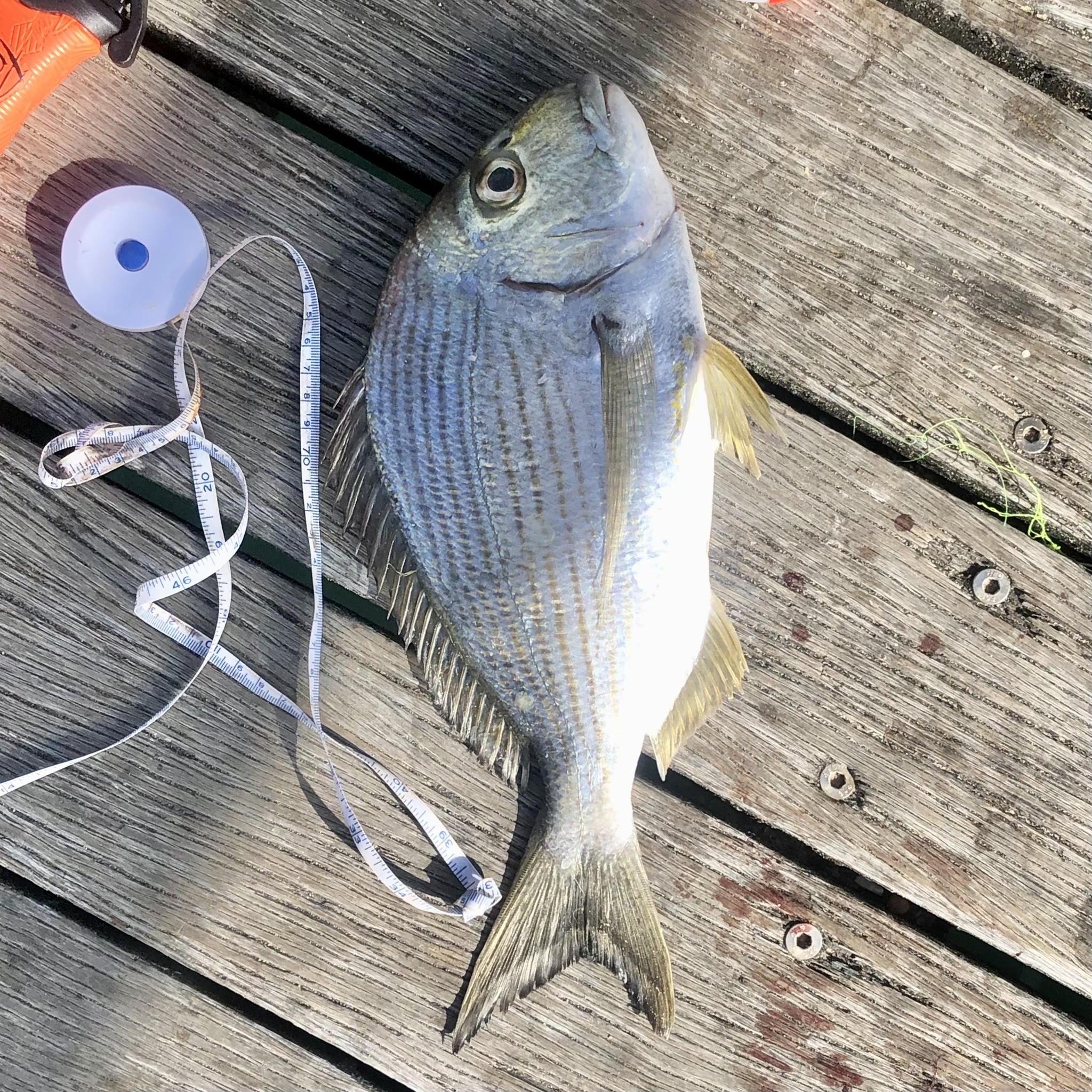
Yellowfin bream (Acanthopagrus australis), one of the three species examined in the field study and one of two tested during the simulated heatwave experiment. Credit: Sylke Rohrlach / Wikimedia Commons, CC BY-SA 2.0
Mitchell et al. (2026) examined 563 fish from three economically important estuarine species: 168 yellowfin bream (Acanthopagrus australis), 351 sand whiting (Sillago ciliata) and 44 tarwhine (Rhabdosargus sarba). Fish were collected from 20 sites across 15 estuary systems spanning approximately 1 000 km (620 miles) of Australia’s east coast, between about 28° and 38° S.
The sampling network crossed subtropical, warm-temperate and cold-temperate waters and included tidal rivers, coastal lagoons and marine-influenced embayments. Field collections took place from January 19–31 and March 4–18, 2024, allowing the researchers to compare populations living under high and low short-term thermal variability.
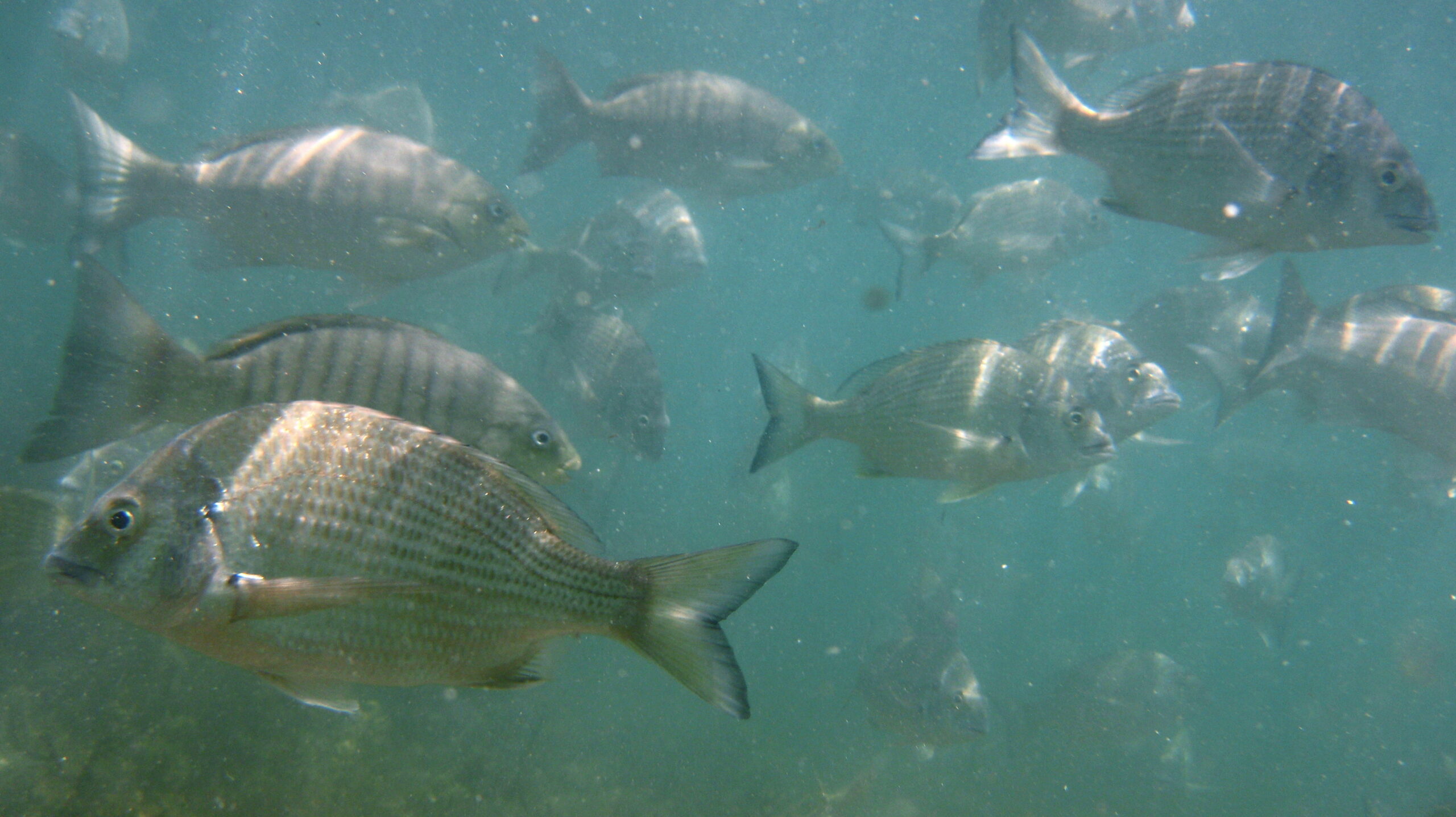
Estuaries exposed fish to sharply different temperatures
January measurements showed a clear separation between the two thermal environments. Mean water temperatures at high-variability sites ranged from 27.7–29.7°C (81.9–85.5°F), compared with 25.3–26.2°C (77.5–79.2°F) at low-variability sites. Maximum temperatures at high-variability locations reached 36.5–37.8°C (97.7–100.0°F), while all low-variability sites remained at or below 30.1°C (86.2°F).
| January 2024 thermal regime | Mean water temperature | Maximum water temperature |
|---|---|---|
| High-variability sites | 27.7–29.7°C (81.9–85.5°F) | 36.5–37.8°C (97.7–100.0°F) |
| Low-variability sites | 25.3–26.2°C (77.5–79.2°F) | ≤30.1°C (≤86.2°F) |
Temperature ranges also differed. During January, high-variability sites recorded ranges of 12.9–14.5°C (23.2–26.1°F of temperature change), compared with 3.6–8.2°C (6.5–14.8°F of temperature change) at low-variability sites. Minimum temperatures overlapped more closely, showing that much of the contrast came from higher daytime or episodic peaks rather than uniformly warmer conditions.
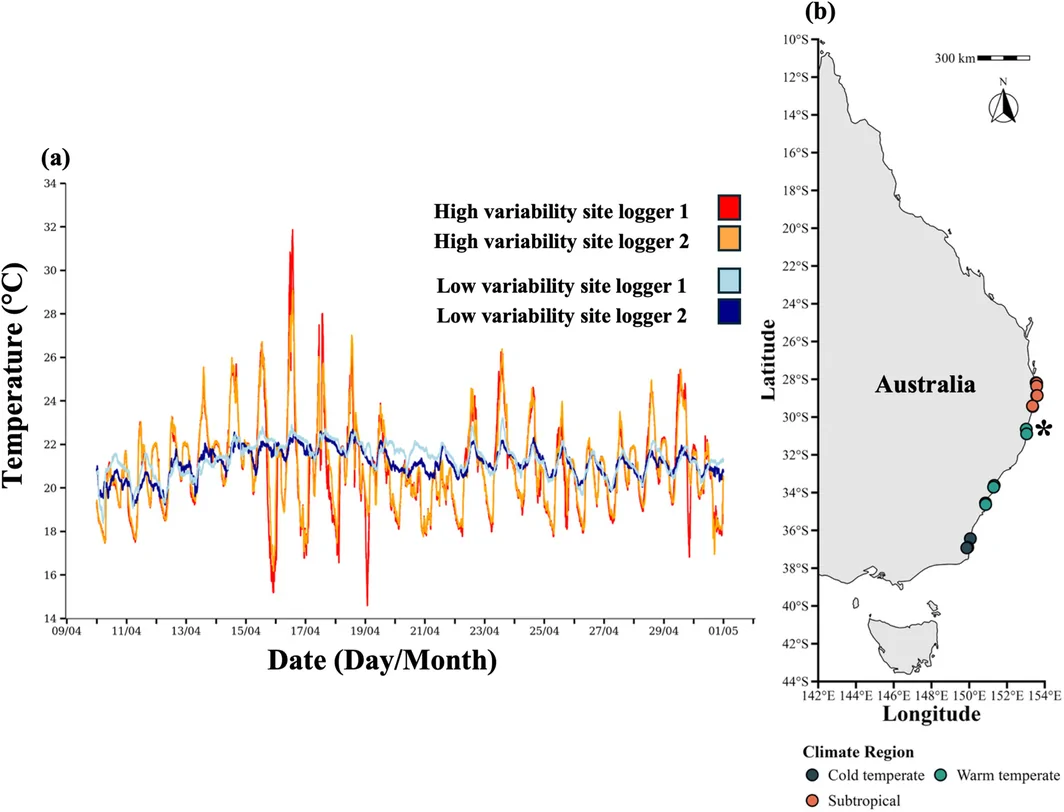
Most sites were monitored with temperature loggers during the collection periods. Three January locations—Wommin Lagoon, Cudgera Creek and Christies Creek—used point measurements to characterize ambient temperature instead; those measurements were not used to calculate continuous thermal-variability metrics. Longer logger records at Narrabeen Lagoon and Careel Bay were also used to confirm the difference between the experimental high- and low-variability environments.
Field physiology showed little consistent advantage from local thermal history
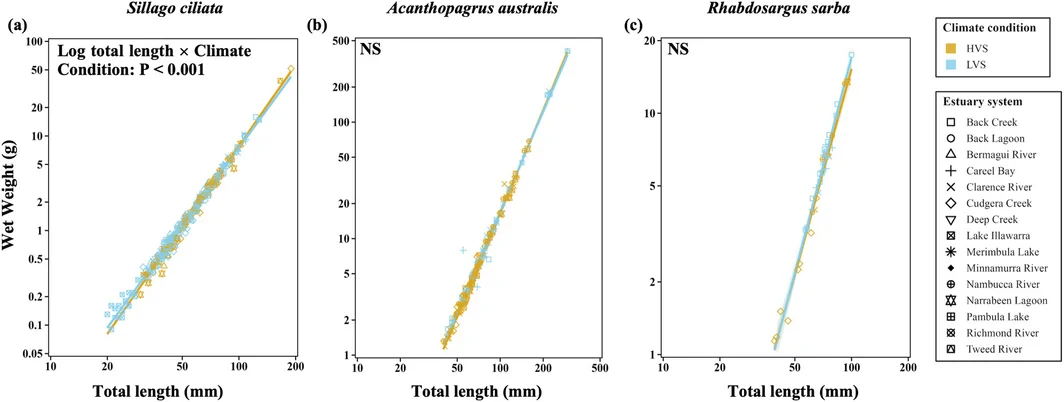
All 563 fish were measured for length and wet weight, while a subset of 294 was analyzed for total protein, total antioxidant capacity and malondialdehyde, a marker of oxidative damage to cellular lipids. Total protein and antioxidant capacity did not differ significantly between high- and low-variability environments in any of the three species.
Two exceptions prevented the field result from being completely uniform. Sand whiting showed a significant difference in length-weight scaling between site types (p<0.001), with mass increasing more steeply with length in fish from high-variability sites. Tarwhine from low-variability sites had higher oxidative damage than tarwhine from high-variability sites (p=0.005), a pattern the authors treated cautiously because it was not reproduced in the other two species and the tarwhine sample was comparatively small.
Two species were tested under simulated marine heatwaves
The controlled experiment used juvenile yellowfin bream and sand whiting collected from Narrabeen Lagoon, the high-variability site, and Careel Bay, the low-variability site. Fish were housed individually in 120 flow-through tanks, with 10 fish assigned to each combination of species, thermal origin and temperature treatment.
Control temperatures reflected the different thermal environments: 24°C (75.2°F) for fish from Careel Bay and 26°C (78.8°F) for fish from Narrabeen Lagoon. Researchers then imposed a moderate heatwave of +2°C (+3.6°F) for 14 days and a more intense heatwave of +4°C (+7.2°F) for seven days.
Both heatwave treatments produced the same cumulative temperature anomaly of 28°C·days (50.4°F·days). Holding cumulative exposure constant allowed the researchers to compare a longer, moderate event with a shorter, hotter event rather than simply giving one group a larger total heat dose.
| Fish origin | Control | +2°C (+3.6°F) heatwave | +4°C (+7.2°F) heatwave |
|---|---|---|---|
| Low-variability site | 24°C (75.2°F) | 26°C (78.8°F) | 28°C (82.4°F) |
| High-variability site | 26°C (78.8°F) | 28°C (82.4°F) | 30°C (86.0°F) |
Researchers assessed 12 physiological and behavioral measures spanning growth, body condition, energy storage, total protein, antioxidant capacity, oxidative damage, activity, shelter use, feeding behavior and escape responses. Neither yellowfin bream nor sand whiting showed a broad significant decline under the +2°C or +4°C treatments relative to controls, irrespective of thermal origin. For the physiological and behavioral responses tested, treatment, origin or interaction effects were nonsignificant at p≥0.06 apart from one sand-whiting growth response.
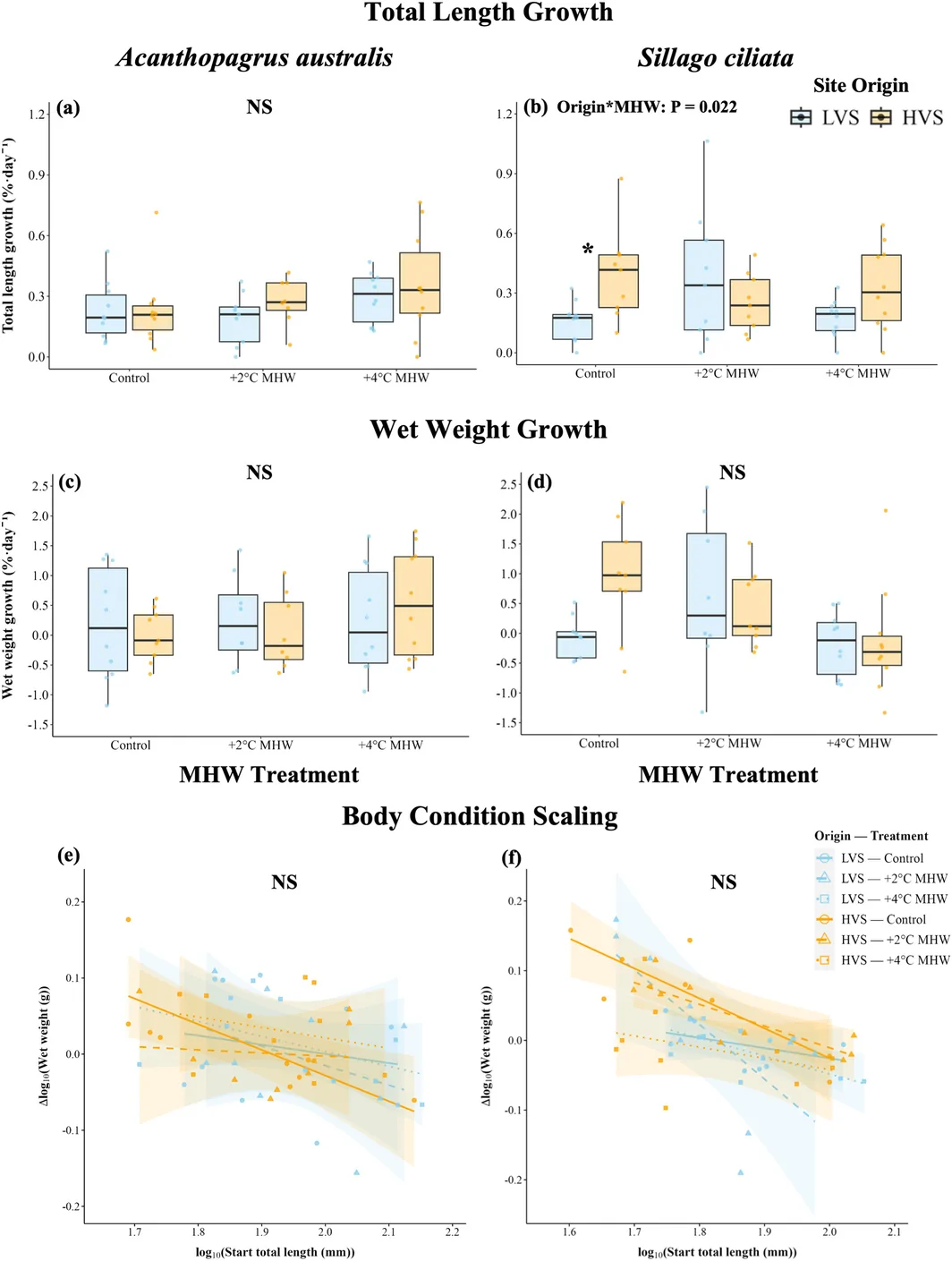
The exception was total-length growth in sand whiting. Origin and treatment interacted significantly (χ²=7.62, p=0.022): fish from the high-variability site grew faster than low-variability fish under their respective control conditions (p=0.020), but the origin difference was not detected under either heatwave treatment (p≥0.10). Because the two origins deliberately had different control temperatures, 26°C (78.8°F) and 24°C (75.2°F), the laboratory growth difference cannot by itself establish that warmer water caused a population-specific advantage.
Mortality during the experiment was 5.8% and was distributed across treatments and origins without an apparent systematic pattern. Fish that died were excluded from growth and physiological analyses, while behavioral observations recorded before mortality were retained.
The results favor thermal generalism over a strong local-acclimation effect
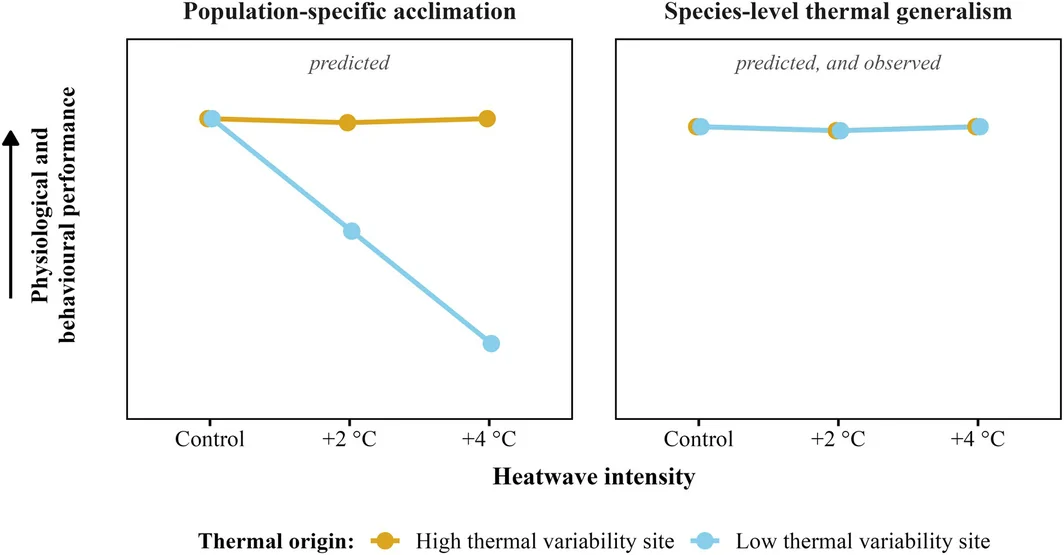
The experiment was designed to separate two explanations. Under population-specific acclimation, fish with a history of large temperature swings should gain an advantage over members of the same species from more stable estuaries as heatwave intensity rises. Under species-level thermal generalism, both groups should maintain performance because broad thermal tolerance is shared across the species.
The absence of a consistent experimental advantage for fish from Narrabeen Lagoon, combined with broadly comparable field physiology across the 1 000 km (620 miles) sampling gradient, led the authors to favor species-level thermal generalism. That conclusion concerns the scale at which the tolerance pattern was observed; it does not establish a specific genetic mechanism.
The mechanism remains unresolved. Broad species-level tolerance can arise through genetic adaptation, phenotypic plasticity or a combination of processes. The observational design could not determine whether the fish possessed constitutive thermal generalism independent of local conditions or actively maintained tolerance through chronic exposure to variable environments.
The experiment did not establish the fishes’ absolute heat limits
The hottest laboratory conditions reached 28–30°C (82.4–86.0°F), depending on thermal origin. Field measurements at some high-variability estuaries exceeded 35°C (95°F) and reached 36.5–37.8°C (97.7–100.0°F) during the January sampling period. The experiment therefore did not reproduce the highest temperatures recorded in the field.
The researchers also did not measure critical thermal maximum (CTmax), the acute temperature at which an animal loses normal physiological function under a controlled heating protocol. Field temperatures show that the sampled populations occupied very warm and variable environments, but they do not define the fishes’ absolute physiological ceilings.
The laboratory component carries another scope limitation: each experimental species came from only one high-variability and one low-variability population. Responses can differ across a species’ geographic range, and the authors state that experiments involving additional populations and latitudes would provide a stronger test of species-wide thermal generalism.
Why the distinction matters for heatwave vulnerability
Many heatwave-vulnerability frameworks place heavy weight on event intensity. For a thermal generalist, however, a temperature increase can remain within an existing performance range even when the same anomaly would impose substantial stress on a species with a narrower thermal margin. The study therefore argues that species-level thermal breadth should be considered alongside the magnitude and duration of a marine heatwave.
The result does not show that Australian fishes as a group are protected from warming, nor that stronger or longer future heatwaves will be harmless. The study covered three broadly distributed estuarine species, and controlled heatwave exposures were conducted on two of them. Temperatures beyond the tested tolerance envelope, chronic warming, interacting environmental stressors and species with narrower thermal ranges can produce different outcomes.
Resolving why the observed tolerance persists across contrasting populations will require experiments that separate inherited characteristics from environmental conditioning. The authors identify common-garden experiments and transcriptomic work as possible tests, while acoustic telemetry, individual temperature logging and population genomics could connect the thermal histories of individual fish with adaptive genetic variation across their ranges.
References:
Mitchell, A., Booth, D. J., Connell, S. D., Ravasi, T., & Nagelkerken, I. (2026). Thermal generalism shapes tolerance to extreme heatwaves in estuarine fishes. Global Change Biology, 32(10), e71143. https://doi.org/10.1111/gcb.71143

I’m a science journalist and researcher at The Watchers, contributing to the Epicenter edition, where I cover peer-reviewed scientific research and emerging discoveries across Earth and space sciences. With a background in astronomy and a passion for environmental science, I’ve worked in shark and coral conservation in Fiji, conducting reef and shark-behavior research, contributing to mangrove restoration, and earning PADI Open Water and Coral Reef Certifications. I bring a blend of scientific rigor and storytelling to illuminate the discoveries shaping our planet and beyond.
Published in the last 24 hours
- NASA’s STRIVE mission targets long-standing 3D observing gap in the upper atmosphere Epicenter
- Lightning killed 323 wild reindeer at once on a Norwegian mountain plateau in 2016, and the crows and ravens that came to eat them left droppings full of crowberry seeds that could still sprout, clustered around the bodies Epicenter
- Helicopters plucked almost 100 people from the Cornish village of Boscastle when a flash flood hit in 2004, and not one person died Epicenter
- A Kansas farmer looked straight up into a tornado in 1928 and saw a hollow tube at least half a mile tall, its walls lit by constant flashes of lightning Epicenter
