• Severe floods hit eastern and northern China after Typhoon Bavi’s double landfall

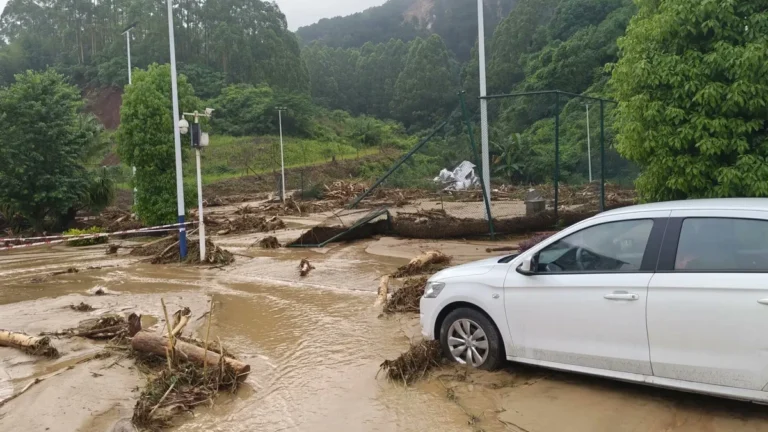
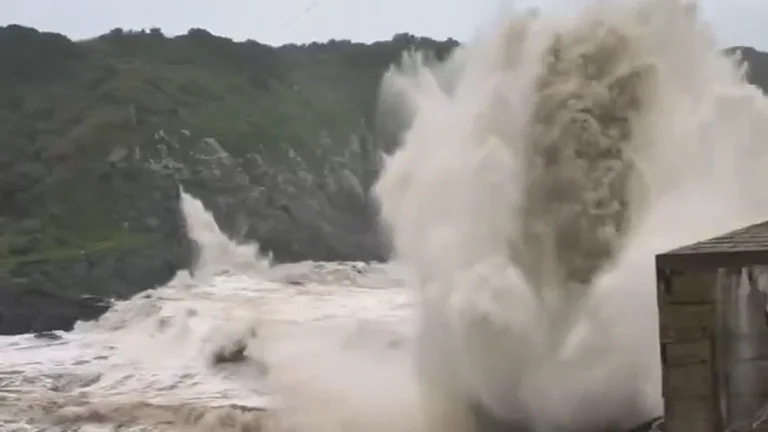
    Typhoon Bavi battered eastern China after making two landfalls in Zhejiang Province late Saturday, July 11, 2026. More than 2.68 million people were relocated in Zhejiang alone ahead of landfall, while rainfall exceeded 300 mm (12 inches) in some areas. As the system moved northward, severe flooding submerged roads under more than 2 m (6.6 feet) of water in parts of Hebei, stranded approximately 1 800 people and disrupted railway services in Liaoning, while 46 rivers nationwide exceeded warning levels.
  • Typhoon Bavi makes landfall in Zhejiang, China, after triggering mass evacuations

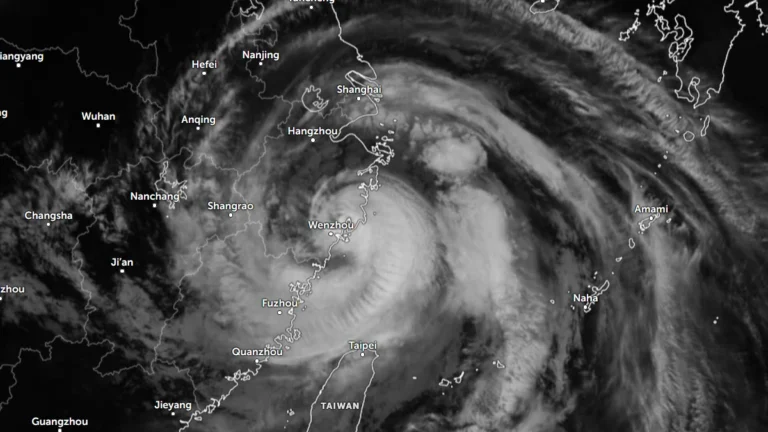
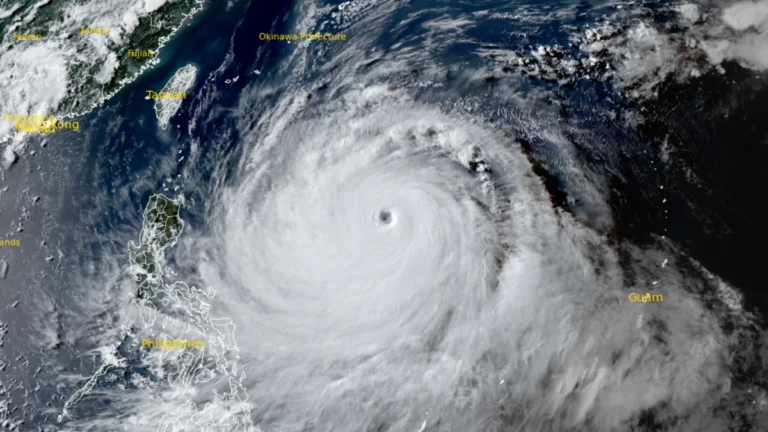
    Typhoon Bavi made landfall in Zhejiang Province, eastern China, at 23:20 local time (LT) on July 11, 2026, with 10-minute maximum sustained winds of 144 km/h (90 mph). The storm prompted the evacuation of more than 1.7 million people across eastern China. Bavi passed north of Taiwan before reaching the mainland and enhanced the southwest monsoon over the Philippines, where flooding and landslides caused fatalities.

  • Super Typhoon Bavi weakens slightly as Taiwan, Yaeyama Islands and eastern China brace for impacts

    Super Typhoon Bavi maintained Category 4-equivalent intensity over the Philippine Sea on July 8, 2026, with maximum sustained winds of 250 km/h (155 mph) and higher gusts. The cyclone is forecast to weaken gradually before passing near Taiwan and Japan’s Yaeyama Islands around July 11 and making a possible landfall along the eastern coast of China around July 12.

  • ‘Historically rare’ tornado strikes Huanggang, causing extensive urban damage in Hubei Province, China

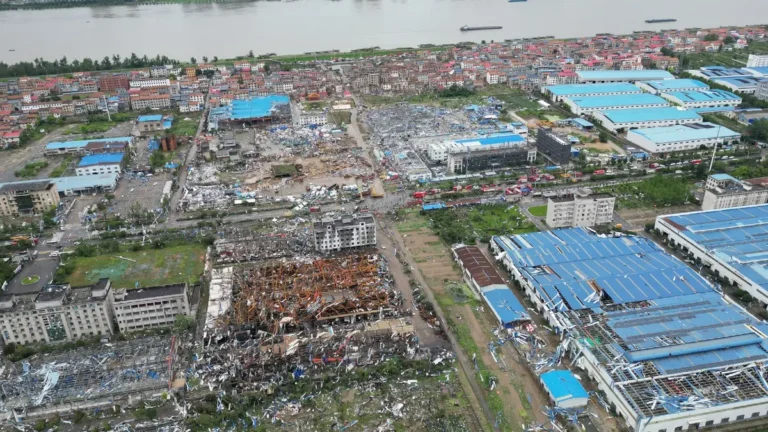
    A rare tornado struck the urban area of Huanggang, Hubei Province, between 20:10–20:30 LT on July 6, 2026, causing widespread destruction across residential neighborhoods, industrial facilities, and logistics parks. Huanggang’s on-site command headquarters said the tornado produced winds exceeding Force 15 on the Chinese wind scale during what it described as a historically rare event for the city. Still preliminary numbers mention up to 12 fatalities and hundreds injured.

  • Reservoir breaches and Maysak floods leave 6 dead, 11 missing in Guangxi, China

    Severe flooding caused by Tropical Cyclone Maysak left 2 people dead in Nanning, Guangxi, on July 6, 2026, after extreme rainfall caused Liulan and Yunbiao reservoirs in Hengzhou to overtop and develop breaches. The Nanning flood-control briefing reported about 55 000 people affected and 48 000 evacuated, as of late Monday, July 7.

  • Large wedge tornado strikes the Huanggang–Ezhou area in China’s Hubei Province, causing extensive damage

    A large wedge tornado struck the Huanggang–Ezhou area of Hubei Province, China, on July 6, 2026, during severe thunderstorms associated with the remnants of Typhoon Maysak. Numerous videos and photographs shared on Chinese social media appear to show a large condensation funnel moving through urban areas, while unconfirmed reports claim widespread damage, at least two fatalities, and hundreds of injuries.

  • Rare dust storm, hail, and extreme winds hit Harbin as multi-hazard event unfolds in Northeast China

    A rare dust storm accompanied by winds of up to 148 km/h (92 mph) struck Harbin, Heilongjiang Province, at around 17:00 LT on May 31, causing widespread damage, reducing visibility to less than 100 m (328 feet), and disrupting transportation and public events across the city. The same atmospheric setup also produced a tornado in Changling County, Jilin Province, as a broader outbreak of severe weather affected parts of Northeast China.

  • At least 21 dead after extreme rainfall hits southern and central China

    Torrential rain triggered widespread flooding across southern and central China from May 16 to 19, 2026, killing at least 21 people and disrupting schools, businesses, transport, and power supplies. China’s National Meteorological Center keeps a yellow rainstorm warning in force, with heavy rain forecast to continue across parts of southern and eastern China through May 20.