
Tropical Cyclone Gezani leaves at least 63 dead across Madagascar and Mozambique
Tropical Cyclone Gezani has left at least 63 people dead across Madagascar and Mozambique after striking eastern Madagascar on February 10, 2026, and later passing 15 km (9 miles) offshore from Mozambique’s Inhambane coast before weakening over the Mozambique Channel. Madagascar’s disaster management authority reports 59 fatalities, 15 missing persons, and 804 injured, with 423 986 people affected nationwide, while Mozambique officials confirmed four deaths and continued infrastructure disruption. Heavy rain and coastal hazards persisted into February 17 as the system looped west of southern Madagascar.
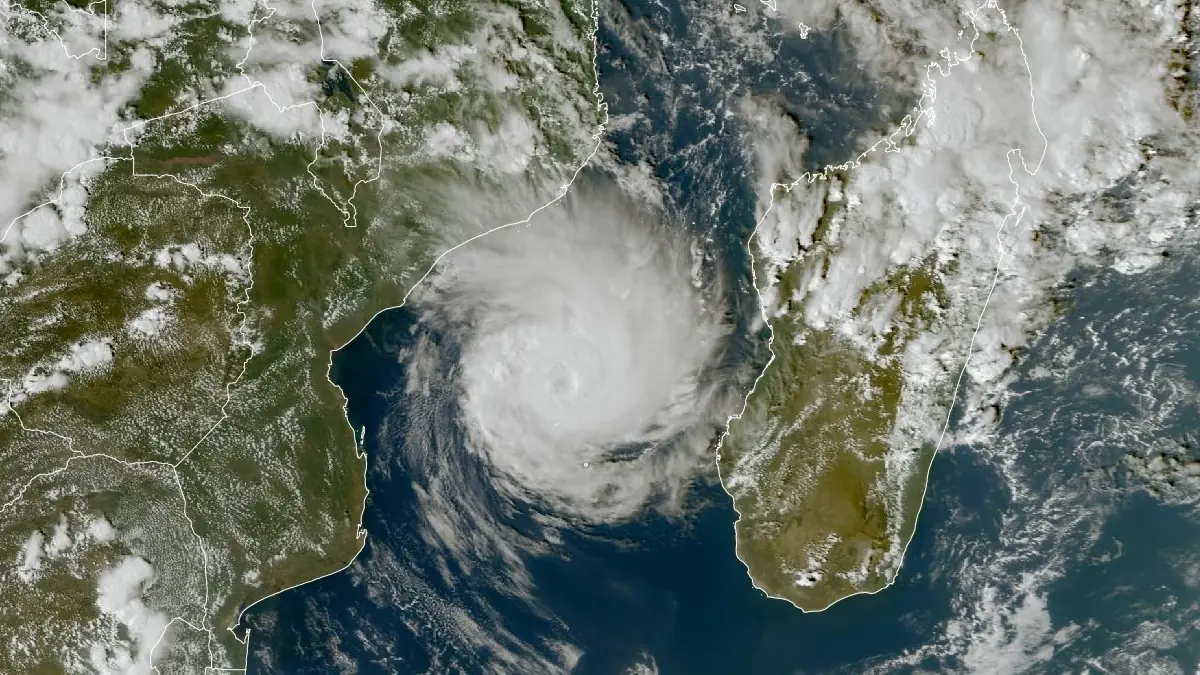
Satellite image of Tropical Cyclone Gezani at 13:40 UTC on February 17, 2026. Credit: EUMETSAT/Meteosat, The Watchers
Madagascar’s National Bureau for Risk and Disaster Management (BNGRC) reported on February 16 that 16 428 people had been displaced and tens of thousands of homes damaged across the country. Authorities recorded 24 699 houses destroyed, 48 041 damaged, and 25 266 flooded as assessments expanded beyond the initial impact zone.
Earlier figures compiled through the European Commission’s Emergency Response Coordination Centre cited 52 fatalities; updated BNGRC data later the same day raised the confirmed toll to 59 as field verification continued.
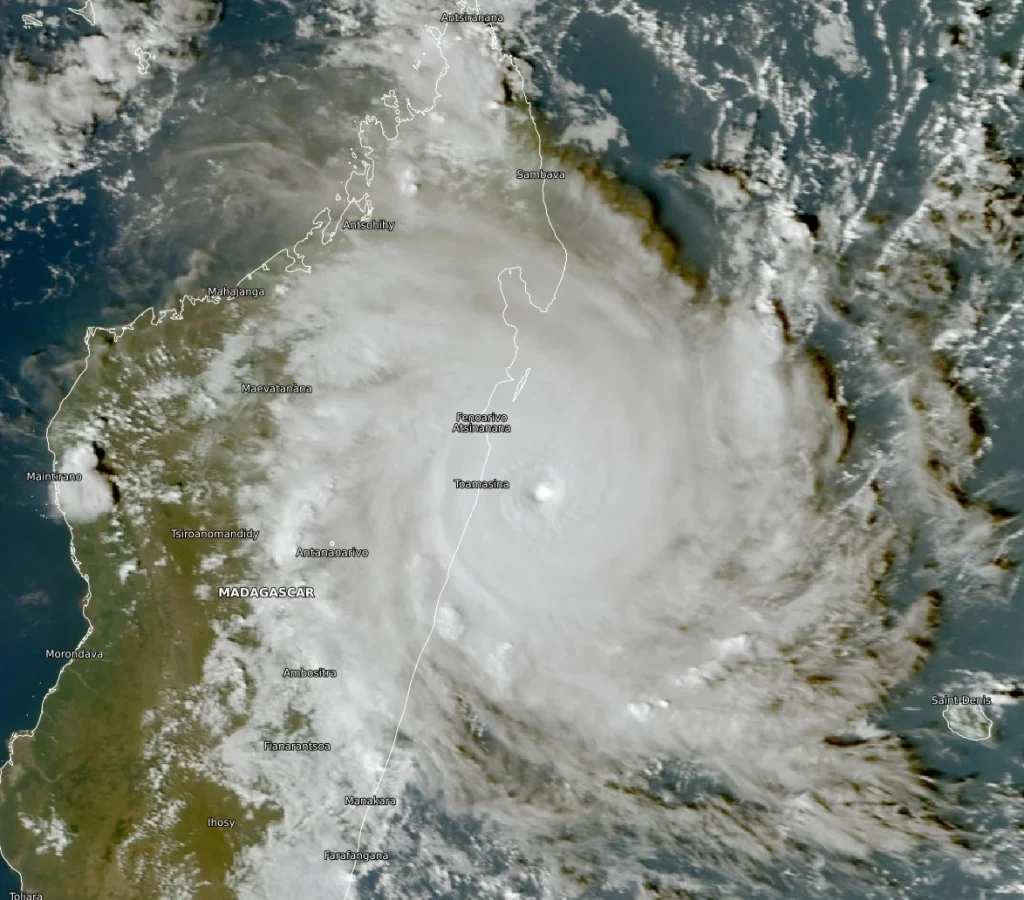
Gezani made landfall near Toamasina, eastern Madagascar, on February 10, as an intense tropical cyclone with maximum sustained winds estimated near 175 km/h (109 mph). Structural damage was widespread in Toamasina and surrounding districts, where housing, public facilities, and transport infrastructure sustained significant losses.
According to the National Bureau of Risk and Disaster Management (BNGRC), around 80% of the city’s infrastructure had been damaged or destroyed. The cyclone’s aftermath displaced another 6 870 people, while a total of 250 406 were classified as disaster victims, the BNGRC said.
The cyclone crossed the island before re-emerging over the warm waters of the Mozambique Channel, where environmental conditions supported renewed strengthening.
Between February 13–14, the system intensified again to around 185 km/h (115 mph) while tracking roughly 60 km (37 miles) west of Inhambane, Mozambique. According to ECHO and Mozambican authorities, the centre passed approximately 15 km (9 miles) offshore on February 14 without making a full inland landfall. Although the core circulation remained over water, strong winds and high seas affected coastal districts.
Mozambique’s National Institute for Disaster Risk Management and Reduction reports four fatalities, five injuries, and 2 734 people affected, with 306 displaced in six accommodation centres.
A total of 1 468 houses were damaged or destroyed, primarily in Inhambane Province. Approximately 132 000 electricity customers initially lost power in the province, and about 17 000 remained without supply as of February 16.
Local authorities reported wind gusts in Inhambane city reaching around 215 km/h (135 mph), resulting in roof damage, fallen trees, and interruptions to water services.
The cyclone struck Mozambique at a time of elevated hydrological stress. Earlier in February, national authorities reported more than 700 000 people affected by flooding following consecutive weeks of heavy rainfall, increasing vulnerability to renewed runoff and river flooding even without a direct landfall.
Humanitarian operations have expanded in both countries. In Madagascar, the government requested assistance through the European Union Civil Protection Mechanism on February 12. Water purification and telecommunications modules were deployed by France and Luxembourg, while Belgium, Germany, and France offered shelter and WASH support.
The Copernicus Emergency Management Service activated rapid mapping (EMSR 867) on February 11 to support damage assessment, and two ECHO field experts are being deployed for coordination.
In Mozambique, anticipatory measures were activated before the cyclone’s closest approach, including the pre-positioning of 254 metric tons of food. A government declaration triggered the release of USD 4.5 million from the Central Emergency Response Fund for United Nations agencies.
UNICEF, the Mozambican Red Cross, and the International Federation of Red Cross and Red Crescent Societies initiated anticipatory action protocols ahead of impact. Additional funding of EUR 288 000 was mobilised through DG ECHO crisis modifiers, and EUR 718 000 was activated through Start Ready for multi-sector interventions related to cyclones Fytia and Gezani.
As of 06:00 UTC on February 16, the system’s center was located over the sea approximately 270 km (170 miles) west of the Atsimo-Andrefana region of Madagascar as a Category 1 tropical cyclone. Forecasts indicated gradual weakening, though additional rainfall and coastal surge were expected over southern Madagascar, with heavy rainfall also forecast over parts of Mozambique.
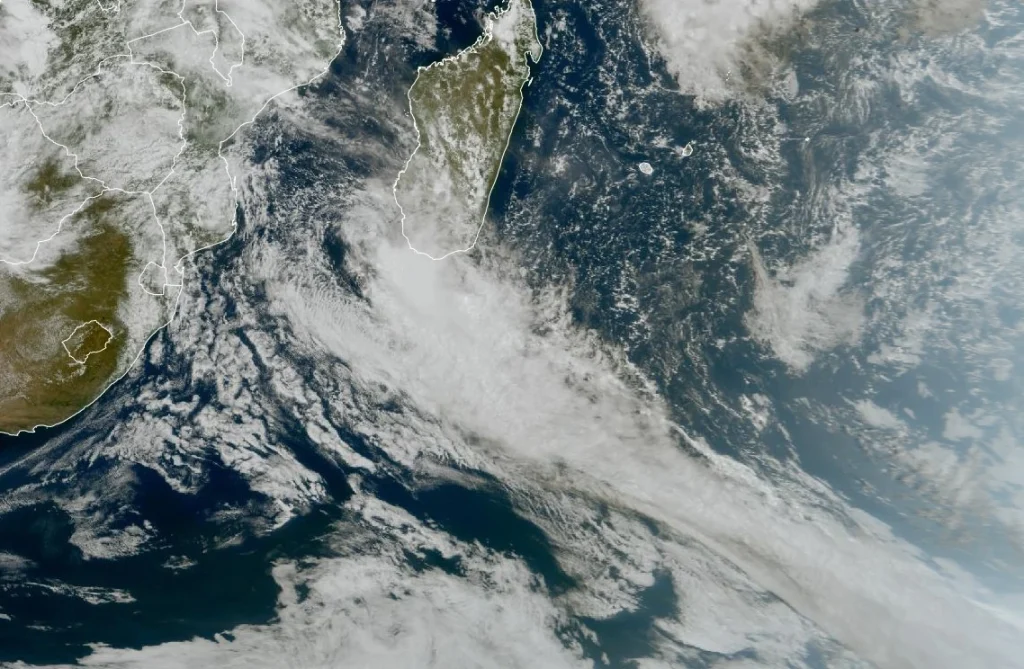
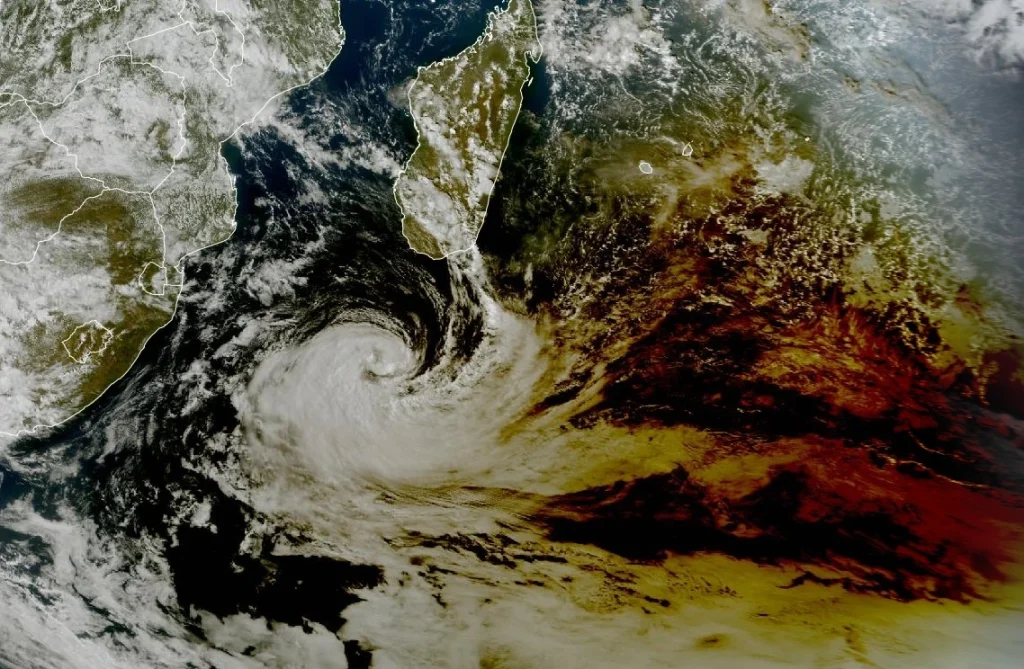
Local meteorological services placed the Ampanihy district in southwestern Madagascar on red alert as the system curved eastward over the channel, with the centre forecast to pass roughly 100 km (60 miles) offshore. Winds near 65 km/h (40 mph) were expected in the district, while significant additional rainfall was not anticipated at that stage.
Gezani is the eighth named storm of the 2025/26 Southwest Indian Ocean cyclone season.

I’m a science journalist and researcher at The Watchers, contributing to the Epicenter edition, where I cover peer-reviewed scientific research and emerging discoveries across Earth and space sciences. With a background in astronomy and a passion for environmental science, I’ve worked in shark and coral conservation in Fiji, conducting reef and shark-behavior research, contributing to mangrove restoration, and earning PADI Open Water and Coral Reef Certifications. I bring a blend of scientific rigor and storytelling to illuminate the discoveries shaping our planet and beyond.

Commenting rules and guidelines
We value the thoughts and opinions of our readers and welcome healthy discussions on our website. In order to maintain a respectful and positive community, we ask that all commenters follow these rules.