
Record tsunami waves cause nearly USD 1 million in damages at Crescent City Harbor, California
The M8.8 earthquake off Russia’s Kamchatka Peninsula sent tsunami waves of up to 1.2 m (4 feet) to Crescent City Harbor, California, on July 30, 2025, coinciding with high tide. The tsunami waves caused damages worth nearly USD 1 million. The city also set a new record for the highest tsunami waves on record for the continental United States.

A bird's-eye view from offshore captures the mouth of Crescent City harbor, where the grid of docks has been damaged by the recent tsunami. Credit: Crescent City Harbor District
Tsunami waves generated by the earthquake in Russia began arriving during the night and continued into the next day. According to the harbor district, most of the damage occurred at approximately 02:40 local time on July 30 when a significant wave surge lifted the floating concrete dock too high before submerging it.
Crescent City recorded the highest tsunami waves ever observed in the continental United States during this event. The waves arrived during a 1.2 m (4 feet) high tide, which amplified currents and harbor surge.
Crescent City’s location just shoreward of the Mendocino Fracture Zone channels tsunami energy into deeper water, accelerating wave speed before reaching shore.
This bathymetric effect has contributed to at least 41 recorded tsunami events since 1933, several of which caused severe damage.
Happened to be in Corvallis for a meeting, decided to drive down to Crescent City to document the tsunami in the harbor. Made it there just before midnight last night and stayed into the morning. Many surges like that shown in the video below, which was taken a bit before 7 . pic.twitter.com/WjoDOxqB32
— Patrick Lynett (@lynett_patrick) July 31, 2025
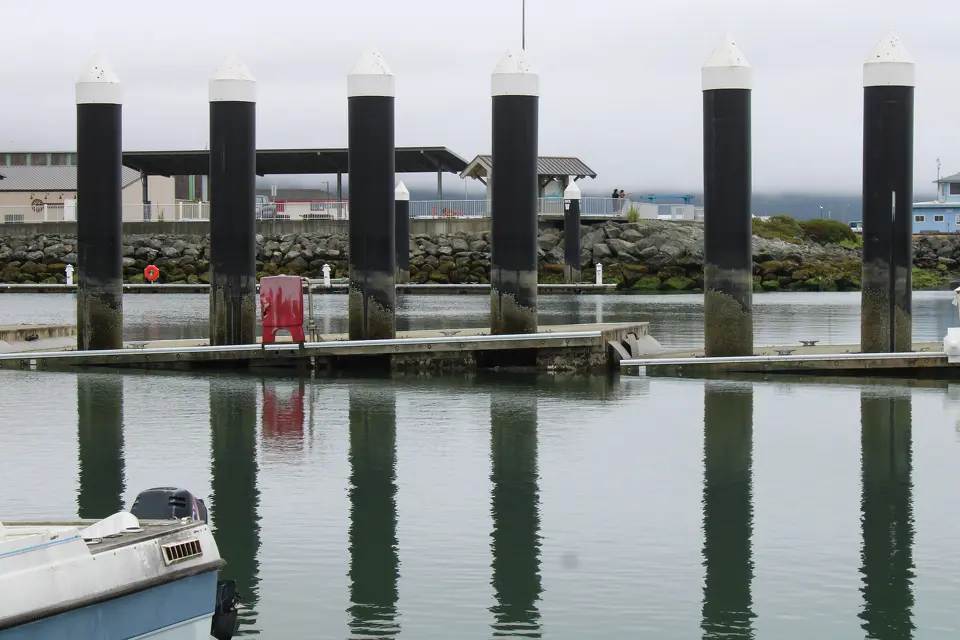
On July 30, tsunami waves destroyed the harbor’s floating concrete H Dock, which was constructed as a wave attenuator following the 2011 Tōhoku‑Oki tsunami.
The dock was anchored by closely spaced steel pilings driven 6–11 m (21–37 feet) into bedrock and was engineered as a sacrificial structure to absorb incoming wave energy.
The structure detached from its pilings and failed under the surge, as intended, thereby protecting the inner harbor. The loss of H Dock damaged electrical wiring, potable water lines, and fire-suppression systems.
Sediment and debris were deposited in the navigation channels, requiring dredging and underwater clearance. No vessels were reported lost or significantly damaged.
Crescent City invested approximately USD 50 million in harbor reconstruction to modern tsunami-resistant standards following a major tsunami in 2011.
The July 30 tsunami validated this design approach: while H Dock failed, it prevented cascading damage to inner docks and moored vessels.
Initial estimates by Crescent City Harbor indicate damages close to USD 1 million. Recovery will require diver surveys, debris removal, and full reconstruction of the destroyed dock and damaged utilities.
The event did not meet criteria for Federal Emergency Management Agency assistance. Funding will likely come from local harbor resources and potential state emergency allocations.
 Crescent City Harbor Tsunami. Credit Crescent City Harbor. Credit: Crescent City Harbor District
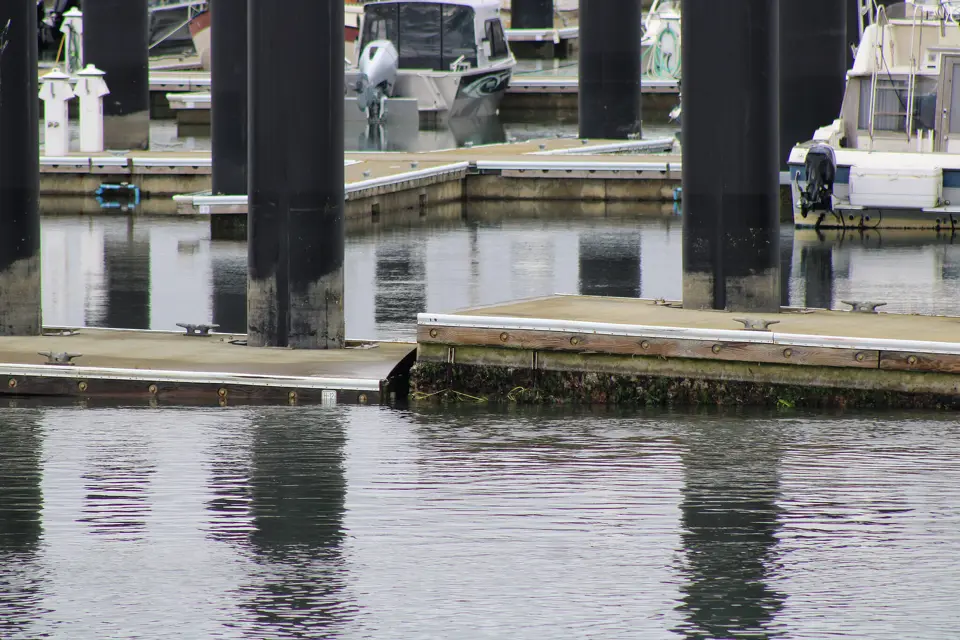
- Sections of a structurally compromised dock at Crescent City’s harbor sink into the water, a result of the damage from the recent tsunami. Credit: Crescent City Harbor District
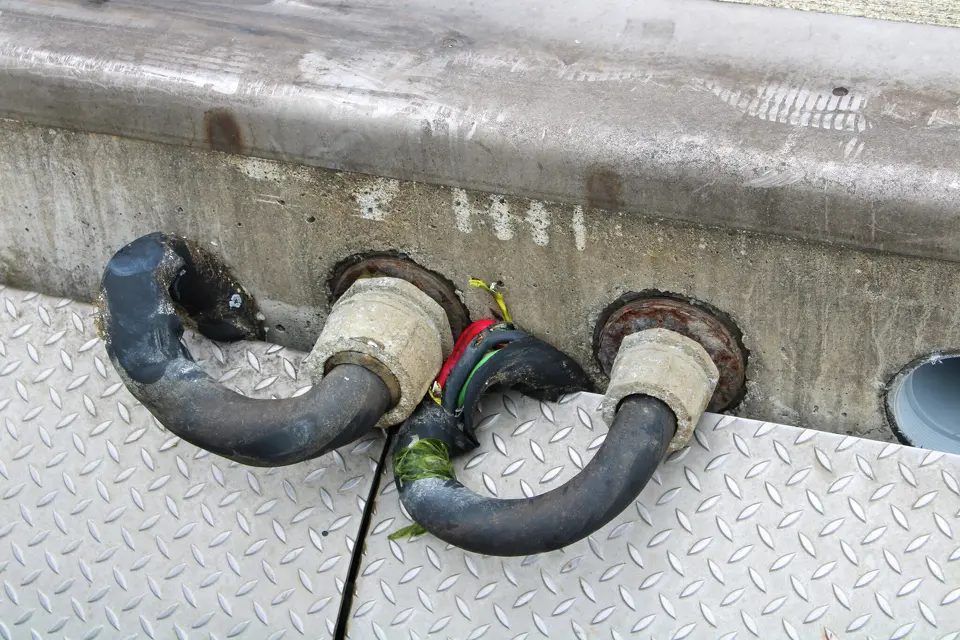
- The aftermath of the tsunami at Crescent City’s harbor reveals compromised electrical conduits, Credit: Crescent City Harbor District
- In the wake of the tsunami, damaged electrical conduits are among the many safety concerns that recovery crews are addressing at Crescent City’s harbor. Credit: Crescent City Harbor District
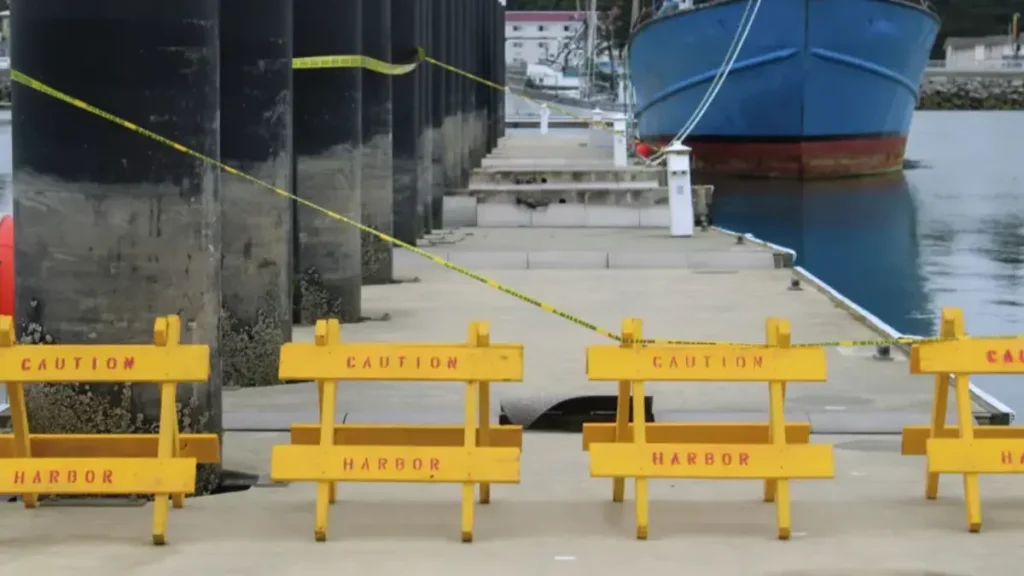
- A bowed and bent section of the dock at Crescent City’s harbor is roped off with caution tape and signage, demarcating a hazardous area for recovery crews following the recent tsunami. Credit: Crescent City Harbor District


Crescent City remains one of the most tsunami-exposed ports in the United States due to its geological setting. Harbor officials emphasize the importance of maintaining sacrificial protective structures, sustaining NOAA-linked early warning systems, and continuing public preparedness to reduce future tsunami risks.
The 2011 tsunami was triggered by a 9.1-magnitude earthquake off northern Japan, which also caused a nuclear power plant meltdown. Crescent City’s harbor sustained USD 50 million in damage — boats were repeatedly slammed against docks and other vessels, according to the harbormaster. In contrast, no boats were damaged during the July 30 event.
According to the harbormaster, wave heights during the 2011 and July 30 events were roughly equivalent. In 2011, 2.7–3 m (9–10 feet) waves struck during a -0.3 m (-1 feet) tide. On July 30, a 1.2 m (4 feet) tsunami wave coincided with a 1.2 m (4 feet) high tide.

I’m a science journalist and researcher at The Watchers, contributing to the Epicenter edition, where I cover peer-reviewed scientific research and emerging discoveries across Earth and space sciences. With a background in astronomy and a passion for environmental science, I’ve worked in shark and coral conservation in Fiji, conducting reef and shark-behavior research, contributing to mangrove restoration, and earning PADI Open Water and Coral Reef Certifications. I bring a blend of scientific rigor and storytelling to illuminate the discoveries shaping our planet and beyond.

The tsunami waves that hit Crescent City after the 1964 Alaska earthquake were higher, so the 2025 earthquake did not set a record.