
Glacial outburst flood developing at Mýrdalsjökull, Iceland
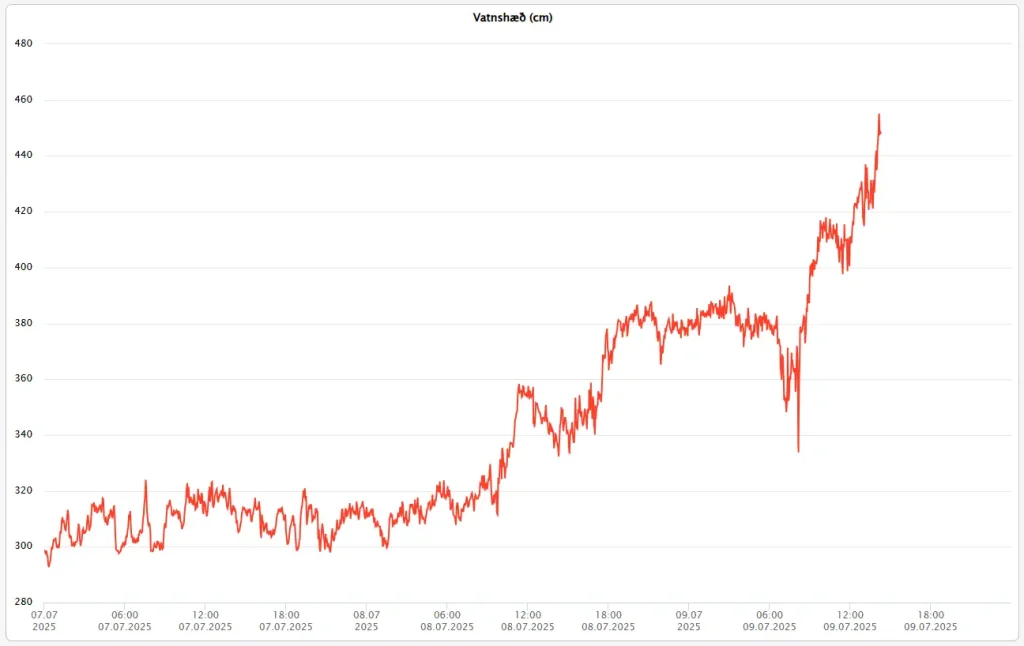
A glacial outburst flood has been developing in the Leirá syðri and Skálm rivers, southern Iceland, following rising water levels and electrical conductivity measured since July 7, 2025. Conditions continued to intensify as of 15:00 LT on July 9.
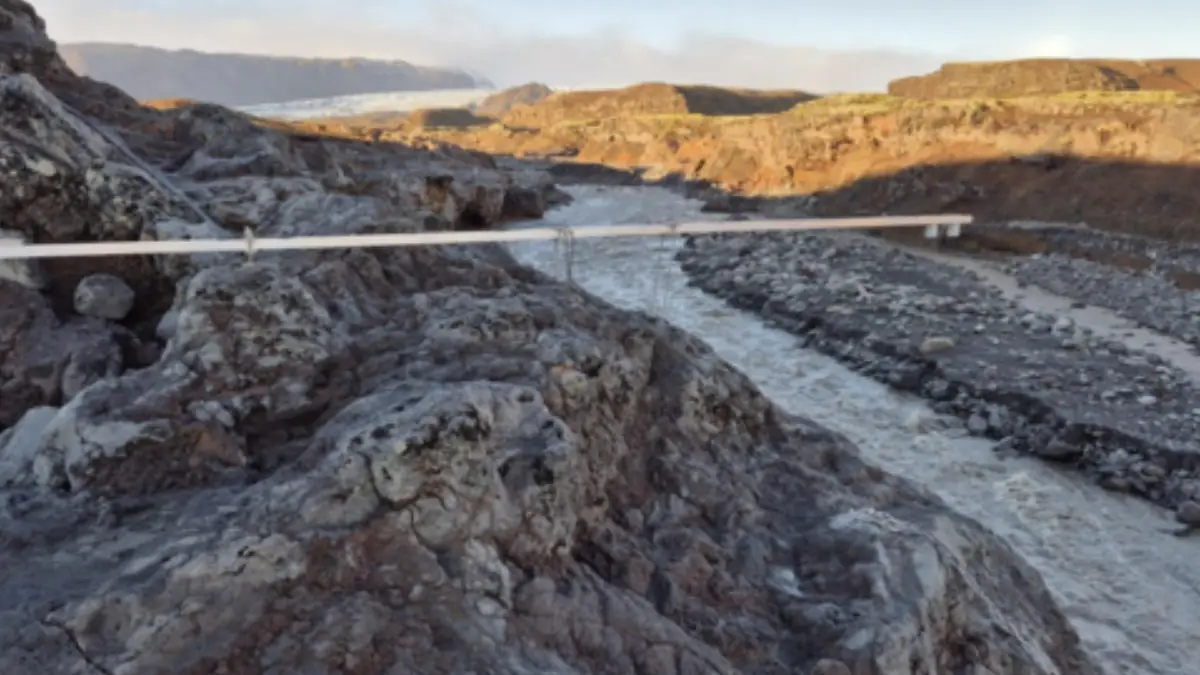
Image credit: IMO
A small glacial outburst flood (jökulhlaup) is currently underway in the Leirá syðri and Skálm rivers, fed by meltwater originating from geothermal activity beneath Sandfellsjökull, a southwestern outlet glacier of Mýrdalsjökull.
The Icelandic Meteorological Office (IMO) reported a steady rise in both water levels and electrical conductivity since July 7, with conditions continuing to intensify as of 15:00 LT on July 9.
Measurements from gauges at Leirá syðri (V665) and at the bridge over Skálm on Highway 1 (V412) show a clear signal of glacier runoff. IMO has also received reports of a sulfur odor in the area, prompting warnings about potential gas pollution. Residents and travelers are advised to exercise caution near the affected riverbeds.
Mýrdalsjökull sits atop the Katla volcanic system, one of Iceland’s most active and closely monitored regions. When meltwater escapes from beneath this glacier, it often signals changes in geothermal activity at the base, making every jökulhlaup here a potential warning sign of subglacial pressure shifts or evolving volcanic unrest.
Historical floods occurred annually in Leirá syðri between 1995 and 2000, with a smaller event in 2012. While none of those floods caused structural damage, they reshaped the Leirá floodplain and diverted parts of the river into Skálm.
A much larger flood occurred in late July 2024, originating from geothermal calderas beneath Mýrdalsjökull near Austmannsbunga. That event breached Highway 1 and caused considerable disruption. Four smaller floods have been recorded since then, the most recent in December 2024.
“The causes of last year’s large flood are still not fully understood,” said Bergur Einarsson, head of hydrological research at the Icelandic Meteorological Office. “If geothermal boiling triggered by pressure release from a small glacier slide led to the major event, then the current activity could reflect a similar process.”
Eyjólfur Magnússon from the University of Iceland’s Institute of Earth Sciences has conducted radar measurements since May 2025. These studies indicate the presence of substantial water accumulation at the base of Mýrdalsjökull, increasing the possibility of further glacial releases.

I'm a dedicated researcher, journalist, and editor at The Watchers. With over 20 years of experience in the media industry, I specialize in hard science news, focusing on extreme weather, seismic and volcanic activity, space weather, and astronomy, including near-Earth objects and planetary defense strategies. You can reach me at teo /at/ watchers.news.

Commenting rules and guidelines
We value the thoughts and opinions of our readers and welcome healthy discussions on our website. In order to maintain a respectful and positive community, we ask that all commenters follow these rules.