
Eruption risk persists as magma accumulation surpasses 90% of pre-November levels at Svartsengi, Iceland
Magma accumulation beneath Svartsengi is nearing the critical threshold, with over 90% of the volume recorded before the last eruption on November 20, 2024, increasing the likelihood of a dike intrusion and possible eruption. Seismic activity remains steady, and land uplift continues.
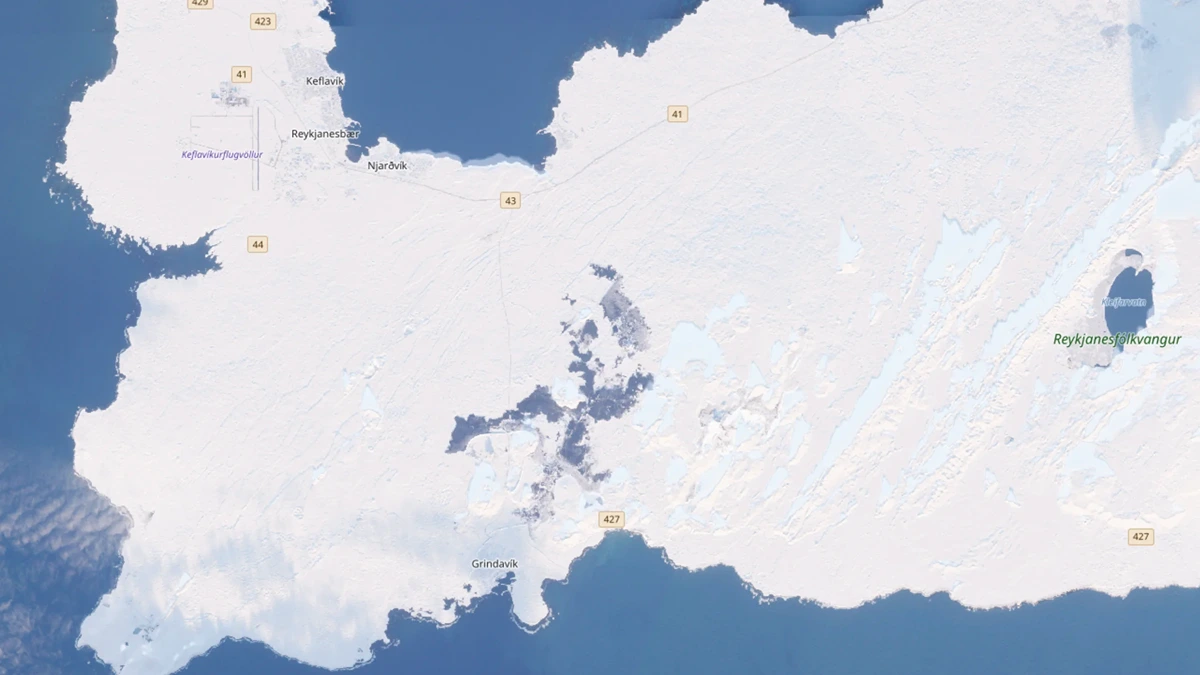
The satellite image, captured by Sentinel-2 on January 28, 2025, shows snow-covered lava field at Svartsengi, Iceland. Image credit: CopernicusEU/Sentinel-2, The Watchers
The risk of an eruption at the Sundhnúks crater row in Iceland remains high as magma accumulation beneath Svartsengi nears the estimated volume required to trigger a dike intrusion, according to the Icelandic Meteorological Office (IMO). Hazard assessment remains unchanged since January 28 and is valid until February 25.
Model calculations indicate that magma accumulation beneath Svartsengi is now over 90% of the volume recorded before the last eruption on November 20, 2024.
The continued deformation suggests that magma is moving closer to the surface, increasing the likelihood of a dike intrusion and a possible eruption. Past observations from eruptions on the Sundhnúks crater row indicate that once the magma volume reaches a certain threshold, eruptions occur within a few days to a month.
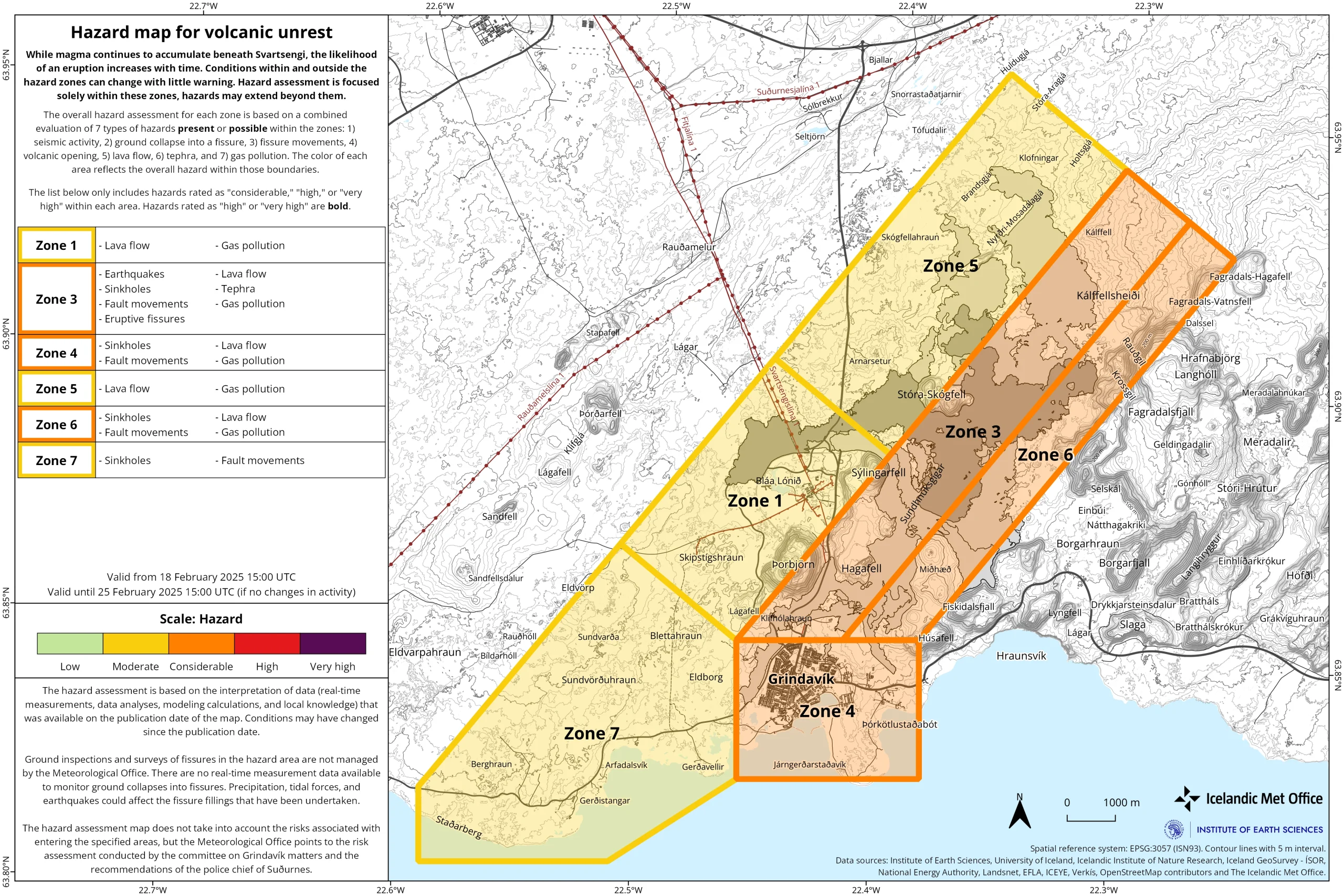
Land uplift continues, though, at a slightly slower rate in recent weeks, while seismic activity remains steady, with around five or fewer earthquakes recorded per day.
Seismic activity has remained consistent, with a slow increase observed since late January. The number of earthquakes per day remains low, averaging fewer than five. Deformation measurements confirm ongoing land uplift beneath Svartsengi, although the rate of uplift has decreased slightly in recent weeks.

References:
1 Continued increased risk of eruption at the Sundhnúkur crater row – IMO – February 18, 2025

Rishika holds a Master’s in International Studies from Stella Maris College, Chennai, India, where she earned a gold medal, and an MCA from the University of Mysore, Karnataka, India. Previously, she served as a Research Assistant at the National Institute of Advanced Studies, Indian Institute of Science, Bengaluru, India. During her tenure, she contributed as a Junior Writer for Europe Monitor on the Global Politics website and as an Assistant Editor for The World This Week. Her work has also been published in The Hindu newspaper, showing her expertise in global affairs. Rishika is also a recipient of the Women Empowerment Award at the district level in Haryana, India, in 2022.

Commenting rules and guidelines
We value the thoughts and opinions of our readers and welcome healthy discussions on our website. In order to maintain a respectful and positive community, we ask that all commenters follow these rules.