
Massive underground aquifer discovered beneath Oregon’s Cascade Range
Scientists from the University of Oregon have discovered a vast underground aquifer beneath Oregon’s Cascade Range, storing at least 81 km3 (19.4 mi3) of water — almost three times the maximum capacity of Lake Mead. The research detailing the findings was published on January 13, 2025, reshaping the understanding of the region’s water resources and volcanic hazards.
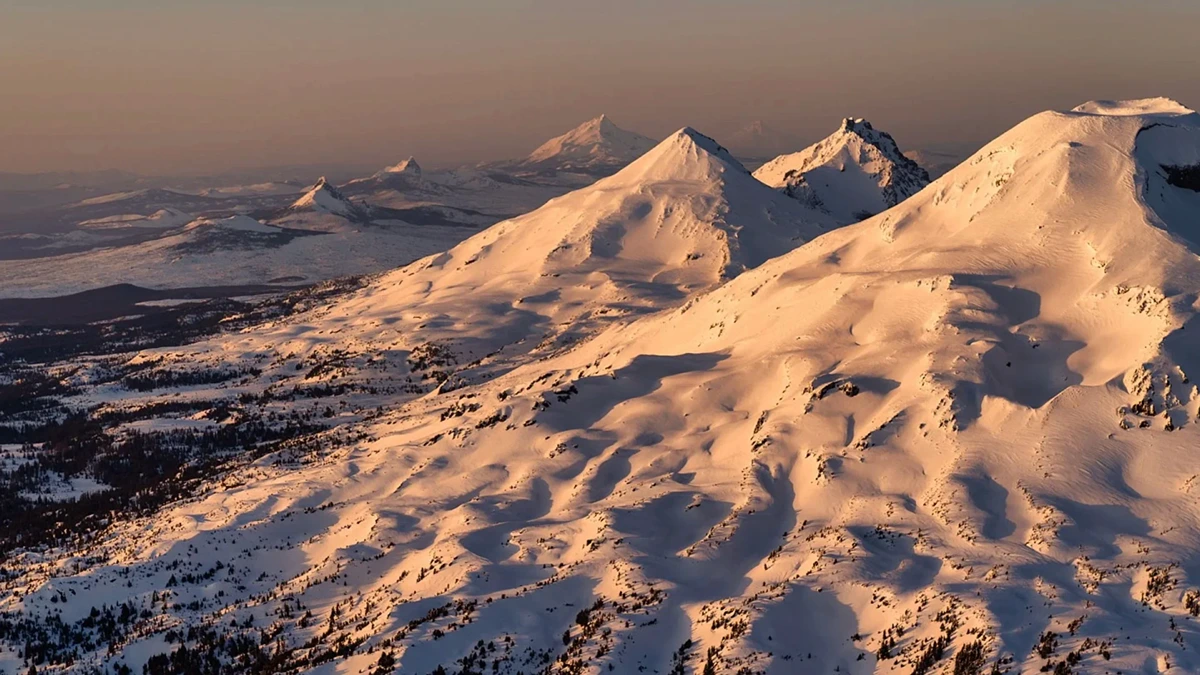
Image credit: University of Oregon
A newly discovered underground aquifer beneath Oregon’s Cascade Range holds at least 81 km3 (19.4 mi3) of water which is nearly 3 times the capacity of Lake Mead – currently overdrawn reservoir along the Colorado River that supplies water to California, Arizona, and Nevada, and greater than half the volume of Lake Tahoe.
Researchers say this vast water reservoir stored within volcanic rock has implications for regional water resources and volcanic hazards.
“It is a continental-size lake stored in the rocks at the top of the mountains, like a big water tower,” Leif Karlstrom, a geophysicist from the University of Oregon who led the study said. “That there are similar large volcanic aquifers north of the Columbia Gorge and near Mount Shasta likely make the Cascade Range the largest aquifer of its kind in the world.”
The study indicates that this aquifer plays an important role in regional hydrology and volcanic activity.
The Cascade Range has been shaped by volcanic processes over millions of years and created porous lava flows that allow deep water circulation.
Researchers believe this water storage system could serve as a long-term reservoir and mitigate the effects of climate change on water availability. Many communities in Oregon depend on water from the Cascades including the McKenzie River which supplies drinking water to Eugene.
Further analysis of geological formations suggests that similar aquifers may exist in other volcanic regions. Scientists have used drill samples and geophysical imaging techniques to map the structure of the subsurface water network and reveal extensive underground channels capable of sustaining long-term water reserves.
The presence of such a large underground water system also has implications for volcanic hazards. Eruptions can become more explosive when magma interacts with groundwater and increases the risks posed by Cascade Range volcanoes.
“The movement of water and the hazards posed by volcanoes are linked together,” Gordon Grant, co-author of the study from the United States (U.S.) Forest Service stated.
Geological models indicate that water stored within volcanic rocks could alter the stability of magma chambers. The interaction between hot magma and pressurized water has been associated with explosive volcanic activity in the past.
Researchers focus on the need for continued monitoring of both water levels and seismic activity in the Cascade region to assess potential risks.
The discovery of this aquifer could provide an important buffer against water shortages with increasing droughts and declining snowpack levels. Scientists estimate that the aquifer may take decades to fully recharge through natural processes and this makes careful management essential.
Hydrologists and policymakers are now evaluating how best to utilize this newly discovered water source. Potential applications include augmenting municipal water supplies, supporting agricultural irrigation, and maintaining ecosystem stability.
Research is ongoing to determine how extraction might affect groundwater systems and whether long-term pumping could deplete the reservoir faster than it can be replenished.
References:
1 State shifts in the deep Critical Zone drive landscape evolution in volcanic terrains, Leif Karlstrom, Nathaniel Klema, Gordon E. Grant, and Daniele McKay, PNAS – https://doi.org/10.1073/pnas.2415155122
2 Atop the Oregon Cascades, a UO team finds a huge buried aquifer – OREGON NEWS – January 24, 2025

Rishika holds a Master’s in International Studies from Stella Maris College, Chennai, India, where she earned a gold medal, and an MCA from the University of Mysore, Karnataka, India. Previously, she served as a Research Assistant at the National Institute of Advanced Studies, Indian Institute of Science, Bengaluru, India. During her tenure, she contributed as a Junior Writer for Europe Monitor on the Global Politics website and as an Assistant Editor for The World This Week. Her work has also been published in The Hindu newspaper, showing her expertise in global affairs. Rishika is also a recipient of the Women Empowerment Award at the district level in Haryana, India, in 2022.

Commenting rules and guidelines
We value the thoughts and opinions of our readers and welcome healthy discussions on our website. In order to maintain a respectful and positive community, we ask that all commenters follow these rules.