
Increased seismicity detected at Kamaʻehuakanaloa volcano, Hawaii
A period of increased seismic activity was detected at the Kama’ehuakanaloa Seamount on January 21, 2025. While the exact cause remains undetermined, the seismic activity may be linked to magma movement beneath the volcano.
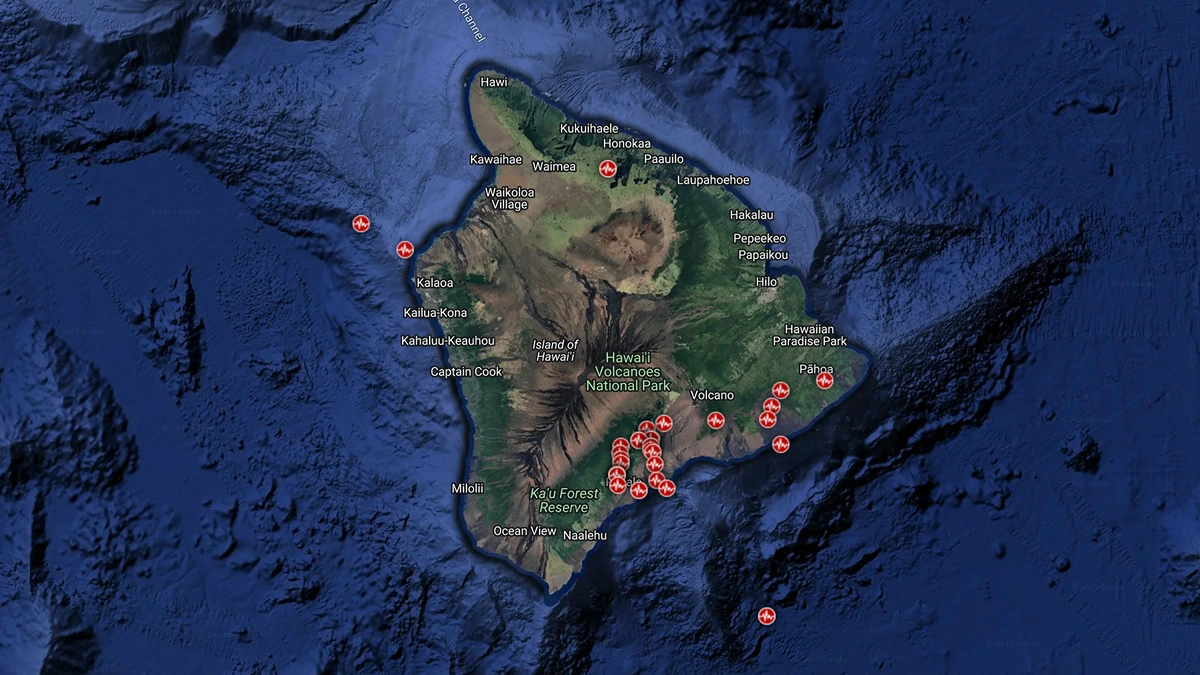
Image credit: TW/SAM, Google
A period of increased seismic activity was detected at Kama’ehuakanaloa Seamount, formerly known as Lō’ihi, situated approximately 35 km (22 miles) southeast of the Island of Hawai’i.
The Hawaiian Volcano Observatory (HVO) reported that the activity began around 02:00 LT (12:00 UTC) on January 21 and ceased by 08:00 LT (18:00 UTC) the same day.
According to the U.S. Geological Survey (USGS), 16 earthquakes were recorded during this swarm with depths ranging from 13 to 32 km (8 to 20 miles) below sea level.
No reports were received from residents of Hawai’i regarding felt tremors. The USGS noted that while the exact cause remains undetermined, the seismic activity may be linked to magma movement beneath the volcano.
Kama’ehuakanaloa has experienced prior earthquake swarms related to potential eruptions although the recent activity did not impact any infrastructure or other volcanoes on the island.
Past swarms have consisted of thousands of tremors from days to weeks.
The most recent known eruptive activity at the seamount occurred in 1996, during which a new pit crater formed at the summit and was accompanied by lava flows.
A previous episode of heightened seismic activity was recorded at Kama’ehuakanaloa on November 1, 2024. More than 70 earthquakes were detected during the event, 32 of which were greater than M2.0, including 2 that exceeded M4.0.
The strongest recorded earthquake in the series occurred at 12:05 LT (22:05 UTC) on November 2, measuring M4.3 at a depth of 5.8 km (3.6 miles) below sea level. The USGS received a single report of the earthquake being felt.
The seismicity declined later that day and returned to background levels by midnight on November 2, despite the increased seismic activity in November.
The volcano’s Alert Level and Aviation Color Code remained unassigned throughout the November and January events.

Kama’ehuakanaloa is the youngest volcano in the Hawaiian-Emperor seamount chain and remains entirely submerged, with its highest point approximately 975 m (3 199 feet) below the ocean surface. The summit area includes a caldera measuring 3 × 4 km (1.9 × 2.5 miles) and features numerous lava cones, pit craters, and hydrothermal venting.
The volcano’s structure is characterized by 2 prominent rift zones extending north and south from the summit.
Scientists believe that continued volcanic activity will eventually lead to the formation of a new island. Estimates suggest that it could take between 10 000 and 100 000 years for Kama’ehuakanaloa’s summit to emerge above sea level.
The volcano’s magmatic system is distinct from that of Kīlauea, and while its activity remains closely monitored, any future eruption is unlikely to pose a direct threat to Hawai’i’s residents.
References:
1 Kama’ehuakanaloa volcano – HVO/USGS – January 21, 2025
2 Kama’ehuakanaloa – GVP – Accessed on January 21, 2025

Rishika holds a Master’s in International Studies from Stella Maris College, Chennai, India, where she earned a gold medal, and an MCA from the University of Mysore, Karnataka, India. Previously, she served as a Research Assistant at the National Institute of Advanced Studies, Indian Institute of Science, Bengaluru, India. During her tenure, she contributed as a Junior Writer for Europe Monitor on the Global Politics website and as an Assistant Editor for The World This Week. Her work has also been published in The Hindu newspaper, showing her expertise in global affairs. Rishika is also a recipient of the Women Empowerment Award at the district level in Haryana, India, in 2022.

Commenting rules and guidelines
We value the thoughts and opinions of our readers and welcome healthy discussions on our website. In order to maintain a respectful and positive community, we ask that all commenters follow these rules.