
Researchers use AI to predict major earthquakes months in advance
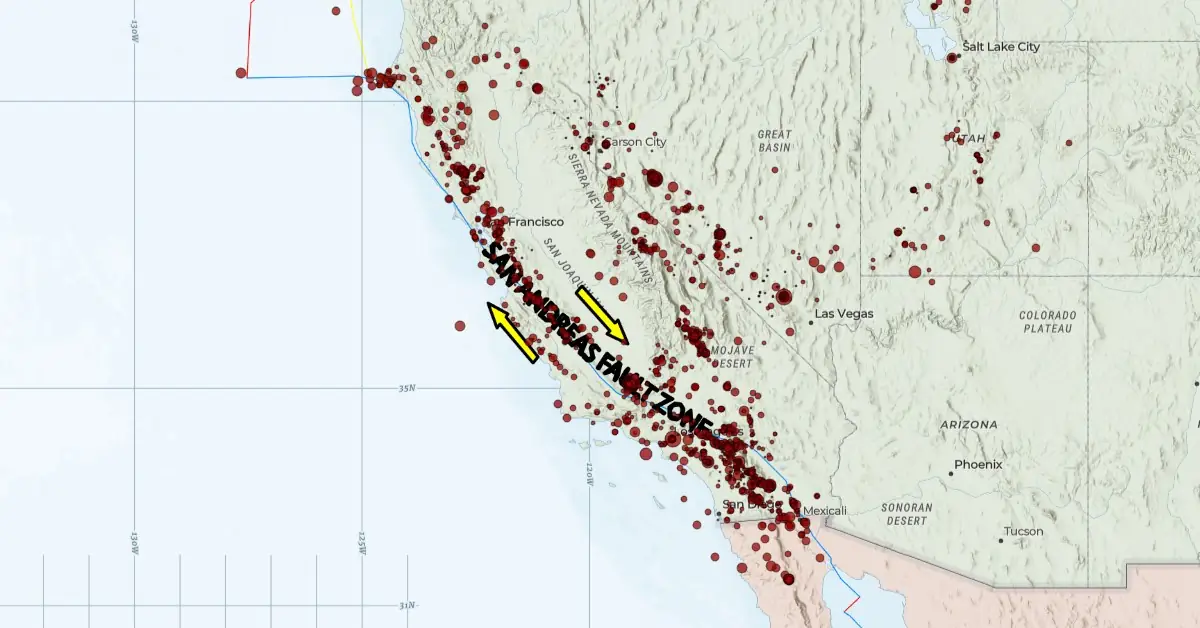
Image credit: TW/SAM, ESRI
A recent study by Társilo Girona of the University of Alaska Fairbanks and Kyriaki Drymoni of Ludwig-Maximilians-Universität in Munich proposed a new machine learning technique for predicting big earthquakes months in advance. The study, published in Nature Communications on August 28, 2024, intended to improve earthquake predictions and public safety.
- Unraveling the precursory signals of potentially destructive earthquakes is crucial to understanding the Earth’s crust dynamics and to provide reliable seismic warnings.
- While earthquake precursors are ambiguous, recent experimental studies suggest that robust warning signs may precede large seismic events in the short (day-to-months) term.
A significant advance in earthquake prediction was led by two geophysicists composed of research assistant professor Társilo Girona from the University of Alaska Fairbanks (UAF) and Dr. Kyriaki Drymoni from Ludwig-Maximilians-Universität in Munich, Germany. Their interdisciplinary research, which focused on using machine learning to evaluate seismic activity, provided fresh promise for predicting large earthquakes months in advance.
The new method entailed analyzing massive volumes of seismic data to identify minor patterns of low-magnitude earthquake activity that may foreshadow big quakes. Dr. Girona and Dr. Drymoni’s study focused on the difficulty of discovering precursors to big seismic events. Their machine learning algorithm, trained on historical earthquake data, may detect these precursors, potentially providing months of notice before a large-magnitude disaster.
“Unraveling the precursory signals of potentially destructive earthquakes is crucial to understand the Earth’s crust dynamics and to provide reliable seismic warnings. Earthquake precursors are ambiguous, but recent experimental studies suggest that robust warning signs may precede large seismic events in the short (day-to-months) term. Here, we show that the M6.4-M7.1 2019 Ridgecrest sequence (California) and the M7.1 2018 Anchorage earthquake (Alaska) were preceded by up to ~3 months of tectonic unrest on regional scales, as evidenced by abnormal low-magnitude seismicity spreading over the ~15-25% of Southern California and Southcentral Alaska,” the researchers stated.
The researchers concentrated on two recent significant earthquakes: the 2018 magnitude 7.1 Anchorage earthquake and the 2019 Ridgecrest, California, earthquake series. In both cases, they discovered signs of aberrant seismic activity in the months preceding up to the main events, with the probability of a significant earthquake climbing up to over 80% three months before the Anchorage quake and 85% just days before it occurred.
This research was mostly tested in seismically active areas such as Southcentral Alaska and Southern California. These regions, recognized for their high seismic activity, supplied important data to test the method’s ability to forecast big earthquakes. The study’s findings have far-reaching ramifications for other earthquake-prone areas, including California’s San Andreas Fault and Japan’s Nankai Trough, both of which are susceptible to big seismic occurrences.
The findings were published in Nature Communications on August 28, 2024. The study represented several years of data collecting and analysis, with the most recent findings indicating a significant improvement in earthquake prediction. This technique has already demonstrated encouraging results in retroactively predicting big prior earthquakes, paving the way for its possible application in real-time forecasting.
The major goal of this research was to enhance public safety and catastrophe preparedness. Traditional earthquake prediction technologies have frequently failed to provide adequate advance warning. Dr. Girona and Dr. Drymoni hoped to develop a more reliable method of anticipating seismic events, perhaps saving lives and decreasing economic damages through timely evacuations and preparedness.
The researchers forecast method used machine learning algorithms trained on earthquake catalogs to spot patterns of aberrant, low-magnitude seismic activity, which frequently precede big earthquakes.
According to their findings, these precursory low-magnitude earthquakes could be caused by increased pore fluid pressure within faults, which changes the faults’ mechanical properties. Their methodology discovered this antecedent activity in 15% to 25% of the afflicted zones about three months before the Anchorage and Ridgecrest earthquakes. The model’s capacity to forecast the likelihood of a big earthquake occurring within a given timeframe is a huge step forward in earthquake prediction.
While the approach is currently in its early phases of application, additional refining and validation could make it a regular tool in earthquake-prone areas, resulting in safer and more resilient populations.
“Finally, it is worth highlighting that the machine learning-based approach presented in this paper only requires information that is currently being archived routinely in earthquake catalogs; could help to better understand the dynamics of fault networks and identify variations in the regional stress field; and can be easily implemented by surveillance agencies to monitor low-magnitude seismicity in near-real time. Eventually, our approach could help to design earthquake alert level strategies based on the detection of regional tectonic unrest, and to improve the forecast of large-magnitude earthquakes from weeks to months in advance in Southern California, Southcentral Alaska, and potentially elsewhere,” the researchers concluded.
References:
¹ Abnormal low-magnitude seismicity preceding large-magnitude earthquakes – Girona, T., Drymoni, K – Nat Commun 15, 7429 (2024) – August 28, 2024 – https://doi.org/10.1038/s41467-024-51596-z – OPEN ACCESS

Harsha Borah is an experienced content writer with a proven track record in the industry. Harsha has worked with LitSpark Solutions and Whateveryourdose, honing skills in creating engaging content across various platforms. A gold medalist in a state-level writing competition organized by Assam Tourism, Harsha’s travelogue on Tezpur was widely appreciated. Harsha’s article, "The Dark Tale of the Only Judge in India to Be Hanged," ranks second on Google and has garnered over 11 000 views and 8 900 reads on Medium. Outside of writing, Harsha enjoys reading books and solving jigsaw puzzles.

Commenting rules and guidelines
We value the thoughts and opinions of our readers and welcome healthy discussions on our website. In order to maintain a respectful and positive community, we ask that all commenters follow these rules.