
Sulfur dioxide emissions rise as magma nears surface at White Island, New Zealand
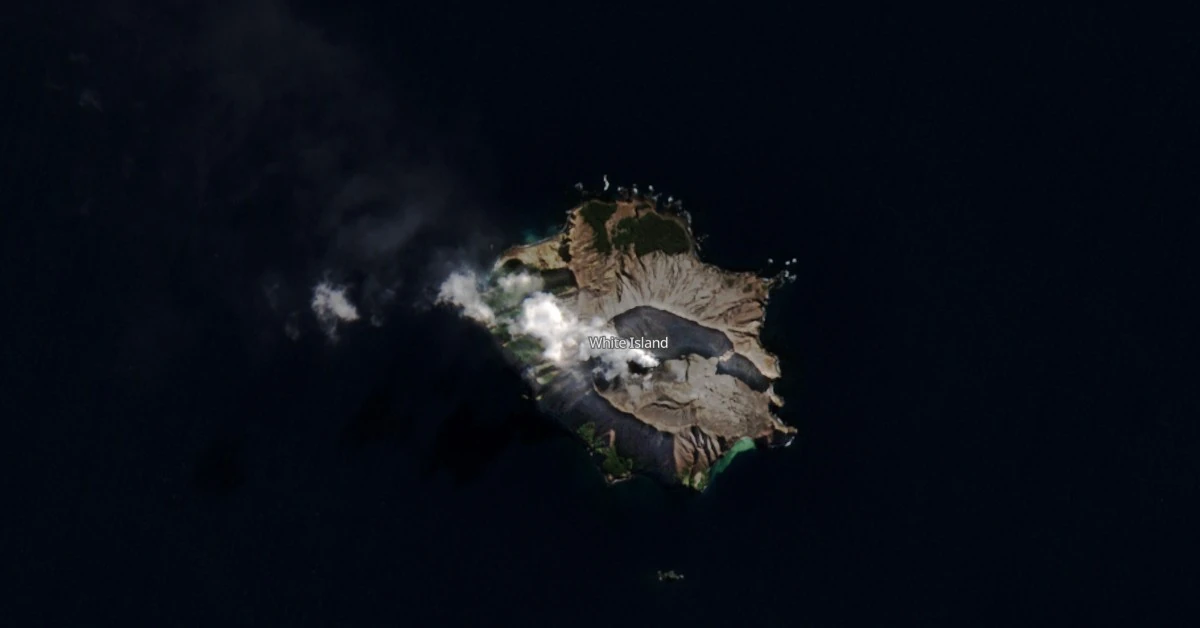
Featured image: Satellite image of White Island volcano on August 2, 2024. Credit: Copernicus EU/Sentinel-2, The Watchers
An increase in sulfur dioxide emissions, alongside minor eruptions observed on August 11, 2024, suggests the presence of shallow magma beneath the White Island volcano in New Zealand. The Volcanic Alert Level remains at Level 3 since August 9, with continued monitoring under difficult weather conditions.
A marked increase in sulfur dioxide (SO2) emissions, detected by the TROPOMI satellite, and minor volcanic eruptions at White Island volcano in Bay of Plenty, New Zealand, over the weekend suggest the presence of magma in the shallow subsurface system, according to GNS Duty Volcanologist Ery Hughes on August 12, 2024.
This is the first satellite-detected sulfur dioxide emission since the volcanic activity resumed in May 2024. Weather conditions permitting, a gas observation flight will be conducted to confirm these findings.
This shallow magma could result in high-temperature gas venting and may sustain regular eruptive activity. Currently, the eruptions are minor, with the hazards confined mainly to the island. There is no immediate evidence suggesting that the volcanic activity will increase in magnitude.
On August 11, GeoNet reported a continuous plume of volcanic ash to the west of the volcano, but the plume appeared to be low in volcanic ash concentrations, representing a low likelihood of impacting land.
The Volcanic Alert Level remains at Level 3 (minor eruption), and the Aviation Colour Code is Orange.
Due to the absence of an on-island monitoring network and the current cloud cover, there may be delays in detecting changes in volcanic activity and updating the Volcanic Alert Level.
Future gas and observation flights will be carried out when weather conditions improve.
References:
1 Shallow magma likely at Whakaari/White Island. Volcanic Alert Level remains at Level 3 and Aviation Colour Code remains at Orange – GeoNet – August 12, 2024

Teo Blašković founded The Watchers in 2011 and edited it until 2026, covering seismic and volcanic activity, extreme weather, space weather and near-Earth objects. Articles on this page are his archive.
Published in the last 24 hours
- High Risk of excessive rainfall covers Florida’s Space Coast as St. Johns River near Cocoa reaches 5.67 m
- Four small asteroids will pass close to Earth from November 21 to 23
- Cyclone Akvan weakens after landfall near Gopalpur; more than 300 000 evacuated in Odisha, India
- A broad low over southeastern Florida and the northwestern Bahamas has a 30 percent chance of subtropical or tropical development within 48 hours and a 50 percent chance within 7 days, the National Hurricane Center says
