
Typhoon “Chaba” about to hit Okinawa, turn toward Kyushu, Japan
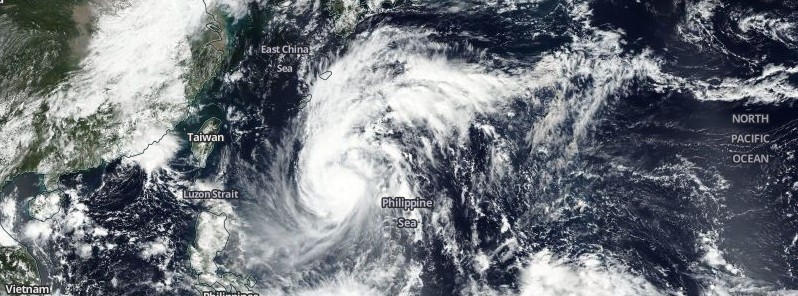
Featured image: Typhoon "Chaba" on October 2, 2016. Credit: NASA/NOAA/DoD Suomi NPP/VIIRS
Typhoon "Chaba" is moving toward Okinawa Islands, Japan and is expected to pass right over them around 12:00 UTC on Monday, October 3, 2016, as a Category 4 hurricane equivalent.
At 15:00 UTC on Sunday, October 2, the center of Typhoon "Chaba" was located about 535 km (332 miles) S of Okinawa and 800 km (500 miles) NW of Taipei, Taiwan.
Chaba had maximum sustained winds of 203 km/h (126 mph) and gusts to 250 km/h (155 mph). This placed Chaba at the upper edge of Category 3 hurricane equivalent. It was tracking northwestward at 26 km/h (16 mph) over the past six hours, according to the JTWC.
At 18:00 UTC, it had estimated central pressure of 935 hPa, according to the JMA.
Environmental conditions are still favorable for intensification and Chaba is expected to become a Category 4 hurricane equivalent over the next 12 hours. Wind gusts to 268 km/h (166 mph) are possible as Chaba tracks over Okinawa. 125 – 250 mm (5 – 10 inches) of rain is expected.
Chaba is expected to turn toward Kyushu around 12:00 UTC on Tuesday, October 4 and make landfall around 18:00 UTC. Chaba will then move over Japan, dumping heavy rain.
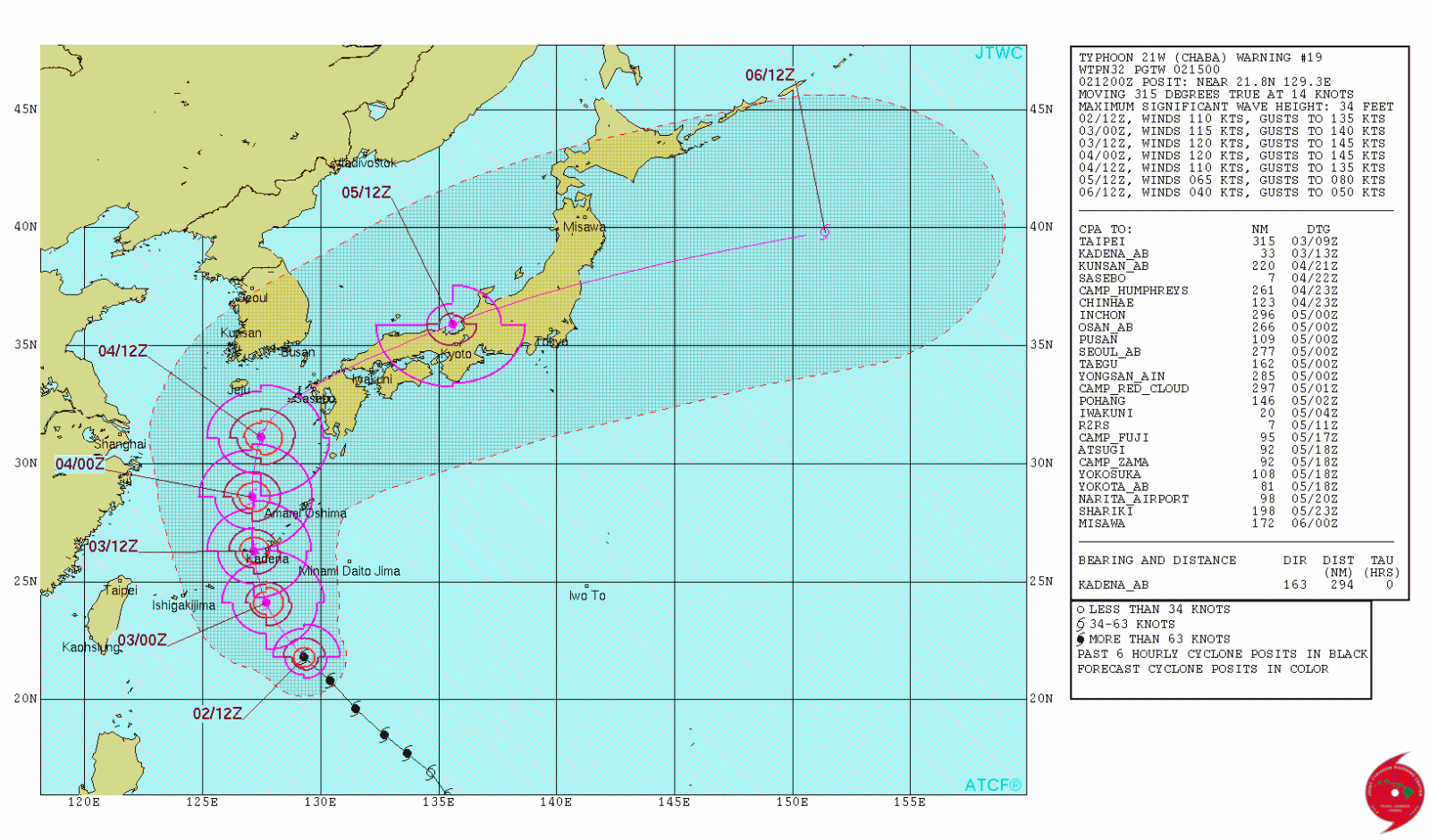
Typhoon "Chaba" JTWC forecast track at 15:00 UTC on October 2, 2016
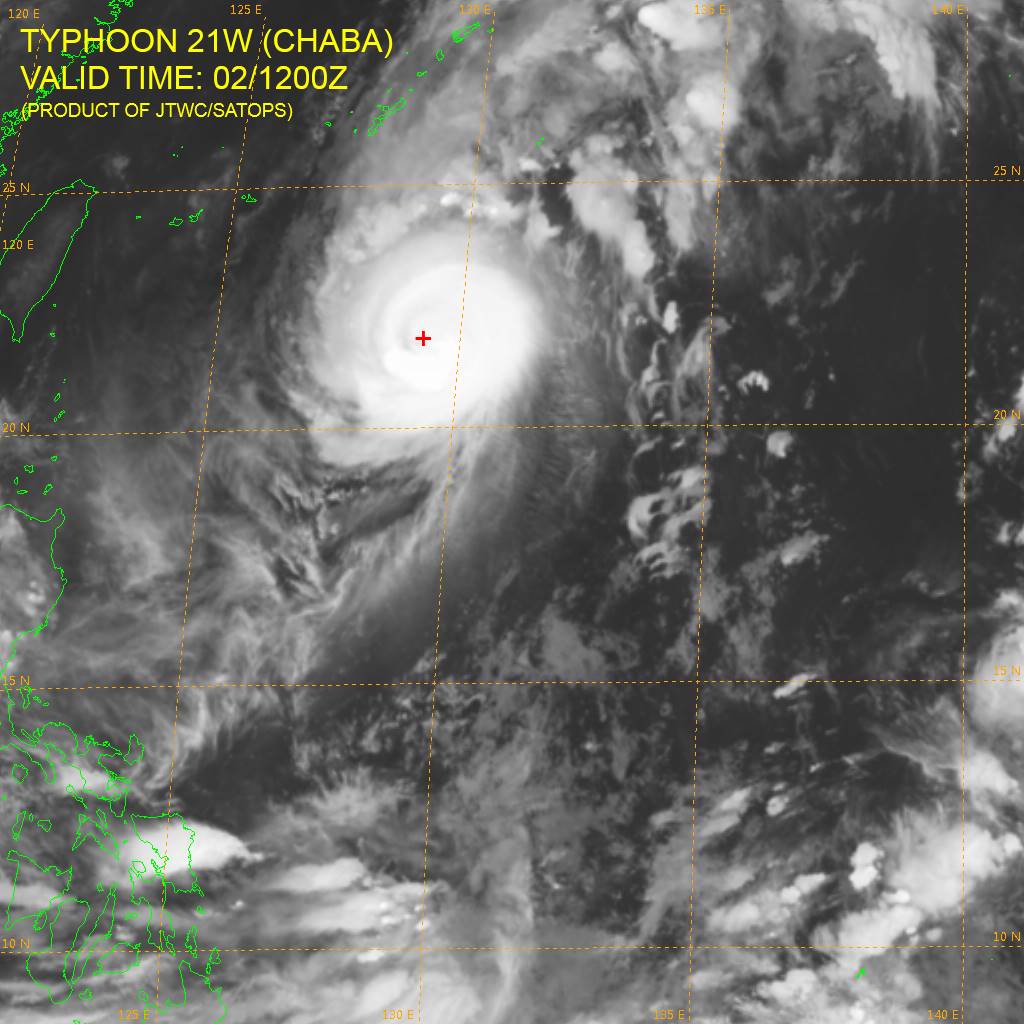
Typhoon "Chaba" at 12:00 UTC on October 2, 2016. Credit: JTWC
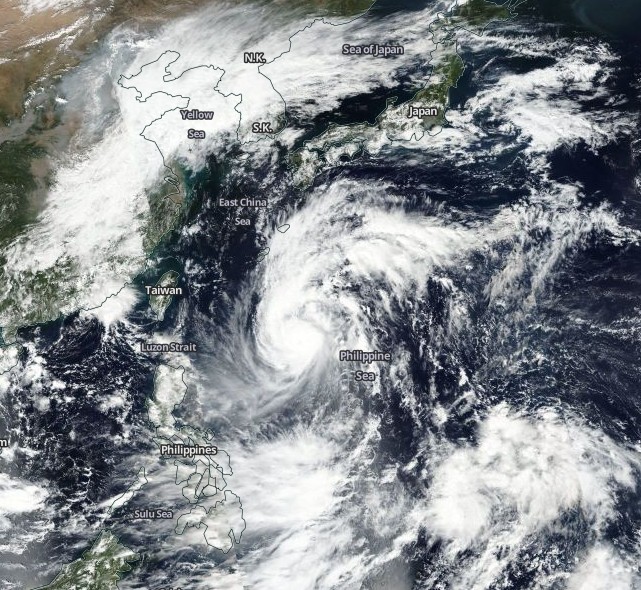
Typhoon "Chaba" on October 2, 2016. Credit: NASA/NOAA/DoD Suomi NPP/VIIRS

The Watchers team and our contributors bring the latest on extreme weather, earthquakes, volcanic eruptions, space weather, and all things science. We're all about making sense of the natural world and keeping you informed on what’s happening. Got a tip or a question? Hit us up using the form at newstips!
Published in the last 24 hours
- Cyclone Akvan weakens after landfall near Gopalpur; more than 300 000 evacuated in Odisha, India
- In January 1862, California’s new governor took a rowboat to his own inauguration, after 45 days of storms had turned the Central Valley into a lake up to 300 miles long Epicenter
- People who stayed put through the 2017 hurricanes were more often the ones with flood insurance, a survey of 2,557 Gulf Coast residents found, and the authors suggest the policy may have made the storm feel less dangerous Epicenter
- High Risk of excessive rainfall covers Florida’s Space Coast as St. Johns River near Cocoa reaches 5.67 m
