
Prozac killing E. coli in the Great Lakes
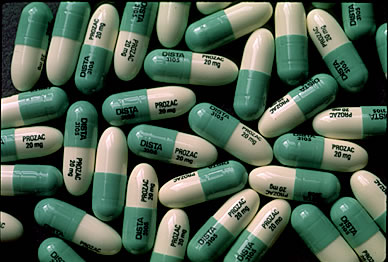
Image credit: TW
Scientists in Erie, Pennsylvania, have found that minute concentrations of fluoxetine, the active ingredient in Prozac, are killing off microbial populations in the Great Lakes.
Traces of antidepressants such as Prozac have been found in both drinking and recreational water supplies throughout the world, in quantities experts say are too dilute to affect humans but which have been found to damage the reproductive systems of mollusks and may even affect the brains of animals like fish. (National Geographics)
 Killing off bacteria might seem like a good thing. Treating clean lake water with similar strength doses killed off E. coli and enterococcus bacteria, both of which can cause serious infections in humans.
The fluoxetine found in Lake Erie is at very low levels—about one nanogram per liter of water. It doesn’t appear to be at a level that would be harmful to humans or invertebrates, for that matter. Researchers suspect that fluoxetine combined with other chemicals could be having a cumulative effect on the lake’s ecosystem. (NationalGeographic)
But what’s puzzling is where the drug is coming from. Fluoxetine is thought to enter waterways after it passes through the body and is excreted in urine. And pill users who dispose of unused pills down the sink could be adding to the problem. Wastewater treatment plants generally don’t filter out the chemical.
But near Presque Isle State Park in Lake Erie, where the water samples containing fluoxetine were found, there’s no particular fallout. There is no direct sewage outfall located anywhere near the beaches. That means the fluoxetine is likely spread out all over the lake. (NationalGeographics)

111th General Meeting of the American Society for Microbiology.

Published in the last 24 hours
- A Virginia park ranger was struck by lightning seven times and lived, even though three of the strikes set his hair on fire Epicenter
- The hole in the ozone layer over Antarctica was about twice the size of the US this year, and scientists say it would have been bigger still if ozone-eating chemicals were at their 2000 levels Epicenter
