• Earthquake swarm in progress along Calaveras fault near San Francisco, California

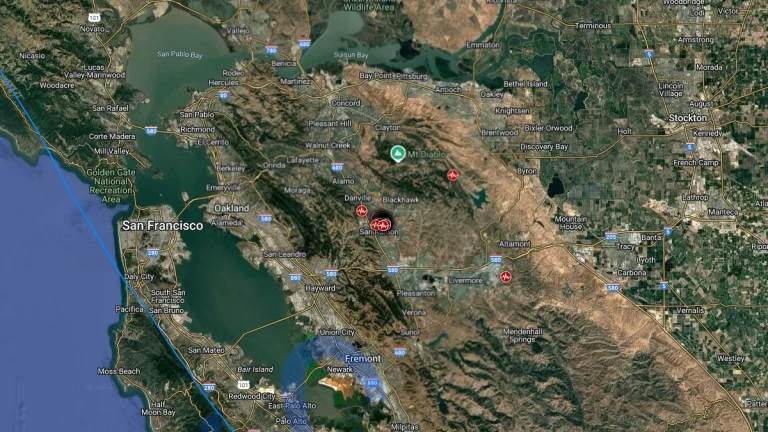
    Over 40 earthquakes were recorded along the Calaveras fault southeast of San Ramon, California, between November 9 and 10, 2025. The largest event, M3.8, occurred at 09:38 LT (17:38 UTC) on November 9 at a depth of 9.2 km (5.7 miles). Geological and seismic studies show that the Calaveras fault is capable of generating an event in the M6.5 to M7.0 range over long-term timescales.
  • San Andreas Fault earthquakes caused by deep underground forces

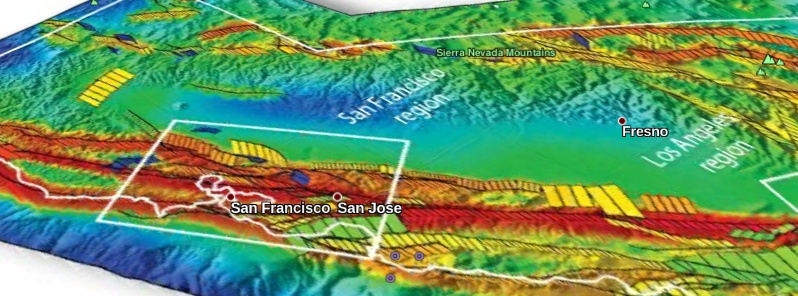
    Scientists at the University of South California (USC) have detected that the earthquakes registered alongside California’s San Andreas Fault occur much deeper than previously understood. The previous knowledge of the fault indicated that earthquakes are…

  • Ridgecrest earthquakes increase chance of San Andreas tremors

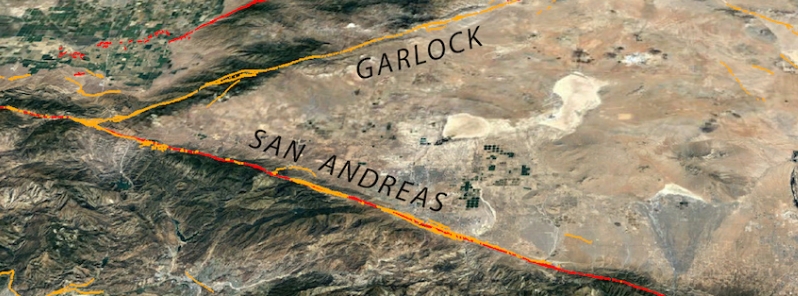
    In a new study, scientists have warned that the Ridgecrest earthquakes in Southern California in 2019 could increase the chance of a San Andreas Fault earthquake. The probability is higher because the 2019 temblors stressed the Garlock Fault, which links the…

  • Parkfield segment of San Andreas fault can host large earthquakes

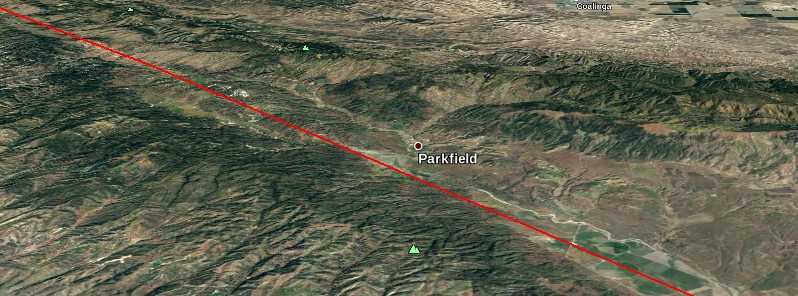
    Although magnitude 6 earthquakes occur about every 25 years along the Parkfield Segment of the San Andreas Fault, geophysical data suggest that the seismic slip induced by those magnitude 6 earthquakes alone does not match the long-term slip rates on this part of…

  • More than 130 quakes after M4.6 NE of Gonzales, California

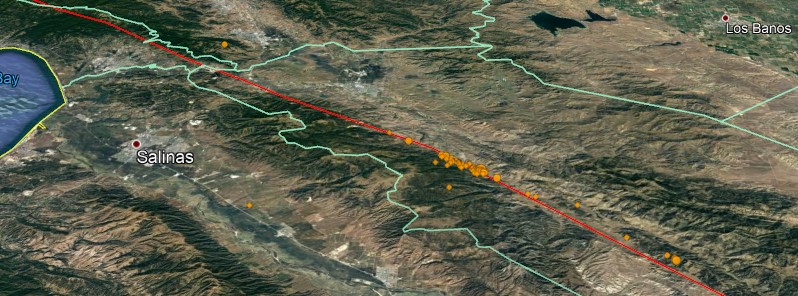
    Following a M4.6 earthquake that hit just NE of Gonzales, California on November 13, 2017, the USGS has registered more than 130 aftershocks within the 5 km (3.1 miles) of the epicenter. Although most of those aftershocks weren't felt by the Central Coast, the…

  • Historic earthquakes discovered along San Andreas Fault

    In a new study, USGS geologist Dr. Kate Scharer and her team excavated trenches across the San Andreas Fault – near Frazier Mountain in northeastern Kern County – to investigate the timing of sand, mud, and gravel deposits that were episodically ripped…