• Farside CME hurled toward Mercury and Venus

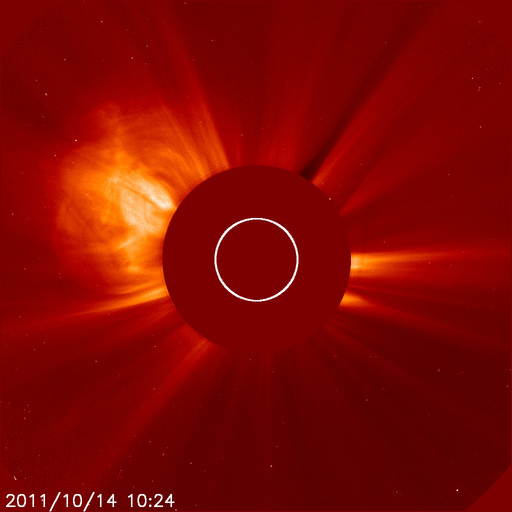
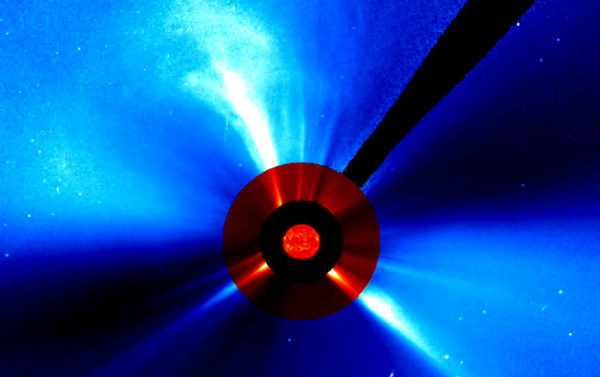
    An active region on the far side of the sun erupted on October 14 and hurled a significant coronal mass ejection toward Mercury and Venus. Analysts at the Goddard Space Flight Center expect the cloud to hit the innermost planet on October 15 around 08:30 UTC….

  • STEREO-SOHO detected six coronal mass ejections

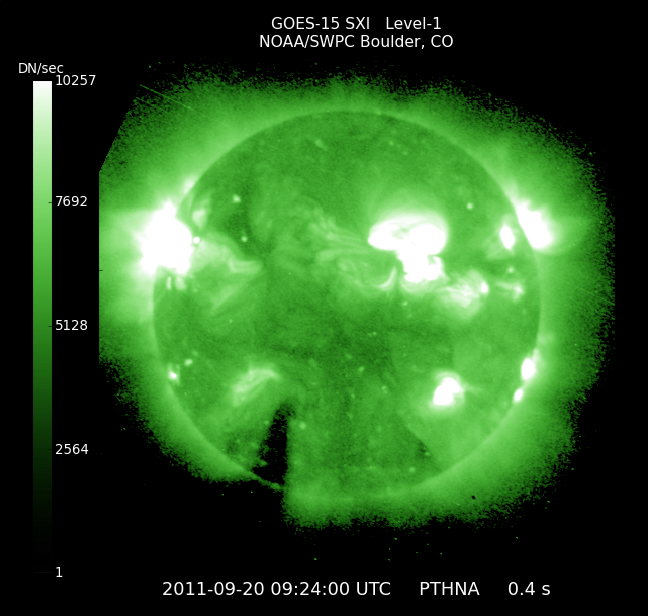
    On Sept. 19th, the STEREO-SOHO fleet of spacecraft surrounding the sun detected six coronal mass ejections (CMEs). Two of the clouds rapidly dissipated. The remaining four, however, are still intact and billowing through the inner solar system. Click to view a movie of

  • Heavy metal in and around the lakes

    Heavy metal pollution of lakes has a seriously detrimental impact on people and ecosystems that rely on such bodies of water. According to a study published in the current issue of Interdisciplinary Environmental Review, researchers have focused on the physicochemical

  • Planetary triangle seen on sky this morning

    Another day, another alignment of planets. “This morning, May 14th, the ‘planetary triangle’ created by Venus, Jupiter and Mercury adorned the eastern sky behind my nearby mosque,” reports Shahrin Ahmad, who snapped this picture from his rooftop observatory of Sri

  • SkyWatchers: Great Morning Planet Show!

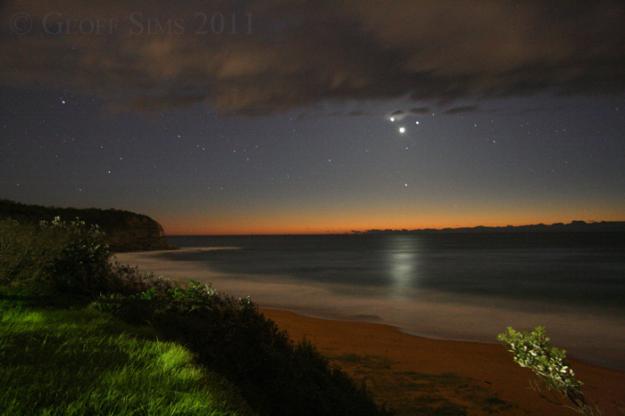
    The Great Morning Planet Show of May 2011 is underway. Every morning for the rest of this month, you can see a beautiful gathering of four planets in the eastern sky. They are Mars, Jupiter, Venus and Mercury, shown here on May 1st over Magnetic Island in east

  • 2011 Skywatching Guide: Planets in the Solar System

    The planets of our solar system are at tomes some of the most rewarding and simplest skywatching targets to spot, if you know when and where to look. Here's a look at how to observe the planets of the solar system in 2011: Tip: Astronomers measure distances in…

  • Rare sight: Mercury to meet Mars at dawn on Tuesday

    Skywatchers set your alarm clocks: On Tuesday morning (April 19), Mercury will appear to have a close encounter with Mars. In reality, the two planets will actually be separated by about 161 million miles (259 million kilometers), but in Earth’s sky they will…