• Discovery of a diamond-rich core-mantle boundary offers new information into Mercury’s evolution

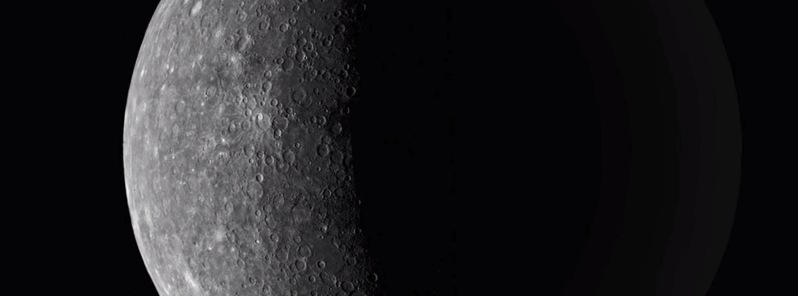
    Scientists discovered that Mercury may have a 16 km (10-mile) thick diamond layer at its core-mantle barrier. This revelation, based on NASA’s MESSENGER mission data and high-pressure laboratory experiments, shed new light on the planet’s complicated interior structure and thermal development. The team was led by Yongjiang Xu and Yanhao Lin of the Center for…

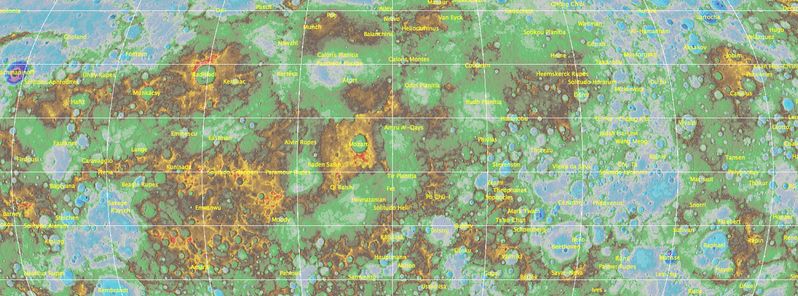
  • Mercury’s rich topography revealed for the first time

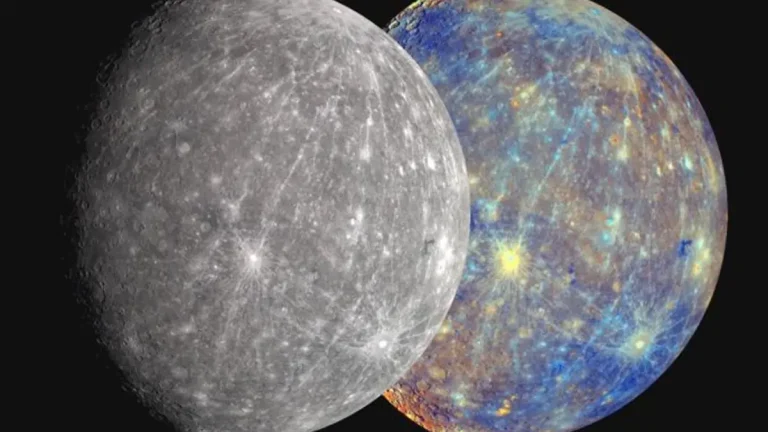
    A team of scientists from the US Geological Survey (USGS), the Arizona State University, Carnegie Institute of Washington, Johns Hopkins University Applied Physics Laboratory and NASA have produced a first comprehensive, high-resolution topographic map of…

  • Mysterious electric Mercury

    In April 2015, the NASA spacecraft MESSENGER completed its more than four year journey in the orbit of the planet Mercury.New discoveries in the mission have emphasized just how mysterious Mercury is for planetary scientists. Recurring features across the entire planet

  • Triple conjunction in the sunset sky on May 26, 2013

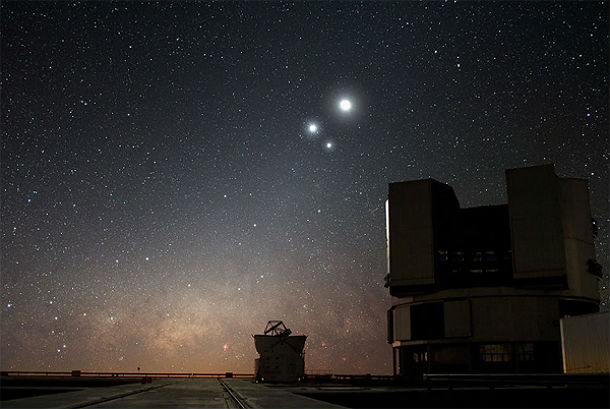
    The three brightest planets in this month's night sky are lining up for a remarkable sunset conjunction at the end of May. 

    On May 26, 2013, in a triple conjunction, Venus, Jupiter and Mercury will form a tight triangle only three degrees

  • May 2013 Skywatching guide

    May 2013 brings few interesting sky events. This years Eta Aquarid meteor shower will peak on May 6 with expected zenith hourly rate of 55 meteors per hour. We are about to experience annular solar eclipse on May 9/10. Annularity will be visible from

  • Mercury seen at sunset

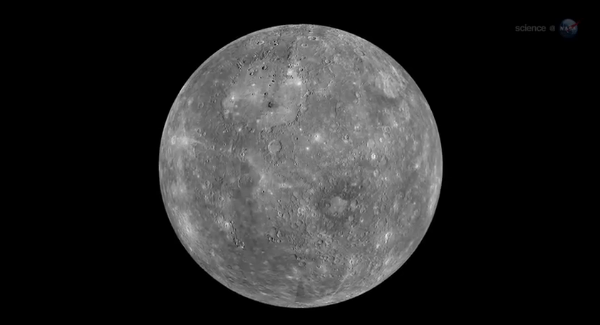
    The planet Mercury is about to make its best apparition of the year for backyard sky watchers. Look west at sunset for a piercing pink planet surrounded by twilight blue.Source: NASA Science

  • Messenger finds new evidence for ice on Mercury

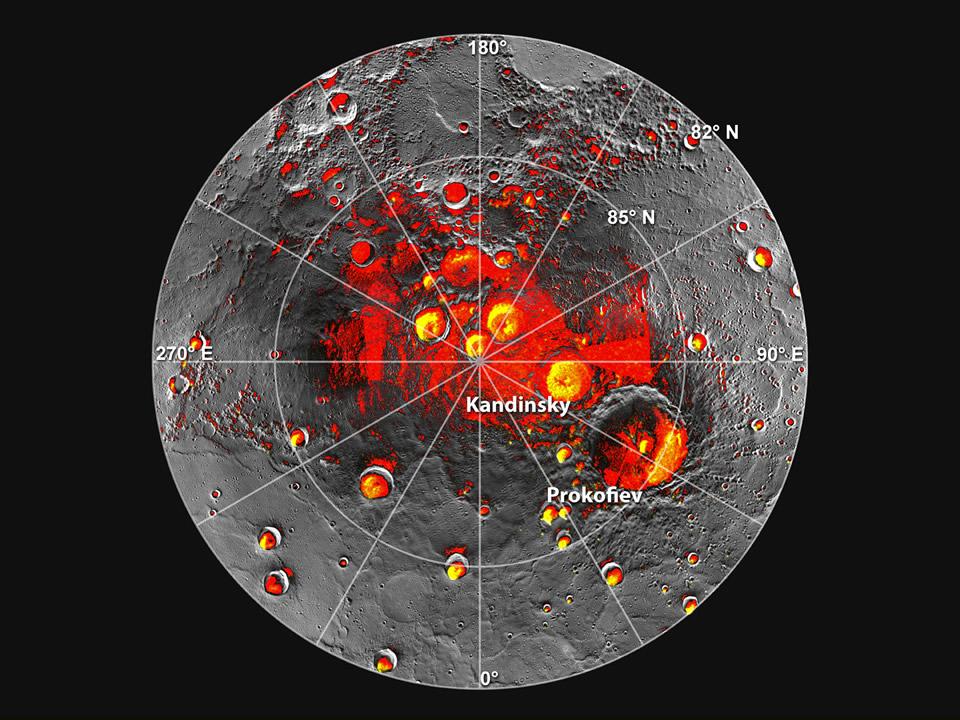
    New data from NASA’s MESSENGER spacecraft suggest that there’s plenty of ice on Mercury’s polar regions. Given its proximity to the Sun, Mercury would seem to be an unlikely place to find ice. But the tilt of Mercury’s rotational axis is almost zero — less than one